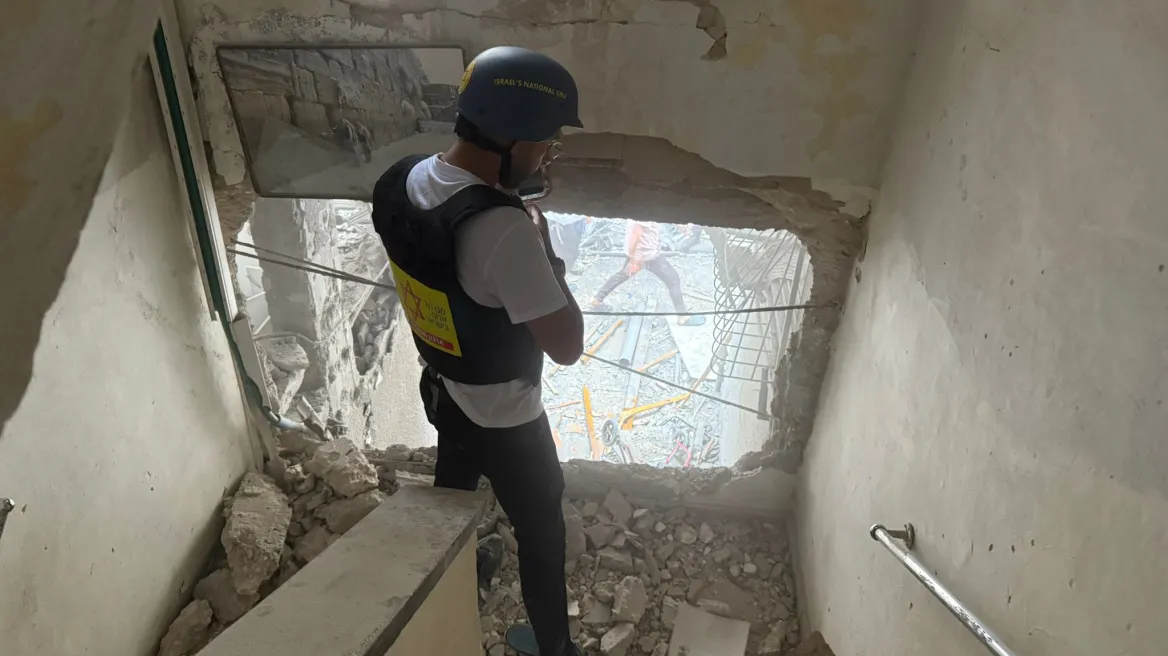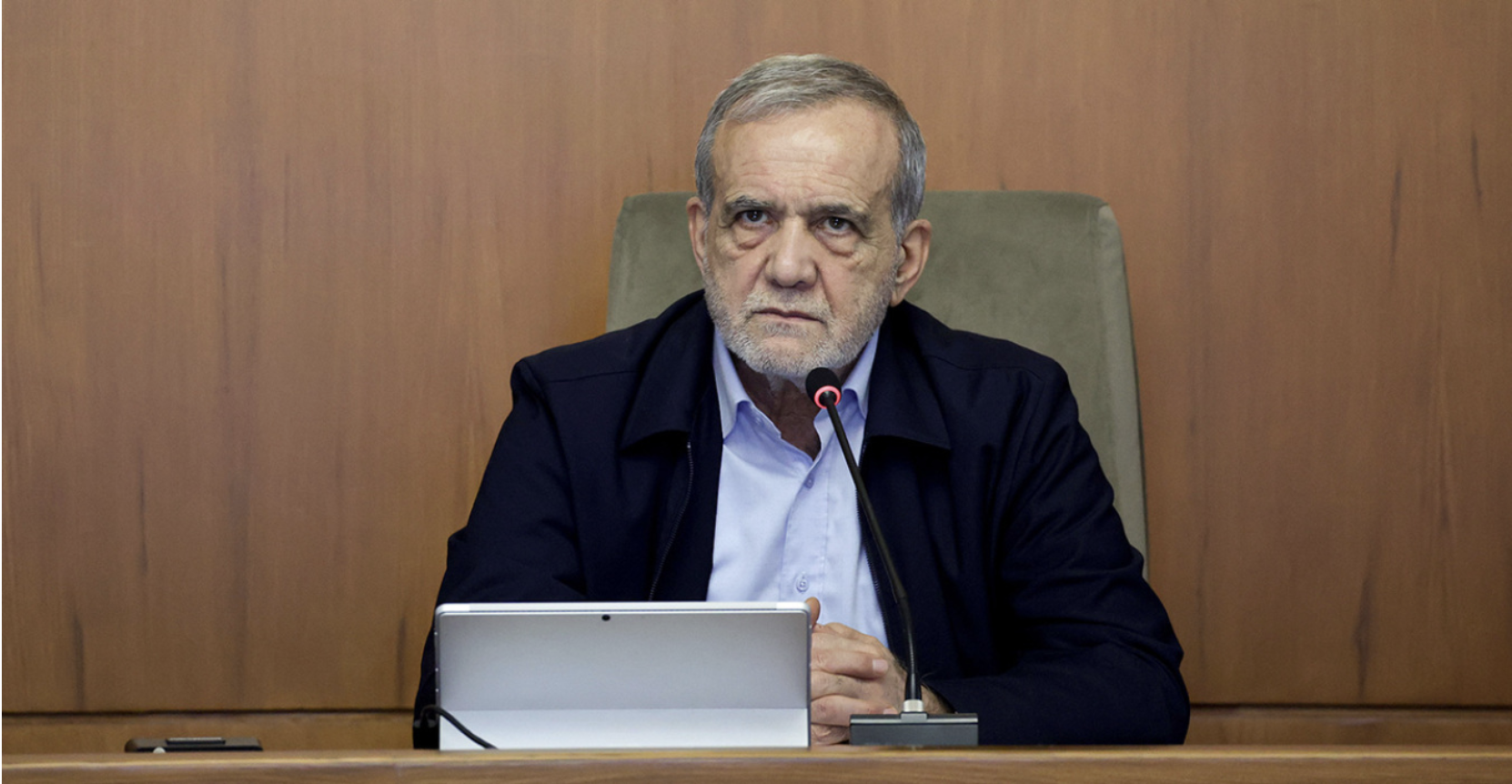
The ITB is the barometer of the global travel economy. In the winding corridors of Messe Berlin, where the global travel industry attempts to map the future every year, this year’s ITB Berlin 2026 was like no other. The timing was not indifferent. The weekend before the gates opened, developments around Iran abruptly brought geopolitics back into the centre of international debate. And in the corridors of Messe Berlin, this was felt in subtle but eloquent ways.
At the Middle Eastern countries’ pavilions, impressive architectural installations, huge screens and budgets in the millions, the picture was unusually quiet. The Saudi Arabian pavilion, one of the most imposing in the entire exhibition, often sat almost empty. The few attendees tried to give an impression of continuity, but the unease was evident. In an exhibition celebrating travel, geopolitics was the invisible exhibitor.

At the pavilions of Middle Eastern countries, with impressive architectural installations, huge screens, and multimillion-euro budgets, the atmosphere was unusually quiet. The pavilion of Saudi Arabia—one of the most imposing in the entire exhibition—was often almost empty. The few participants tried to maintain an image of continuity, but the anxiety was visible. At an exhibition that celebrates travel, geopolitics was the invisible exhibitor.
Berlin Exhibition: The New Major Trend in Global Tourism, Greece and Peru
A vintage Volkswagen bus stood nearby. This brief look back at how we used to travel and how we once dreamed about travel proved far more powerful than any slide presentation.
“Longevity tourism” is the next major market
At the Medical & Health Tourism Pavilion, it felt as though you were entering a completely different industry. Longevity clinics, predictive medicine, forest therapy backed by scientific research, and astro-tourism as a form of mental relief. For the first time, Charité, one of Europe’s leading university hospitals, was sitting at the same table as tour operators.
“Healthspan”—the years of life we live in good health that we aim to extend—is becoming the new luxury product. Destinations capable of offering this in measurable ways, supported by data rather than promises, are already ahead.
Interestingly, the concept of longevity is beginning to influence major hotel brands as well. At the Accor pavilion, the presentation of the new philosophy of Novotel, titled “Longevity Everyday,” reflected exactly this shift: wellness not as a spa experience, but as everyday balance built around four simple ideas—eat, sleep, move, and connect.

The absences spoke just as loudly
Israel and Lebanon were two countries absent from the exhibition. The discussion about the impact of the Middle East on tourism was everywhere—during conferences, behind the scenes, and in informal conversations.
Joschka Fischer, former German foreign minister, who spoke at the main conference, stressed that tourism can no longer treat geopolitics as background noise. It is part of the equation. Companies that understand this are already planning differently.
The presence of Jordan, with the iconic replica of Petra, also drew attention.
China is reopening—and this changes everything
Fifty countries now benefit from unilateral visa exemptions. In 2025, 73% of visitors to China entered without a visa, representing almost a 50% increase in arrivals within one year.
The figures presented at ITB were not merely statistics—they were an announcement of geopolitical intent. China wants to become visible to the world again, and the world wants to rediscover China. The effects on airline connections, pricing, and the broader Asian tourism market will be felt very quickly.
AI is no longer a tool—it is infrastructure
What was repeatedly discussed at the Travel Tech Track was not chatbots but “agentic commerce.” These are autonomous AI systems capable of managing bookings, adjusting prices, and making decisions in real time.
Sabre presented its new Mosaic platform, which does not simply “add” artificial intelligence but is built around AI from its core. The difference is enormous. Companies that still view digital transformation as merely “updating a website” are operating in a completely different era.

Greece plays in a different league
It is also worth noting that Greece remains among the top three choices for German travelers, behind Turkey and Spain, with approximately 8% growth in tour operator sales.
However, what attracted even more attention was the discussion around a new environmental classification system for Greek hotels currently under development. This is not simply another sustainability certification, but an attempt to quantify the environmental performance of hospitality units.

The idea is straightforward: energy consumption, water usage, waste production, and overall environmental footprint would be translated into measurable indicators. In a market where sustainability often functions as a marketing slogan, turning it into concrete data signals a more mature direction—and this is exactly the language the German market understands.
Human contact as a privilege
At the same time that AI was being discussed as a universal solution, another session offered the opposite warning: algorithmic bias.
Executives from Google and Microsoft explained how AI systems may unintentionally exclude marginalized travelers or render small local providers invisible. Efficiency and humanity are not always compatible. This dialogue was among the most honest discussions heard at the exhibition.
New industry metrics: beyond arrivals
During the presentation of the ITB Travel & Tourism Report 2026/2027, an important question was raised—one that perhaps should have been asked long ago: what exactly do we measure when we measure tourism success?
Arrivals and overnight stays are no longer sufficient. New indicators focus on:
- social acceptance of tourism by local communities
- destination resilience
- quality of employment within the sector
These factors are difficult to measure. But if we fail to measure them, we are building the industry on sand.
Peru reminded us why we travel
Peru became the first official Adventure Travel Partner in ITB’s history.
The Andes, the Amazon, indigenous communities, and barrier-free adventure tourism—including travel experiences for people with disabilities through the Wheeltheworld platform—were all highlighted.
At an exhibition filled with metrics and strategies, this pavilion served as a reminder that in the end, people travel because they are searching for something—usually themselves.
Africa spoke seriously—and we listened
Angola, as the official host country, turned out to be the surprise that was not really a surprise.
Under the slogan “The Rhythm of Life,” the country presented something rare at exhibitions of this type: a concrete plan. Not just images of waterfalls and savannas, but also a Convention Bureau, infrastructure investments, and a strategy aimed at attracting the MICE sector (Meetings, Incentives, Conferences, and Exhibitions).
In Hall 21, the new African Travel Hub gave voice to countries such as Ghana, Namibia, and Botswana, which until recently were represented mostly through exotic posters. Africa is changing rapidly.
The DeLorean and the weight of 60 years
At the entrance of one of the anniversary installations stood an iconic car: a DeLorean, an obvious reference to Back to the Future.
Next to it stood a vintage Volkswagen bus. This short reflection on how we once traveled—and how we once dreamed of travel—was far more powerful than any slideshow presentation.
Tourism is, above all, about memory and expectation. No artificial intelligence can change that.
The conclusion of the 60th anniversary
The main conclusion of ITB’s 60th anniversary is simple: tourism is coming of age.
It is no longer just about vacations. It is becoming a field that intersects with economics, diplomacy, science, and medicine.
What is changing is not travel itself—but its role in the world.
Ask me anything
Explore related questions