





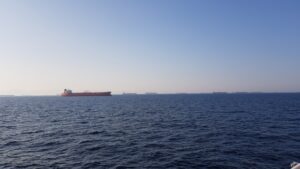
The recent disruptions to navigation in the Strait of Hormuz—one of the most important maritime corridors in the world—are affecting not only the oil market but also the global fertilizer supply chain, with the disturbances already leading to price increases and putting pressure on agricultural production.
The Strait is one of the most crucial hubs for global fertilizer trade, since about one-third of all seaborne fertilizer transport worldwide passes through this route.
Recent disruptions in shipping have begun to affect the market, increasing fertilizer costs and raising concerns about the impact on global food production.
According to market estimates, fertilizer prices have risen by around 30% since the end of February, as delays in maritime transport are creating supply problems in international markets.
At the same time, ships carrying fertilizers remain stranded in Persian Gulf ports, further burdening the supply chain.
This situation has already started to affect the spring planting season in several regions around the world.
The Iran war is driving up energy and fertiliser prices, threatening food shortages in poor countries, destabilising fragile states and complicating inflation control at central banks worldwide. https://t.co/X07VzTD4qa
— euronews (@euronews) March 10, 2026
The Role of Gulf Countries in the Fertilizer Market
Countries in the Persian Gulf play a decisive role in the global fertilizer market.
Producers in the region account for approximately 43%–49% of global urea exports and about 30% of ammonia exports.
In addition, around 44% of global seaborne sulfur trade—a key component in fertilizer production—also moves through the same region.
Nitrogen-based fertilizers such as urea and ammonia are essential for maintaining high crop yields.
Their production depends heavily on low-cost natural gas, which Gulf countries possess in abundance. Nearly all fertilizer exports from Qatar, Saudi Arabia, the United Arab Emirates, and Iran must pass through the Strait of Hormuz, making this maritime route crucial for global agricultural production.
Global Impact
The effects of disruptions in fertilizer transport are already being felt in various parts of the world.
In India, Pakistan, and Bangladesh, rising prices are combined with natural gas supply problems that are affecting fertilizer production plants.
In Brazil, higher fertilizer costs are raising concerns about soybean crops, one of the country’s most important agricultural export sectors.
Meanwhile, China and several Southeast Asian countries are seeing sharp increases in fertilizer prices, while in parts of Africa shortages threaten to intensify risks of food insecurity.
Ask me anything
Explore related questions




