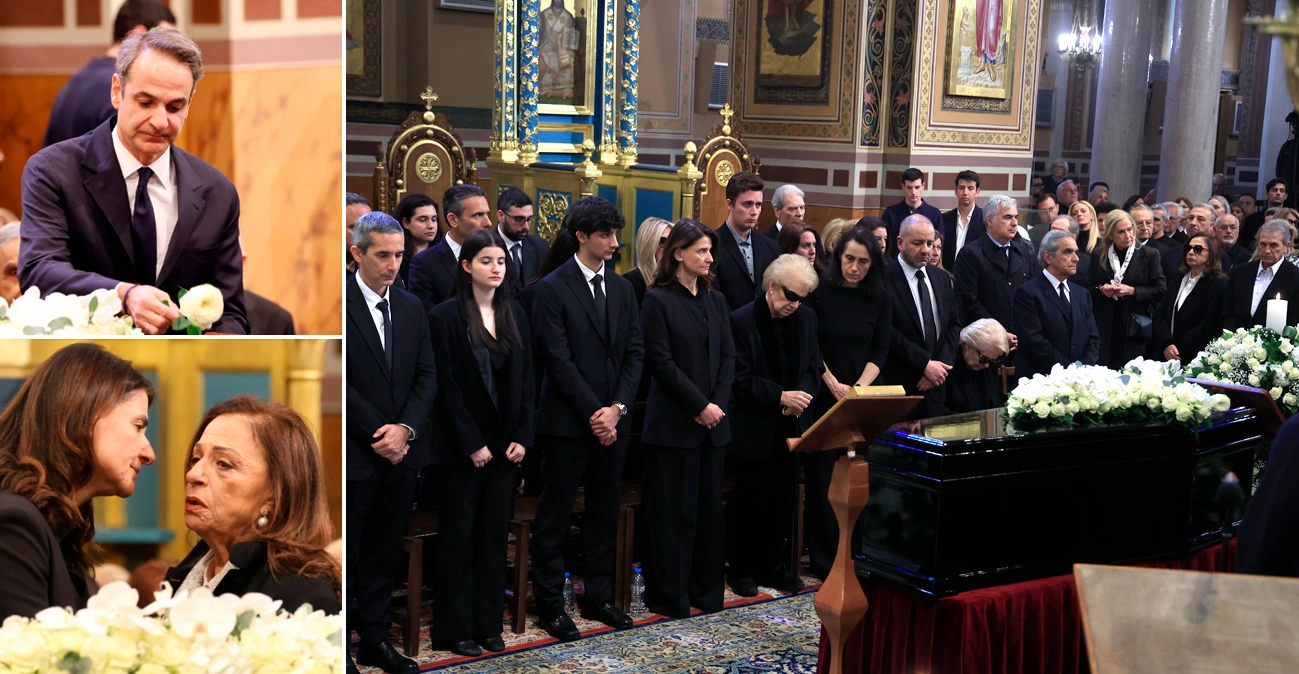
In Brussels, ahead of the Summit, the crisis in the Middle East dominated discussions on economic impacts and migration.
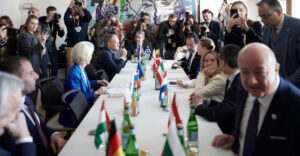
The Greek Prime Minister participated in an informal meeting on migration with leaders of 16 member states and the President of the European Commission.
Mr. Mitsotakis stressed the need for Europe to protect its external borders and not repeat past mistakes.
Another informal meeting also took place on European competitiveness between the Italian, German, and Belgian prime ministers.
The Prime Minister called for a clear roadmap for institutional support among member states in the event of an attack.
Strong activity is being observed in Brussels just before the start of the Summit, with the Middle East crisis at the center of consultations, particularly regarding economic and migration impacts.
Before arriving at the European Council, Greek Prime Minister Kyriakos Mitsotakis attended an informal migration meeting at the offices of the Italian delegation, with leaders of 16 member states and European Commission President Ursula von der Leyen.
The meeting involved 16 member states, including Austria, Belgium, Bulgaria, Cyprus, the Czech Republic, Germany, Greece, Hungary, Latvia, Malta, Poland, Slovakia, and Sweden, aiming to find “innovative solutions” for managing migration flows.
Mitsotakis at the Summit
Government Positions on Migration
Mr. Mitsotakis also addressed migration upon his arrival at the European Council, saying:
“This crisis must in no way lead Europe to face a new refugee crisis. The message here must be absolutely clear: Europe cannot tolerate a repeat of the 2015 crisis. We are not at that point, but we must be prepared for all eventualities.”
“A clear message, therefore, that Europe will protect its external borders and not repeat past mistakes, I consider essential to send from this European Council,” he added.
European Competitiveness
Beyond the migration meeting, a second informal meeting was held in Brussels, also at the offices of the Italian delegation, between Italian Prime Minister Giorgia Meloni, German Chancellor Friedrich Merz, and Belgian Prime Minister Bart De Wever, focusing on European competitiveness.
“Europe Must Protect Consumers and Businesses”
Referring to the economic impacts of developments in the Middle East, Mr. Mitsotakis called for reason to prevail and for attacks on oil facilities and energy infrastructure to stop.
He also stressed that Europe must be prepared to deal with the crisis:
“The response must be national and European. Greece is doing everything it can to support the Greek economy. We will need European-level responses if the crisis continues. And that will be the subject of the discussion,” he explained.
At the same time, he emphasized the need for a solid institutional process for support between member states. As he noted, Greece rushed to support Cyprus when it was attacked. For this reason, he will raise the issue at the European Council:
“I will call for a clear roadmap on how we can transform this essentially informal activation of Article 42.7 into a solid institutional option that European countries will have in case they are attacked again,” he said.
Ask me anything
Explore related questions