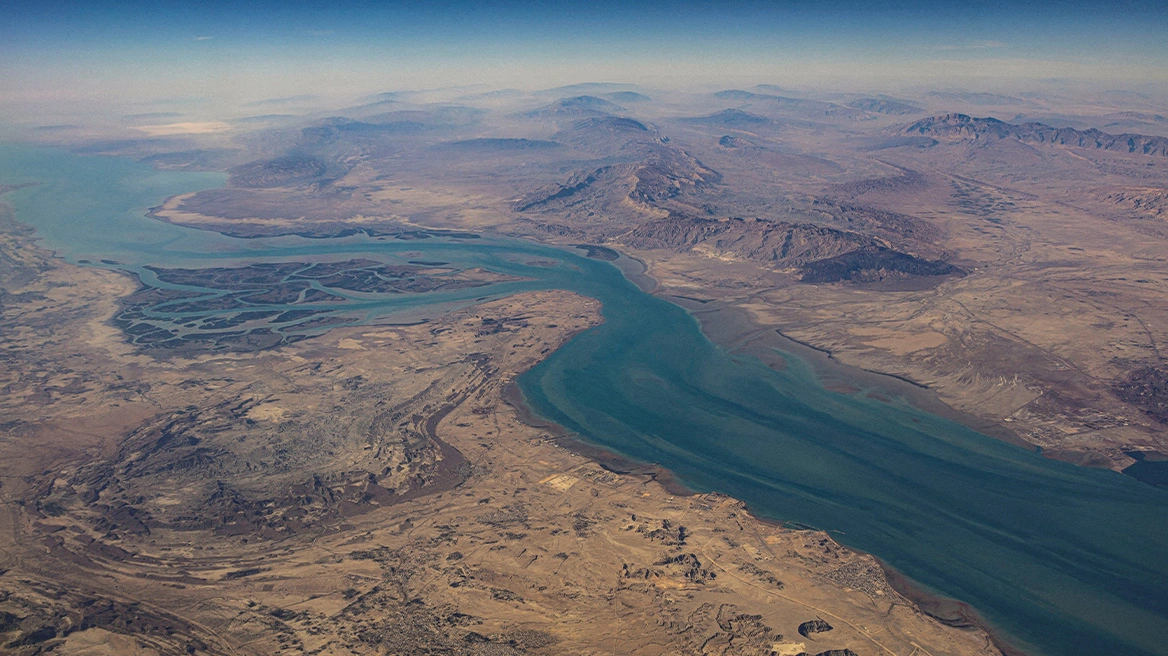
The reopening of the Strait of Hormuz—a key objective of the United States when it agreed to a ceasefire with Iran yesterday—is the first step toward restoring energy flows through the Persian Gulf. But this is only the beginning, as the process remains highly complex and the consequences continue to accumulate.
This is because dozens of refineries, storage facilities, and oil and gas fields in at least nine countries—from Iran to the United Arab Emirates—have been targeted. In total, 10% or more of global oil supply has been shut down. Restarting these facilities requires not only safe passage through the Strait of Hormuz, but also inspections of pumps, replacement of specialized processing equipment, and the return of workers and ships scattered around the world.
The timeline for restoring the Gulf’s energy system to even a basic level of normality remains highly uncertain for one key reason: the war is in a “pause,” and if all goes well, that pause may last two weeks—but beyond that, there are no guarantees.
Under the ceasefire agreement announced by President Donald Trump on Tuesday evening, Iran agreed to allow ships to pass through the Strait without being attacked. Earlier that day, Trump had warned that if the waterway remained closed, “an entire civilization would disappear.” He has also repeatedly threatened to strike Iranian power plants and other critical infrastructure if Tehran does not allow passage—actions that could be considered war crimes.
Attacks on energy infrastructure continued in the days leading up to the ceasefire, including strikes on an oil refinery in Kuwait and petrochemical complexes in Iran. The full extent of the damage remains difficult to assess, as many countries have released very little information.
Once companies are convinced their ships can safely pass through this narrow passage between Iran and the Arabian Peninsula, their first priority will likely be exporting oil and fuels already stored near the Strait. Then, assuming no renewed escalation, some wells could restart within days or weeks, according to industry analysts and Gulf oil executives.
However, a more complete recovery is expected to take many months. Some heavily damaged infrastructure could take years to repair.
For consumers, this means fuel prices—recently averaging over $4 per gallon in the United States—are unlikely to return to pre-war levels anytime soon, even though global oil prices dropped late Tuesday. Countries are already drawing down pre-war energy reserves, so the longer the crisis lasts, the more persistent high prices will be.
Shut-in oil wells also create additional complications. When oil or gas wells are taken offline, restarting them can be difficult—and the longer they remain inactive, the harder it becomes.
Subsurface pressure can become unstable, and water may accumulate. If shutdowns last too long, equipment may corrode due to prolonged exposure to hydrogen sulfide, a toxic gas commonly found mixed with oil and gas. Countries like Saudi Arabia and Iraq inject gas or water into wells to boost production, adding further complexity to restoring proper pressure when operations resume.
Kuwait, wedged between Saudi Arabia and Iraq at the northern edge of the Persian Gulf, is the world’s tenth-largest oil producer. Before Friday’s drone strike on the Mina al-Ahmadi refinery, the CEO of Kuwait Petroleum had said a significant portion of production could be restored “within days” after the war ends.
Sheikh Nawaf Al-Sabah added at the CERAWeek by S&P Global energy conference in Houston last month that full production could return within three to four months.
The key question is the total extent of damage across all infrastructure needed to bring oil and gas from extraction sites to global markets. Analysts believe few facilities have suffered catastrophic damage, but available data remains limited.
One of the region’s most important energy assets is the Ras Laffan gas export complex in Qatar. Spanning at least eight square kilometers within a large industrial city, it supplies natural gas to countries across Asia and Europe for heating and electricity generation.
Before being loaded onto ships, natural gas must be cooled to about -162°C to become liquefied natural gas (LNG). Qatar halted LNG production in the early days of the war, and later missile strikes knocked out 17% of the facility’s capacity.
Undamaged parts of the plant are expected to restart first, likely within weeks or months. The process includes restarting offshore gas wells, restoring auxiliary systems, replenishing cooling fuels, and then resuming the liquefaction process, explained Mehdi Touil, a former Ras Laffan engineer now working at Calypso Commodities in Berlin.
Damaged sections are another matter. QatarEnergy has said repairs could take several years. The facility has 14 LNG production units, and attacks destroyed the core of two of them—the massive cooling systems, which can be as tall as an 18-story building. Replacing such equipment can take two years or more.
Much less is known about damage to oil processing facilities across the region. A refinery on Saudi Arabia’s west coast has been operating at reduced capacity since a mid-March drone attack, according to Rystad Energy, which estimates full restoration could take up to a year.
Iran has also suffered strikes on energy infrastructure, including oil storage facilities in Tehran that sent black smoke over the capital.
Another concern is strained global supply chains. The worldwide race to build AI data centers has increased demand for gas-fired power units and related equipment—such as gas turbines—which may also be needed for repairs in the Gulf.
In any case, regardless of how the conflict ultimately ends, analysts expect energy prices to fall from wartime highs—but remain above the levels that would have prevailed without the conflict.
Analysts at Société Générale recently projected oil prices around $80 per barrel by the end of 2026, up from a previous estimate of $65. Markets will continue to price in elevated geopolitical risk, which will inevitably weigh on global economies again.
Ask me anything
Explore related questions