





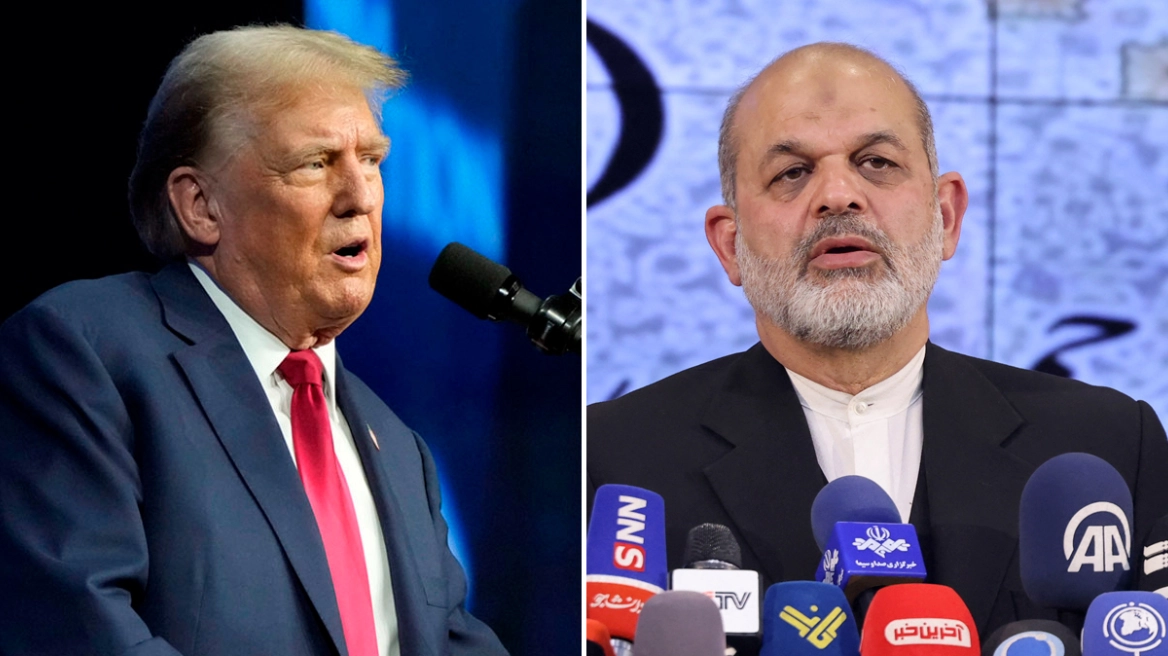
Following US–Israeli airstrikes that weakened Iran’s political and military leadership—killing dozens of senior officials—General Ahmad Vahidi has emerged (informally, as Donald Trump continues to say he cannot identify who would sign an end to the war) as the central figure pulling the strings behind the scenes of the Islamic Republic.
According to analysts, Vahidi—who became head of the Revolutionary Guards after the neutralization of Mohammad Pakpour on the very first day of the conflict—has activated his inner circle, forming an informal military council and taking control of both Iran’s military response and its negotiating team. With the 67-year-old and his allies in charge, Tehran has adopted an even tougher stance, refusing (at least until Friday) to participate in peace talks with the United States and intensifying attacks on ships passing through the Strait of Hormuz.
This stance and the obstacles he places in negotiations have reportedly made Vahidi a key target in US–Israeli military plans should hostilities resume.
He has sidelined Tehran’s moderates
Vahidi, who is under strict Western sanctions and has been linked to terrorist attacks in Argentina, represents the most hardline faction of the Iranian regime. This faction has pushed aside Tehran moderates (Masoud Pezeshkian), including those leading negotiations with the US (Abbas Araghchi). Analysts believe that even if an agreement is reached with Iran’s delegation, it may have little real impact as long as Vahidi and his allies remain in control.
Vahidi previously commanded the elite Quds Force in the 1990s, strengthening Iran’s influence in the Middle East before handing over to Qasem Soleimani. Both men are considered key figures in building and strengthening Iran’s proxy networks abroad, including Hezbollah in Lebanon and Houthis in Yemen.
Unlike previous Revolutionary Guard leaders, Vahidi also played an active role in Iran’s political system, serving in high-ranking positions such as Minister of Defense and Minister of Interior in different governments. In December of the previous year, he was appointed deputy commander by Supreme Leader Ali Khamenei, who was killed along with Pakpour in the strikes of February 28.
How he took control via Mojtaba
After Khamenei’s death, Vahidi reportedly promoted his son, Mojtaba Khamenei, as successor, despite reports that the ayatollah himself did not want such an outcome. However, Mojtaba was injured in the same strikes and has not appeared publicly, which—according to analyst Khosro Esfahani—has effectively made him a “tool” of the regime.
“If Mojtaba is alive—and that’s a big ‘if’—he is nothing more than a puppet. He is the first supreme leader created by artificial intelligence in human history,” Esfahani told the New York Post, referring to allegedly fabricated images released by the regime after his appointment. “He has no political capital, no public support, and no influence over decision-making. The regime attributes statements to him and will continue to do so. If he is alive, which is doubtful, he functions as a puppet,” he added.
Influencing the negotiating team in Pakistan
Vahidi’s influence over negotiations became evident when he secured the participation of Mohammad Bagher Zolghadr, secretary of the Supreme National Security Council and a Guards veteran, in Iran’s delegation. According to the Institute for the Study of War, Zolghadr’s role was to ensure negotiators followed the Guards’ hardline stance.
This was confirmed when he criticized Foreign Minister Abbas Araghchi for allegedly showing flexibility in the talks. The reaction led to the delegation returning to Tehran, where it remained until yesterday, before eventually going back to Islamabad to attempt a possible resumption of talks with the US.
“Good cop–bad cop” tactic
Analysts believe Iran is using a “good cop–bad cop” strategy, with Vahidi taking a hard stance and Parliament Speaker Mohammad Bagher Ghalibaf appearing more moderate. However, both come from the same Revolutionary Guards structure and have historically supported similar strategies.
Links to deadly terrorist attacks abroad
Vahidi was one of nine senior Iranian and Hezbollah officials accused of involvement in the 1994 bombing of the AMIA Jewish Community Center in Buenos Aires, which killed 85 people. Interpol issued a “red notice” for his arrest, making him an internationally wanted figure.
In addition to the 1994 attack, Argentine investigators have linked him to the 1992 bombing of the Israeli embassy in Buenos Aires, which killed 29 people and injured dozens.
Vahidi has also been sanctioned by the United States for his ties to Iran’s nuclear and missile programs, and faced a second wave of sanctions in 2022 following the regime’s violent crackdown on protests over the death of Mahsa Amini.
The European Union also imposed sanctions on Vahidi the same year, citing the use of live ammunition against protesters, which resulted in nearly 500 deaths, according to human rights organizations.
Ask me anything
Explore related questions




