





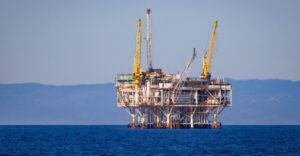
A critical factor—going far beyond the narrow scope of extraction itself—is emerging in the selection of a port base for hydrocarbon drilling in the Ionian Sea. Three ports in Western Greece—Patras, Igoumenitsa, and Astakos—are at the heart of the competition.
Beyond the energy dimension of the project, the real economic weight lies in the full range of activities that develop around drilling. This involves a complex network of services, including logistics support, technical operations, equipment maintenance, and personnel transport—forming a dynamic business cycle with a strong impact on both the local and national economy.
The operation of an offshore installation requires continuous support from specialized services such as towing, anti-pollution measures, security, materials storage, and infrastructure for catering and accommodation. Altogether, these functions transform the selected port into a key operational center with the characteristics of an energy hub.
According to market sources, in drilling investments approaching €1 billion, a significant share—up to €400 million—can be directed toward port-related support activities and associated services. This means that a large portion of the overall value is not confined underground but spreads across the logistics and industrial chain that begins at the port.
From this perspective, selecting a base is not merely a technical decision, but a strategic one with broader economic and developmental implications for the region that will host the project.
The potential benefits for the Port of Patras
The significant economic and developmental benefits that could arise for the Port of Patras from serving as a support base for offshore drilling in the Ionian were highlighted by Panagiotis Anastasopoulos, CEO of the Patras Port Authority and President of ELIME, speaking to ANA-MPA.
As he notes, this activity creates a wide range of economic benefits, led by the establishment of a steady revenue stream from high-value services such as handling specialized support vessels, managing energy equipment, and providing integrated logistics services.
At the same time, he emphasizes that this activity boosts the port’s commercial operations through increased cargo and materials movement.
According to him, the importance of this development extends beyond immediate financial results, as the port acquires a new strategic role as an energy hub, enhancing its overall value and attractiveness for investment.
He also places particular emphasis on employment, noting that hundreds of direct jobs and many more indirect ones could be created. Direct roles would involve specialized sectors such as port operations, technical services, security, and vessel support, while indirect employment would extend to areas like transport, storage, and services.
At the same time, he underlines that the local economy could be significantly strengthened, as small and medium-sized enterprises would have the opportunity to integrate into the new value chains created around energy projects, leading to increased demand for services and products.
He also points to the presence of strong academic institutions in Patras, which create the conditions for developing specialized skills, enhancing career prospects for young people, and reducing brain drain.
Regarding infrastructure, he stresses that taking on such a role requires targeted investments, including upgrading port facilities, creating specialized zones, and improving safety and environmental protection systems.
Finally, he highlights that Patras’ geographical location and proximity to the Ionian energy fields constitute significant comparative advantages, which—combined with institutional stability—can attract investment and strengthen Greece’s position on the broader energy and maritime map of the region.
Igoumenitsa: A development catalyst for Western Greece
The potential created for Western Greece’s ports by supporting offshore drilling is also emphasized by Thanasis Porfyris, CEO of the Igoumenitsa Port Authority.
He describes a transition with a clear geoeconomic footprint, as Igoumenitsa is no longer simply a passenger gateway to Italy but is evolving into a central operational hub for hydrocarbon extraction in the Ionian, leveraging its proximity to Block 2.
He notes that the signing of the exploratory drilling contract in April 2026 acts as a catalyst, integrating Igoumenitsa into a broader plan that connects energy with modern port infrastructure and high value-added logistics chains.
At the core is the port’s new Master Plan, which has received positive feedback, marking its transition into a multifunctional hub for logistics and industrial activity.
He stresses that the potential selection of Igoumenitsa as a support base is not accidental. The port has the capacity to service tankers and support vessels, while infrastructure upgrades expected by 2026 will free up significant space for equipment storage, supply bases, and ship repair activities.
At the same time, the port is adopting “green” features, such as onshore power supply for vessels, significantly reducing its environmental footprint.
The momentum extends beyond the port itself. The need for rapid equipment transport enhances the role of the Egnatia Motorway, improving regional connectivity.
New investments in gas networks and digital infrastructure are also expected, strengthening regional development and creating a comprehensive energy ecosystem.
Porfyris also highlights the financial dimension: the Municipality of Igoumenitsa will receive 3.5% of port revenues, while the Region of Epirus will receive 5% of hydrocarbon production revenues, with funds directed toward infrastructure and local development projects.
Astakos: Also in the race
Astakos is also among the ports being considered, with Platygiali emerging as a strong candidate due to its unique characteristics.
According to Dimitris Kolonias, Vice President of Akarport S.A., the area offers spatial flexibility and functional separation from urban zones, making it suitable for hosting extraction-related activities.
Its extensive available land facilitates the development of storage facilities, technical support infrastructure, and other related operations.
He also notes that the port’s depth and existing infrastructure make it suitable for servicing specialized vessels and demanding operations.
Additionally, Astakos has institutional interest, as it operates under a corporate structure controlled by banking institutions, including Alpha Bank and Piraeus Bank, which influences its development prospects.
Under these conditions, Astakos remains an active contender in the evaluation process for hosting the support base.
“Greek support vessels play a key role”
The crucial role that Greek support vessels can play in offshore hydrocarbon extraction is highlighted by Pavlos Xiradakis, President of the Hellenic Tugboat, Salvage, and Anti-Pollution Shipowners Association and Director of MEGATUGS Salvage & Towage.
As he notes, members of the association have the expertise and fleet required to support demanding offshore activities. “We have been active for years in complex projects, such as Petrobras in Brazil and West Africa,” he says.
According to him, these vessels are essential, as drilling operations cannot function without them. Supply vessels transport fuel, water, equipment, and provisions from ports to platforms, ensuring uninterrupted operations.
They also assist in transporting and positioning offshore rigs and play a critical role in safety, remaining on standby to address risks ranging from technical failures to environmental incidents.
As Xiradakis concludes, the Greek maritime community has both the means and the experience to support such projects, creating strong prospects for Greece to play a meaningful role in the growing offshore extraction activity in the Ionian.
Ask me anything
Explore related questions




