





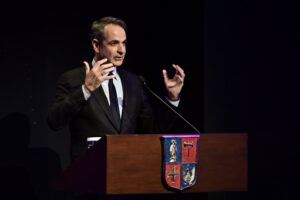
The direction taken by Prime Minister Kyriakos Mitsotakis in his speech on the occasion of Athens College’s 100th anniversary was anything but expected. In what was, in any case, a notably brief address, Mitsotakis chose to minimize the element of nostalgia as much as possible, despite being himself an alumnus of the College.
Perhaps surprising those expecting a conventional greeting, and focusing instead on the vital need to modernize the institution, the Prime Minister spoke about Artificial Intelligence, merit-based allocation of scholarships, inclusion, and even mental health.
He avoided the more or less customary praise of individuals and traditions of the school, opting instead to do something entirely unusual for the standards of a celebratory event: to exercise criticism—indeed a rather sharp one, for those able to tune into the essence of the speech he delivered on the evening of Monday, May 4, in the auditorium of Athens College.
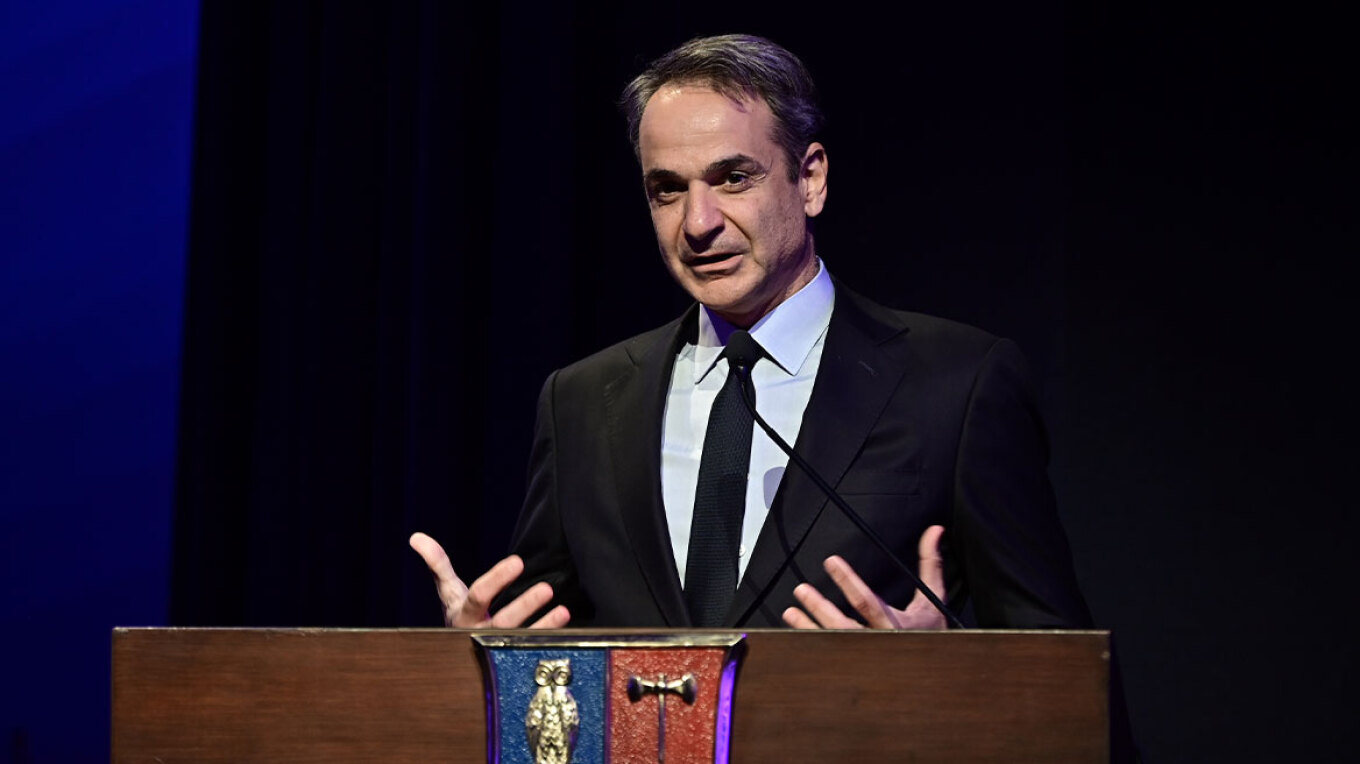
And the essence of his remarks was, behind the criticism, a deep interest—one might even say concern—for the future of this particular educational institution, as expressed by a former student who clearly cares about his school.
Drawing on a reference from 1929 by Eleftherios Venizelos on innovation as a springboard for developing his own positions, the Prime Minister outlined the major challenges the College faces in the 21st century across four axes, as follows:
- Artificial Intelligence. “It is inconceivable for the College not to be at the forefront of this discussion,” Mitsotakis stressed. He added emphatically that “public schools are already engaging in partnerships with major AI companies. I would therefore truly like, in this discussion about how we integrate Artificial Intelligence into education, for the College to be genuinely on the front line.”
- Composition of the student body. “Let’s not kid ourselves; I think that in recent decades the College has, to some extent, lost the social diversity it certainly had in our time, and I believe the time has come to regain it,” Mitsotakis underlined, reminding the administration of the importance of including students from less privileged socio-economic backgrounds, based solely on their willingness to learn and their performance.
- The College’s financial capacity. In connection with the above, Mitsotakis referred to the creation of an endowment that would allow any student capable of gaining admission to the College through meritocratic exams—but whose family cannot afford the tuition—to have those fees covered by the school’s endowment as a scholarship. In fact, the Prime Minister used the English term “need-blind admission.”
On this occasion, he also made a subtle yet clear remark aimed at hesitant donors of the College, noting characteristically that “I am sure there are many among us who would have the willingness—I dare say also the obligation—to contribute, not only to individual projects—and many have been done and I want to thank all the school’s donors—but also to a collective College goal, which can be none other than a very strong endowment.”
- Inclusion. For Mitsotakis, Athens College must recognize diversity, show respect, and not shy away from major issues and challenges such as mental health. “The emphasis on the mental health of our children,” the Prime Minister observed, “with all the tools we can provide them so that they become well-rounded and happy individuals and creative citizens, I believe must be a priority for the school for the next 100 years—or for the next 10 years, because we won’t be here at the 200th anniversary of the College, but the College certainly will be.”
Concluding his speech, Kyriakos Mitsotakis somewhat cryptically wished for Athens College “to continue on this innovative path and, above all, not to be afraid to change. As times change, so must things that relate to the governance of the school. And through a spirit of healthy cooperation, I believe solutions can be found. You know very well that whatever does not change, declines. And we do not want the College to decline.”
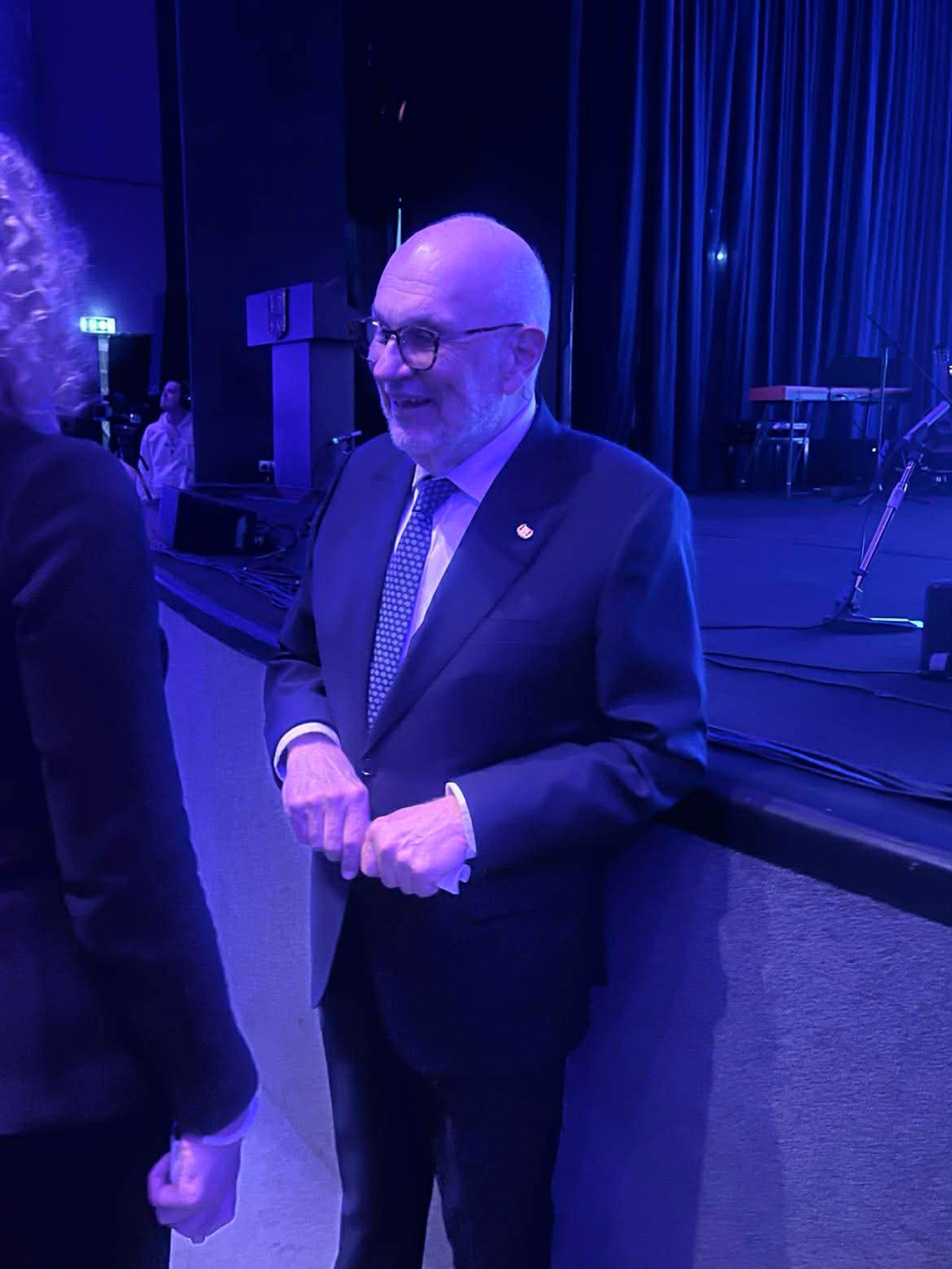
The historical journey of Athens College
Kyriakos Mitsotakis graduated in the class of 1986, while literally dozens of former students of Athens College have distinguished themselves in politics, served as ministers, or even as prime ministers. Consequently, a part of Greek history—political and beyond—one might say even the country’s national trajectory, is nourished by and closely connected to Athens College. It is one of the oldest and, objectively, the most renowned and emblematic private schools in Greece, marking 100 years since its founding in 2025.
Dozens of personalities
The history of Greece, from the interwar period to the present day, as well as the distinct history of Athens College, are composed of hundreds of smaller personal stories—the lives and careers of individuals who excelled—or at the very least stood out—shaped Greek society and left a certain historical imprint across various fields of public life, from politics and business to science and the arts.
Among its alumni are figures such as Spyros Latsis, a banker and businessman of global stature, as well as Dimitris Papaioannou, one of the most creative and groundbreaking artistic minds Greece has ever produced.
Also included are MIT professor and visionary of the digital world Michalis Dertouzos, Pavlos Alivisatos, professor of Nanotechnology at the University of California, Berkeley, academic Costas Synolakis, who also served as President of the College, architect Alexandros Samaras, the widely known and prolific historian Thanos Veremis, as well as the left-wing intellectual and former SYRIZA minister, professor Aristides Baltas.
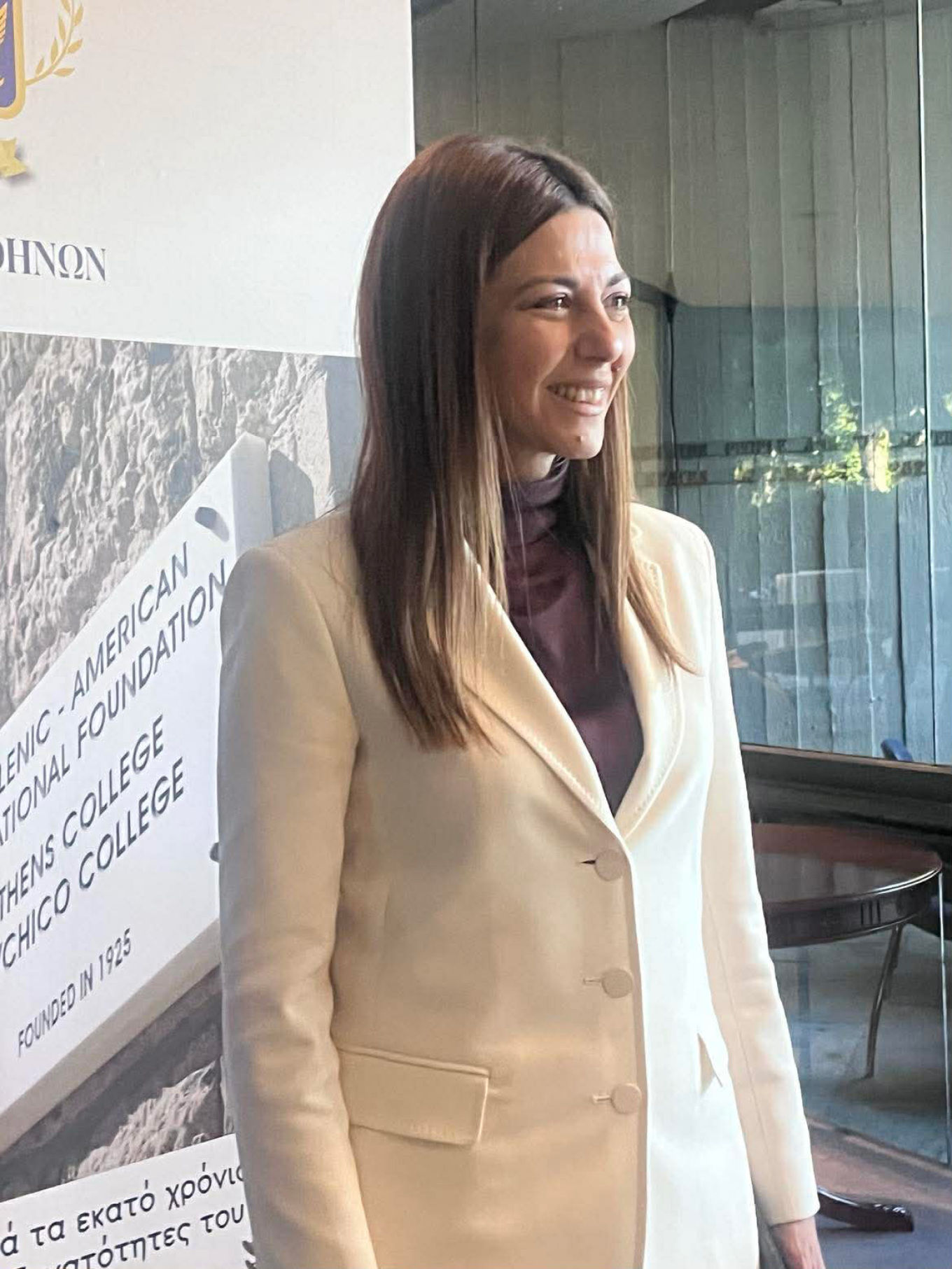
Shipowners Giorgos Prokopiou and Giorgos Economou, as well as actors Kostas Arzoglou and Konstantinos Markoulakis. The head of the Motor Oil Group and multi-time rally champion Giannis Vardinogiannis, along with several other members of his family. Journalist Alexis Papachelas and Savvas Theodoridis of Olympiacos.
Athens College: Mitsotakis’ “warning bells” for the future and the eventful history of the elite school
Niki Kerameus
The man of extreme adventure feats Nikos Todoulos and conductor Nikos Michalakakis. Giorgos Kaminis. Katerina Gagaki, the press representative of Archbishop Ieronymos, Haris Konidaris, Christos Chomenidis, among many, many others. In any case, the game of name-dropping is by definition lost in the shadow of Athens College, since it is a given that any attempt at a complete inventory of VIP alumni, occasional students, etc., will always leave most out.
Nevertheless, even for Athens College itself, which systematically and proudly showcases its distinguished alumni as an unbeatable advantage over competing private schools of the informal “Greek Ivy League,” some students will always cause a degree of awkwardness.
Athens College: Mitsotakis’ “warning bells” for the future and the eventful history of the elite school
Olga Kefalogianni, Stavros Papastavrou
The black sheep and the PASOK threat
Miltiadis Evert, for instance, was one of the difficult cases, uncomfortable for the narrative of excellence associated with the College. He did come from a powerful and well-known family, but he himself—of blessed memory—was proverbially a poor student, especially in theoretical/literary subjects.
However, when much later in life he returned in glory to the College to give a lecture as a minister and future leader of New Democracy, he had every right to share with the assembled students of his old school the thought that “being a good student is not necessarily a one-way street to success in life.
For example, I always had top marks in Mathematics, but not good grades in the rest. Ancient Greek, Modern Greek, etc., I never liked. In the entrance exams for the Evelpidon military academy, the school I wanted to get into, I failed in the essay. Nevertheless, as you can see, I didn’t do too badly in the end.”
Athens College: Mitsotakis’ “warning bells” for the future and the eventful history of the elite school
Zoi Rapti
Similarly, Andreas Papandreou, whose blood was already boiling from his teenage years, managed in 1936 to be expelled from Athens College.
The reason for his expulsion was the fiery Marxist articles he signed in “Xekinima,” an improvised political critique publication that Andreas put out together with some equally hot-headed and restless classmates. And as a kind of family tradition, George Papandreou was also forced to interrupt his studies at Athens College—abruptly and violently.
Having witnessed firsthand the arrest of Andreas on the orders of the coup leaders of April 21, 1967, the until-then quiet and introverted George A. Papandreou, at just 15 years old, began flirting with what was strictly forbidden under the emerging dictatorship: resistance.
Athens College: Mitsotakis’ “warning bells” for the future and the eventful history of the elite school
Niki Kerameus, Dimitris Kairidis, Domna Michailidou
So when this shy “College kid,” grandson of former Prime Minister Georgios and son of the “dangerous for the regime” Andreas Papandreou, attempted to paint on the outer wall of Arsakeio, not far from the College, the anti-dictatorship slogan “Democracy will prevail,” he too was arrested.
It is said that he was beaten by police before being returned home. In any case, his mother, Margarita Papandreou, rushed to smuggle him out to the United States. However, the Papandreou family’s relationship with Athens College includes other episodes as well, clearly beyond the attendance of other members of the dynasty, such as the writer and current PASOK MEP Nikos Papandreou, the children of G.A.P., and others.
From a completely different perspective, during the first phase of PASOK’s governance of the country, in the period 1983–1984, the powerful and established Athens College came very close to bankruptcy and disappearance.
The school went through the most serious financial crisis in its history, which at first glance was due to the accumulation of deficits and debts, but at its core the hardship was the result of a suffocating, restrictive—openly hostile—policy toward the College by the government of Andreas Papandreou.
A private school with this profile was a thorn in the side of the inflamed socialists and the anti-American hysteria orchestrated by PASOK at the time. The College’s administration was denied the right to raise tuition fees in line with inflation, leaving spending cuts and fundraising as the only means to prevent the school from suffocating financially.
Thus, an urgent donation drive was organized, a campaign under the dramatic slogan “Save Our School – SOS.” The response was immediate and substantial, as parents of students, along with alumni and many affluent Greeks outside the school community, created the much-needed lifeline for Athens College.
Indicative of the determination shown by some to keep the school alive at all costs was the gesture of shipowner Captain Giannis Latsis, who personally covered the College’s debts to the National Bank of Greece.
Athens College: Mitsotakis’ “warning bells” for the future and the eventful history of the elite school
Giorgos Babiniotis
Prejudices and myths
In connection with PASOK’s campaign against the College, one could mention the rumor that, beyond financial pressure, certain government officials had embarked on a plan to undermine the school.
According to this scenario—which was never substantiated or disproven—students’ exam papers in the national university entrance exams were deliberately sent to working-class areas, for example Keratsini, with top-down instructions to graders to apply maximum strictness in their evaluation. Supposedly, this explains the sudden drop in the school’s success rates in the early 1980s, whereas previously—and after PASOK’s period in power—Athens College candidates were admitted to universities at overwhelming rates, generally above 95%.
Sheep, white and otherwise
The entrenched stereotype that Athens College is inherently and rigidly a conservative school, with a corresponding political orientation, producing successive generations of bourgeois citizens and politicians, was shaken by the ideological choices of Chrysanthos Lazaridis.
The future politician and State MP with New Democracy in the 2012 elections, in the early 1970s—when the dictatorship seemed omnipotent, capable of detecting and crushing any trace of resistance at birth—was a leading figure in a very small group of alumni who identified as left-wing, indeed ready for dynamic action aimed at overthrowing the colonels’ junta.
Thus, regardless of his later choices, the young Lazaridis followed the solitary path of a radical leftist rebel, playing with fire in every sense, as the only former “College kid” involved in guiding the Polytechnic uprising of 1973 as a member of the EFEE coordinating committee.
But the occasional “black sheep” of the College were not only those who strayed from the dominant current of political conservatism—even though Athens College itself has consistently, systematically, and officially distanced itself from any hint of ideological guidance of its students in any direction. The College declares itself entirely and persistently apolitical.
Nevertheless, at the level of teenage subculture, many of its students have made earnest efforts to debunk the myth that they are “soft,” “spoiled rich kids” compared to students of other private or public schools.
Hence, sometime around 1986–1987, someone had the idea of bringing a flock of sheep onto the grounds of the College in Psychiko for grazing—although the hidden symbolism of this “installation” was never fully decoded.
Watch the event at Athens College:
The Century of Athens College
In October 1925, Athens College began with very few students—just 30 in total, barely more than the average size of a single class today. Today, the student body exceeds 2,000, while the teaching staff numbers more than 250 educators across various specialties.
The school’s facilities include the historic building complex along with newer additions and expansions in Psychiko, more modern campuses in Kantza, as well as a kindergarten.
What is now a vast institution started in 1925 as the innovative “Athens College,” bearing the clarifying subtitle “Hellenic-American School.” It was a newly founded and idealistic educational initiative, firmly oriented toward liberalism and a bourgeois vision of humanistic education.
However, the importance of the endeavor could not be underestimated or ignored by society at the time, given that its founders and benefactors were figures of enormous economic and intellectual stature: Emmanouil Benakis, one of the greatest national benefactors in Greek history, and Stefanos Delta, husband of Benakis’s daughter, the writer Penelope Delta.
Delta was a distinguished banker and intellectual, also known for extensive philanthropic activity. Alongside them was a group of American philhellenes who were deeply committed to creating a hub for a comprehensive Greek-American education—a model school, essentially a true “college” in Athens.
In the words of Stefanos Delta, the founders envisioned “a school that would produce citizens with patriotism and humanity, honest characters, physically and intellectually equipped for the struggles of life… above all with the will to learn more and the method to acquire knowledge from both life and study.”
Class, Image, and Identity
Anyone who has attended an Athens College graduation ceremony cannot help but feel awe. The procession of students lasts for hours, seemingly endless. The same goes for the distinctions awarded to graduates across a wide range of academic fields, as well as in rhetoric, the arts, athletics, and more.
For nearly a century—with the exception of extraordinary periods such as 1940–45, when the school was turned into a military hospital and later occupied by German forces—the administration has proudly announced the achievements of its top students: their admission to prestigious universities in Greece and abroad, and their high rankings in entrance exams.
At these ceremonies, teenage graduates eagerly “try on” their new identities, wearing formal attire—designer dresses, high heels, suits, and ties. Thousands of guests attend, many arriving at the traditional Psychiko campus with personal security details.
Some are former students who now hold prominent positions in politics or business; others are there to witness a major milestone in their children’s lives—their graduation from high school. Often, both roles overlap, as Athens College maintains a strong internal network, encouraging lifelong affiliation through enrollment advantages, tuition discounts, and more.
Complete detachment from the school is rare. Those who pass through its halls become part of a distinct micro-society, with its own codes of recognition, communication, and even solidarity—a kind of brotherhood, with both its strengths and its drawbacks.
Elite Status and Criticism
Athens College has always been defined, in part, by its reputation. As a private institution with high tuition fees (around €12,000–13,000 per student annually), it remains financially inaccessible to most Greeks. Admission is selective, with multiple “filters” in place.
There is, however, a scholarship system—the oldest in Greece—which allows many underprivileged but capable students to attend based on academic and social criteria.
Still, the school is often criticized as an elite institution that reinforces class structures—a “showcase school” for the aristocracy, or even a closed, snobbish club that reproduces the country’s ruling class.
Yet this interpretation is overly simplistic. While Athens College undeniably emphasizes excellence and maintains a degree of elitism, it is also shaped by internal contradictions and complexities—like any living community.
Perhaps one of the most insightful descriptions comes from film director Grigoris Rentis, a graduate of 2002:
“Athens College is a place you come to appreciate over time because, in a subtle and peculiar way, it manages—beyond education—to instill culture in you.”
Ask me anything
Explore related questions




