





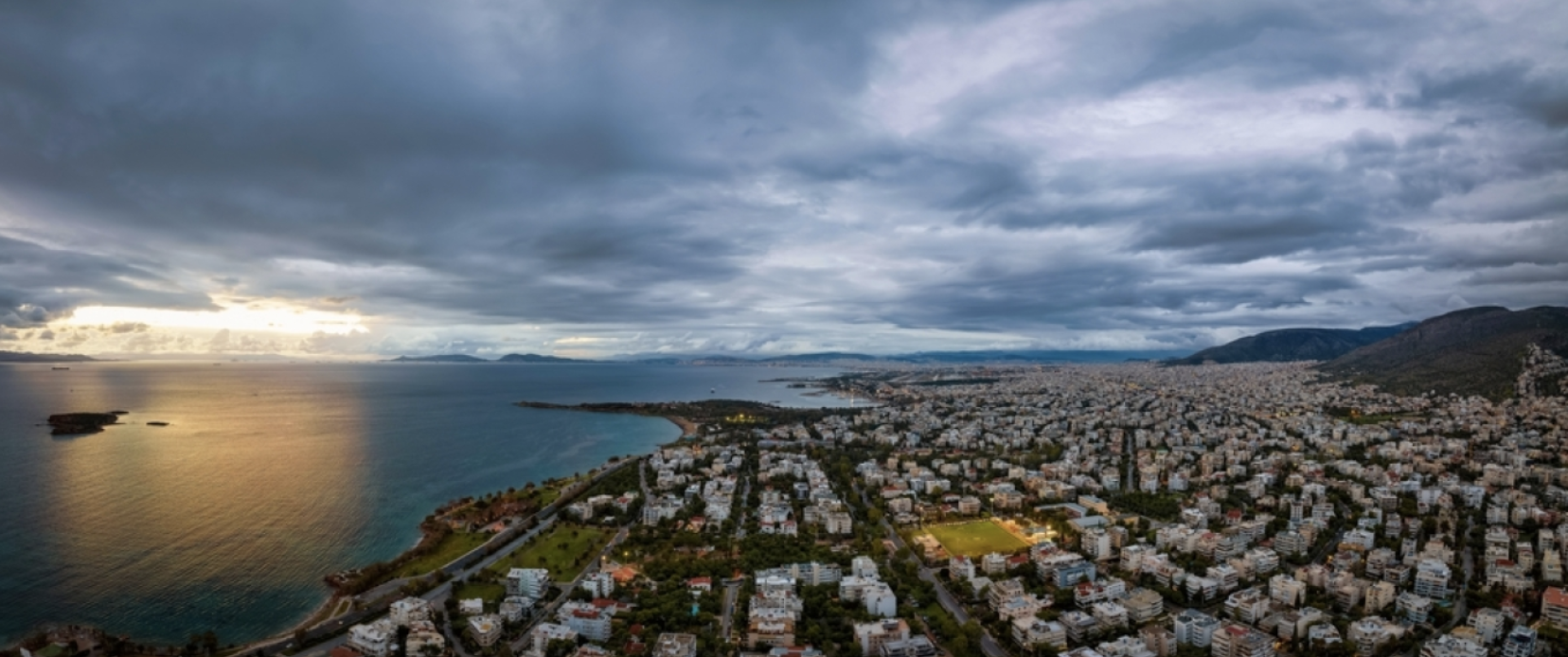
The intense and unusual odor that covered large parts of Athens’ southern suburbs for several hours yesterday mobilized government services, technical agencies, and civil protection mechanisms, causing concern among residents and triggering an operational alert among the authorities.
From coastal areas to densely populated neighborhoods across the Attica basin, reports from citizens were constant, with dozens of calls made to emergency services and critical infrastructure management companies. Despite hours of investigations, the source of the odor remained unclear late into the evening, leaving open questions about what exactly caused the phenomenon.
Inspections of energy infrastructure and gas networks
The initial focus of the investigation fell on energy facilities, as the nature of the smell initially raised fears of a possible natural gas leak or fuel-related byproducts.
At the center of the investigation were DESFA’s facilities. The company firmly denied scenarios linking the odor to its installations in Revythousa, noting that inspections revealed no sign of any incident.
At the same time, ENAON EDA, the manager of Attica’s natural gas distribution network, deployed technical crews that carried out on-site and preventive inspections in areas where the highest number of reports had been recorded. Highly sensitive leak-detection vehicles were also used, but no indication of damage or technical malfunction was found.
As Enaon EDA announced Wednesday morning:
“Following the calls received yesterday by the Emergency Response Center regarding an odor in the atmosphere in areas of Attica, the inspection process was completed yesterday at 22:30, and no natural gas leak was detected, nor was there any finding related to the distribution network.”
Initial technical assessments leaned more toward the possibility that the odor was related to hydrocarbons, LPG, or some petroleum compound rather than a typical natural gas leak.
For this reason, investigations expanded to other energy facilities connected to fuel and storage infrastructure. Refineries also came under scrutiny, but they too denied any possible connection to the incident, as no indication of a leak or technical malfunction was found in their facilities in the Thriasio Plain.
Despite repeated cross-checking of data, none of the main energy-related scenarios were confirmed.
Port facilities, marine transport, and Psyttaleia under investigation
The geographic spread of the phenomenon and the strong presence of the odor in coastal zones also led authorities to investigate possible marine pollution scenarios.
Authorities examined whether passing ships transporting gas or other cargo in the Saronic Gulf shipping corridor could be involved, but no incident reports emerged from port authorities.
At the same time, environmental management facilities also came under scrutiny.
Particular attention was given to the Psyttaleia Wastewater Treatment Center, one of the country’s largest urban waste management systems, as some theories linked the intense smell to possible emissions or operational issues from the plant.
However, sources from EYDAP, which operates the facilities, categorically ruled out any connection between the incident and the Psyttaleia installations.
As a result, neither the energy nor environmental infrastructure that was inspected provided a clear trace of the source of the phenomenon.
Unanswered questions and scientific investigation
Despite the large-scale mobilization and repeated cross-checking of evidence, the main difficulty for authorities was that possible scenarios were continuously being ruled out without any documented explanation emerging.
As reports from citizens began to decline in the afternoon, crews remained on alert, while the investigation also moved into the scientific field.
Specialists were tasked with examining the chemical composition of the odor to determine whether it involved volatile organic compounds, hydrocarbon residues, or another form of atmospheric contamination.
Until reliable conclusions are reached, the case remains open.
What is certain is that authorities placed critical infrastructure under close examination — including DESFA, Enaon EDA, refineries, Psyttaleia, EYDAP, and marine transport operations in the Saronic Gulf — yet so far, the source of the mysterious odor that unsettled Athens’ southern suburbs has not been identified.
Ask me anything
Explore related questions




