





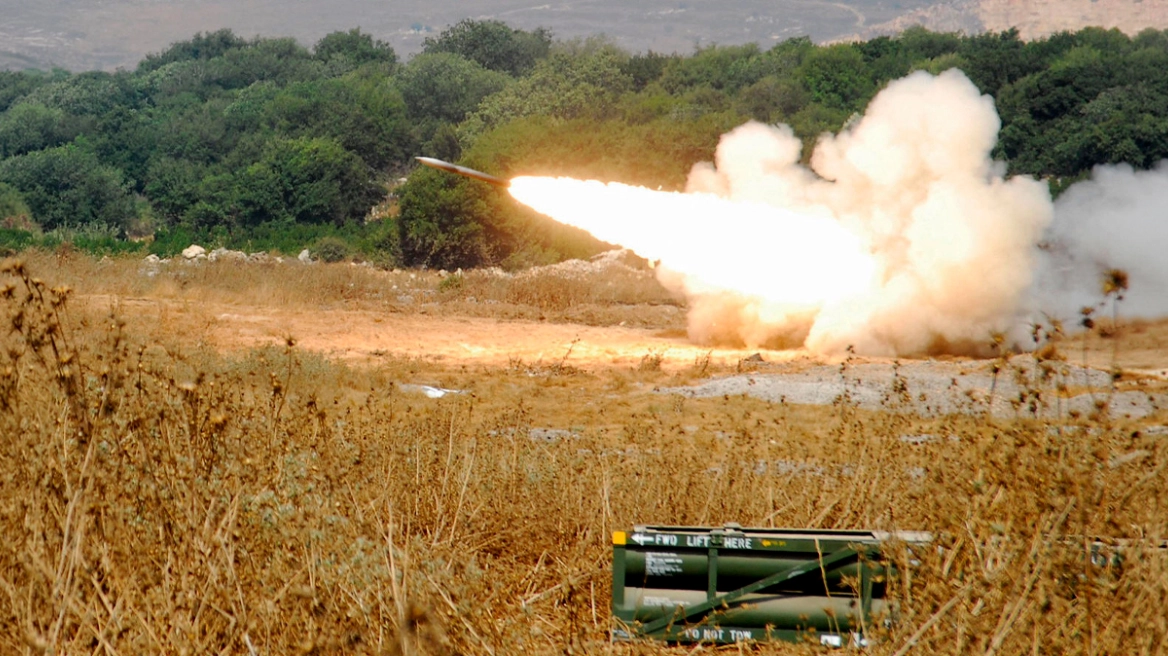
Iran’s armed forces announced today that they had targeted U.S. bases in the Gulf in retaliation for American airstrikes against targets in southern Iran along the coast of the Strait of Hormuz. The developments mark a new escalation in the region following the crash of a U.S. helicopter, for which responsibility was attributed to Tehran.
U.S. President Donald Trump had stated yesterday morning that Washington was close to reaching a “very good agreement” to end the war that erupted on February 28 with the U.S.-Israeli attack on Iran, even suggesting a timeline of “two to three days.”
Any optimism faded later in the day when Trump announced that an AH-64 Apache helicopter had been shot down by Iranian forces and warned that an appropriate response would follow.
In the early hours today, Iran announced attacks against U.S. military bases in Bahrain and Jordan. Meanwhile, Kuwait’s armed forces reported that they were engaging “hostile aerial targets,” though they did not specify who they held responsible.
In Jordan, Iran’s Revolutionary Guards claimed that “four important targets were struck and destroyed,” including “groups of F-35 fighter aircraft at an air base and the U.S. military command center” in Azraq. Jordan’s armed forces, however, stated that they had intercepted five Iranian missiles and reported neither casualties nor damage.
In Bahrain, the elite Iranian force said its navy had carried out a drone attack against the U.S. Fifth Fleet, whose headquarters are located in Bahrain. Bahrain’s Interior Ministry announced that air-defense sirens had been activated.
The Revolutionary Guards said the operations were retaliation for U.S. attacks on Jask, Sirik, and Qeshm Island, which allegedly “damaged a telecommunications tower in Sirik and destroyed two water tanks in the city.” These areas lie along Iran’s southern coast near the Strait of Hormuz, which remains effectively closed.
Iranian media earlier reported multiple explosions near the strategically important strait, a vital route for global hydrocarbon trade.
Tehran Calls on Gulf States to Prevent U.S. Strikes
Tehran argued that Gulf countries have a “legal and moral responsibility” to stop U.S. attacks launched from their territory against Iran, justifying further Iranian operations against neighboring countries hosting American bases.
In a statement, Iran’s Foreign Ministry “once again emphasized the legal and moral responsibility of all countries in the region … to prevent the United States military and Israel from using their territory or facilities to plan, organize, carry out, or support hostile actions against Iran.”
The ministry warned that Iran “will not hesitate to exercise its inherent and legitimate right of self-defense,” specifically targeting bases and logistical facilities used in operations against Iran.
The U.S. Strikes
According to a statement posted on X by U.S. Central Command (CENTCOM), American forces “struck Iranian air-defense facilities, ground-control stations, and surveillance radar installations near the Strait of Hormuz.”
CENTCOM described the attacks as a “lawful self-defense” operation and a “proportionate” response to the downing of the Apache helicopter.
According to Trump, the attack helicopter had been flying over the Strait of Hormuz when it was shot down by Iran on Monday.
The renewed hostilities pushed oil prices higher, though not dramatically so far. U.S. benchmark West Texas Intermediate (WTI) crude rose 0.74% to $88.85 per barrel at around 05:30 Greek time.
The Agreement Will Have to Wait
Iranian Foreign Minister Abbas Araghchi appeared to downplay the helicopter incident.
“Foreign forces near our territory are constantly exposed to danger (…) the best solution is for them to leave,” he wrote on X, adding that “we prefer the language of diplomacy, but we speak other languages as well.”
Although a fragile ceasefire had taken effect on April 8, Iran and Israel exchanged new strikes on Sunday and Monday, resulting in three deaths—including two military personnel—and fifteen injuries in Iran, according to state television.
Trump demanded that both countries “cease fire immediately.” Reports suggest that the U.S. president wants to turn the page on a war that is highly unpopular in the United States as midterm elections approach during his second term.
Tehran was the first to announce the end of its operation against Israel. The Israeli side later confirmed the suspension of hostilities.
In Tyre
Tehran insists that any agreement reached with Washington to end the Middle East conflict must also include an end to hostilities in Lebanon, the other major front in the regional war, where Israel has been fighting Hezbollah since March 2. The U.S. government wants the Lebanese issue addressed separately at a later stage.
Tyre, in southern Lebanon, has been heavily bombarded by the Israeli military in recent days. At least eleven people were killed yesterday in strikes on the city and its suburbs, Lebanese authorities announced.
For the first time since the outbreak of the new war between Israel and the Iran-backed Shiite movement, the Christian district was included in an Israeli military warning urging residents to evacuate immediately, according to an AFP correspondent.
“The Christian district is now 99% empty,” Walid al-Tawil, a member of the municipal council, told AFP.
Hezbollah, for its part, claimed responsibility for new attacks against Israeli troops in southern Lebanon, particularly near Ras al-Naqoura on the border, as well as against northern Israel. The Israeli military said no soldiers or civilians were injured. It also claimed to have killed a man who opened fire on its troops after crossing the border from Lebanon near Kiryat Shmona.
Ask me anything
Explore related questions




