





Despite the fact that global peace continues to decline, some countries still serve as examples of stability and safety. According to the Global Peace Index 2026, the global situation worsened for the 12th consecutive year, with 99 countries recording worse performance compared to the previous year.
The index, compiled by the Institute for Economics & Peace, evaluates 163 countries based on 23 different criteria, including military expenditure, conflicts, crime rates, homicides, and citizens’ sense of safety.
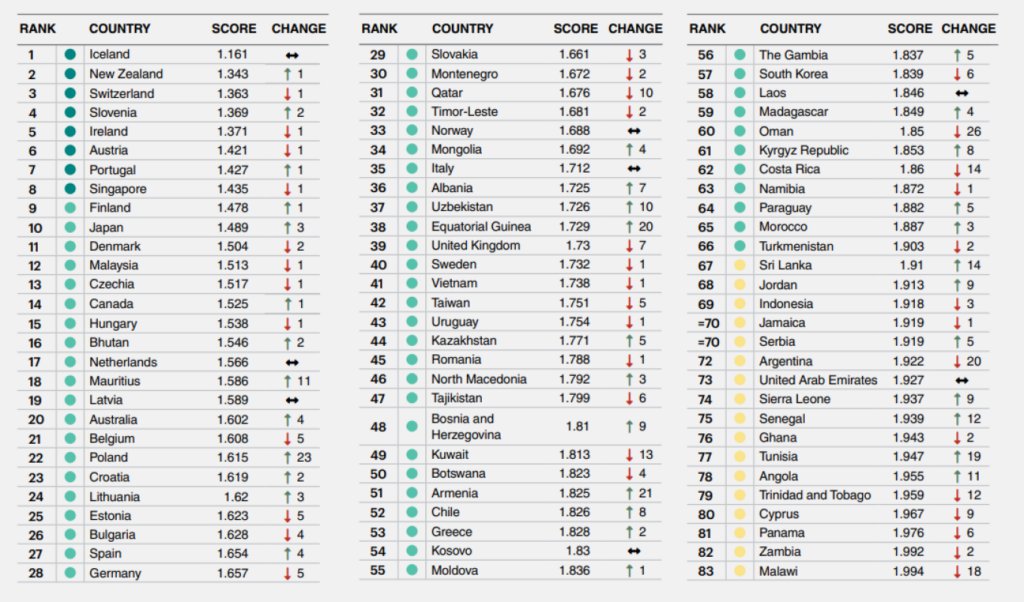
In this environment, Greece improved its position, ranking 53rd globally with a score of 1.828, moving up two places compared to the previous year.
As noted by the founder and executive chairman of the organization, Steve Killelea, although there was a significant global deterioration, the countries at the top of the ranking remained largely unaffected.
Countries that stand out for their safety usually combine low levels of violence, functioning institutions, high social trust, good relations with their neighbors, and a high quality of life.
Iceland remains at the top
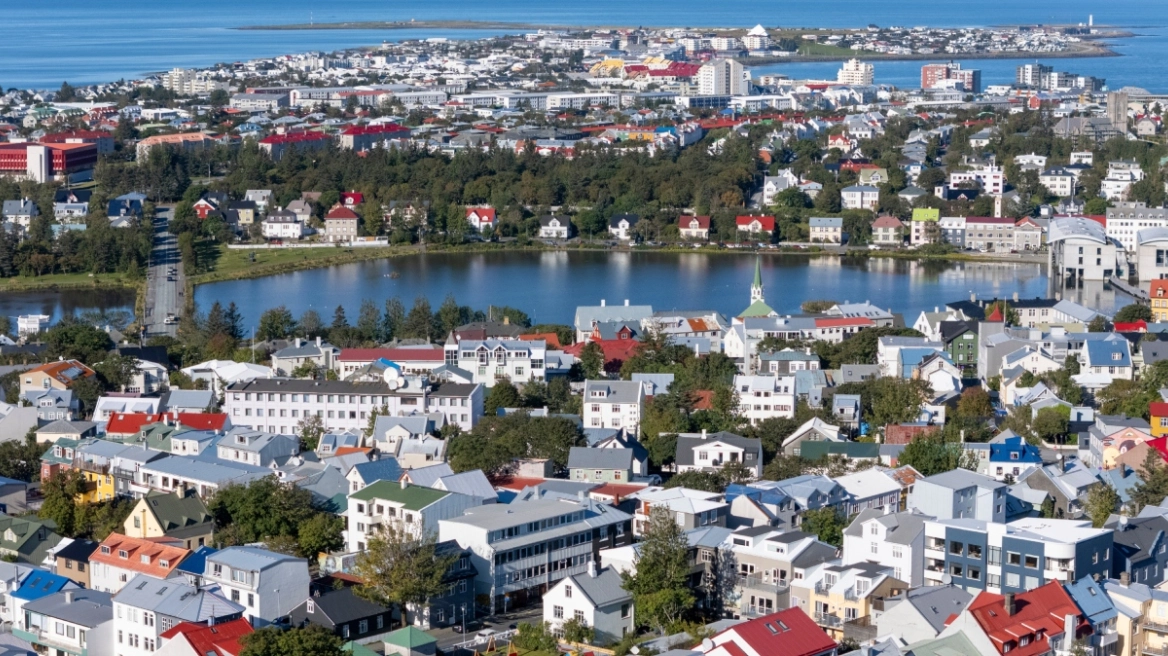
In first place for the 19th consecutive year is Iceland, which has held the title of the world’s safest country since 2008.
In 2026 it recorded a further 2% improvement, mainly due to a decrease in violent protests. At the same time, it continues to show extremely low levels of crime, limited militarization, and minimal social tensions.
Additionally, gun ownership is quite widespread, as the country consistently ranks among the highest globally in firearms per capita. About one in three Icelanders owns a legal firearm, with the total number of civilian guns exceeding 100,000 in a population of just 380,000.
Residents attribute this success to strong local communities, social cohesion, robust public services, and extensive use of renewable energy sources.
In second place is New Zealand, which moved up one position compared to last year and was named the safest country in the Asia–Pacific region.
Its geographic isolation is considered a major factor, keeping it away from many international geopolitical tensions. At the same time, citizens describe a society with a relaxed pace of life and high levels of trust among residents.
In third place is Switzerland, which rose from fifth place in 2025.
The country is known for low crime rates and its long-standing policy of diplomatic neutrality. Residents describe daily life as based on trust and rule-following.
A characteristic example of this culture of trust includes incidents where lost wallets and credit cards are returned to their owners without anything missing.
Slovenia and Ireland complete the top five
In fourth place is Slovenia, which entered the top five for the first time.
The country stands out for high safety levels and the close relationship of its residents with nature. Hiking, cycling, skiing, and outdoor activities are key parts of daily life, while work–life balance is considered especially important.
Completing the top five is Ireland, which scores highly due to low levels of violence and minimal involvement in international conflicts.
At the same time, Ireland’s traditional policy of neutrality in international military alliances contributes to maintaining a stable climate.
Although the world is becoming increasingly uncertain, these five countries continue to serve as examples of societies where safety, trust, stability, and quality of life remain at very high levels.
Ask me anything
Explore related questions




