





The insecurity generated by global developments is prompting the world’s billionaires to seek ways to keep both themselves and their assets safe. Now, according to the Daily Mail, those with almost half a million pounds (more than €580,000) can gain access in Switzerland to an underground vault located more than 100 meters beneath a mountain massif and designed to provide extremely high levels of security.
Specifically, Swiss company Brünig Mega Safe plans to create up to 25 underground caverns within the limestone Brünig massif, turning the inside of the mountain into a vast complex of secure spaces.
The vaults are intended for storing valuable works of art, classic cars, wine, safe-deposit boxes and other high-value assets. However, the company is also marketing them as spaces where people will be able to take refuge in the event of a major crisis or disaster.
The insecurity generated by global developments is prompting the world’s billionaires to seek ways to keep both themselves and their assets safe. Now, according to the Daily Mail, those with almost half a million pounds (more than €580,000) can gain access in Switzerland to an underground vault located more than 100 meters beneath a mountain massif and designed to provide extremely high levels of security.
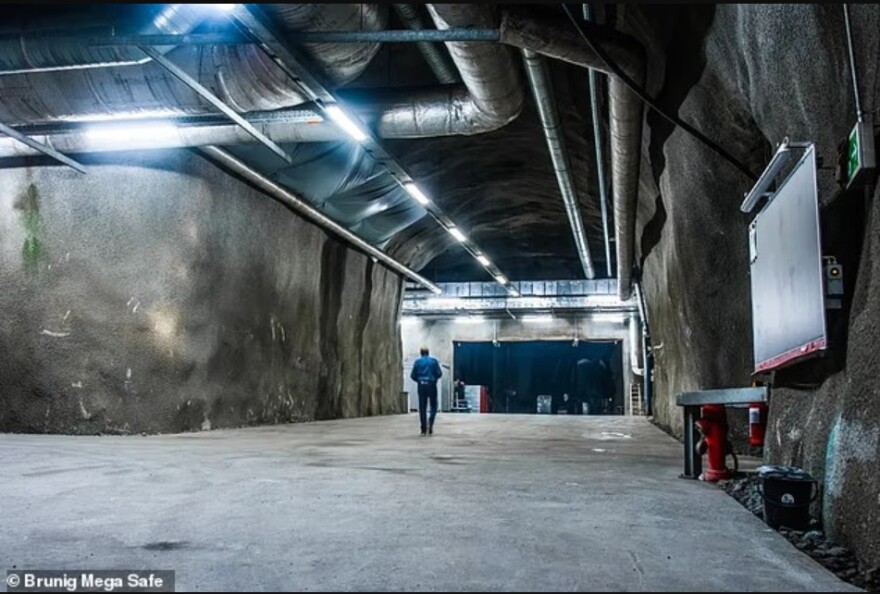
Specifically, Swiss company Brünig Mega Safe plans to create up to 25 underground caverns within the limestone Brünig massif, turning the inside of the mountain into a vast complex of secure spaces.
The vaults are intended for storing valuable works of art, classic cars, wine, safe-deposit boxes and other high-value assets. However, the company is also marketing them as spaces where people will be able to take refuge in the event of a major crisis or disaster.
According to Brünig Mega Safe, excavation work is expected to begin in January, while the security level of the facilities is intended to be “comparable to that of the Swiss National Bank”.
Multiple security checks before entry
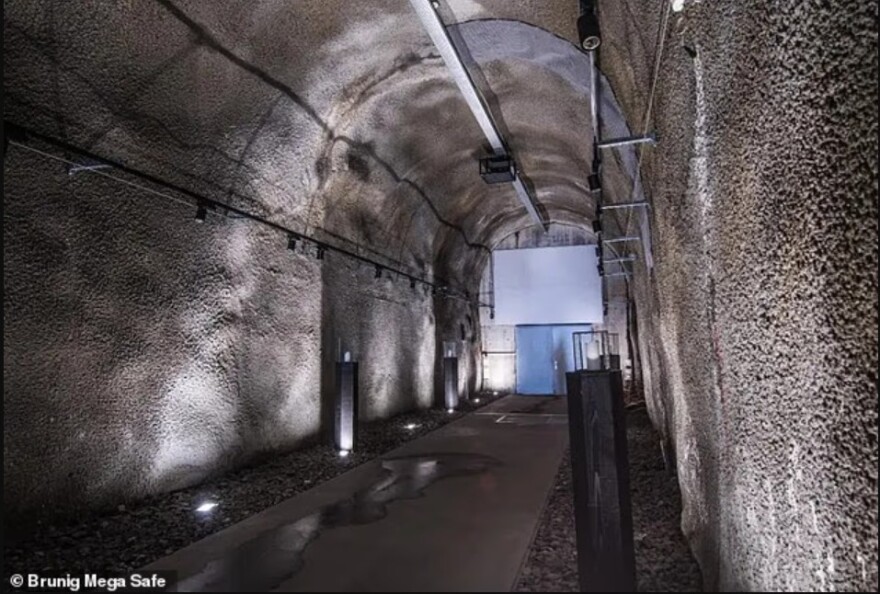
Access to the underground complex will be anything but straightforward. Thomas Gasser, chairman of Brünig Mega Safe, described the planned security measures, saying that even approaching the facilities would involve successive layers of security checks.
“First, you will have to drive through a special checkpoint and get out of your vehicle. There will then be several security checks, which obviously will not be disclosed to the public,” he said.
Customers will have 24-hour access to the facilities via a tunnel large enough to accommodate even lorries. According to the company, customers are already signing 99-year lease agreements, while the first vaults are expected to become operational from next year.
The company also says that the facilities will be guarded around the clock.
A constant temperature of 13°C inside the mountain
The great depth offers another advantage. The temperature inside the facilities is expected to remain naturally at around 13°C, a condition considered particularly suitable for storing wine and works of art.
The plan, however, is not limited to a giant underground safe.
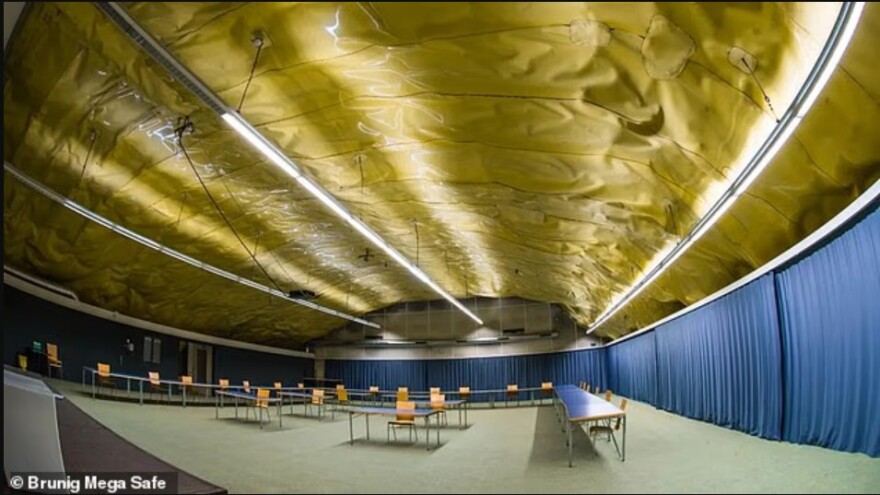
At a time of growing geopolitical uncertainty, tensions between states and concern over the consequences of climate change, the underground caverns are also being proposed as spaces for people to stay temporarily in the event of an emergency.
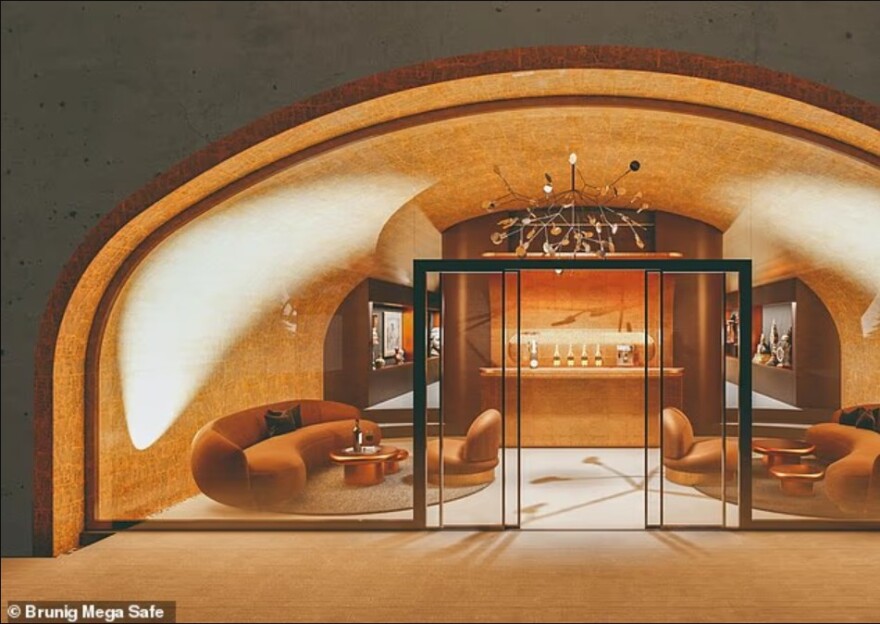
The company says that special room units can be added to the underground sections for situations in which more than simple protection of assets is required.
As it explains on its website, “private temporary isolation spaces, discreet meeting areas or lounges with a distinctive atmosphere” can be created.
A training center focusing on security, risk analysis and survival is also planned next to the underground facilities.
“People want to protect part of their wealth”
According to Thomas Gasser, demand for extremely high-security facilities is increasing year by year, as wealthy clients reconsider even which parts of the world can be regarded as truly safe.
“For a long time, Dubai was considered safe. Today, that sense of security is being called into question. People simply want to protect part of their wealth,” he said.
The choice of Switzerland is no coincidence. The country has a long tradition of making use of its mountainous terrain to create protected facilities. Over the years, many former military bunkers have been converted into vaults and even data centers.
In 2024, Switzerland launched a program to upgrade its nuclear shelters as part of preparations for the possibility of war.
Under a 1963 law, all residents of the country, including foreigners and refugees, are entitled to a place in a shelter capable of protecting them against nuclear, biological and chemical weapons, as well as against the impact of conventional weapons at close range.
Europe is investing in shelters again
The growing importance of shelters is not exclusively a Swiss phenomenon. In several European countries, preparations for the possibility of a major military crisis have returned strongly to the agenda, while some states have been investing in such infrastructure for decades.
Finland is a characteristic example. Beneath Helsinki, more than 5,500 protected spaces have been created within the underground rock formation, with a total capacity approaching one million people. This is a particularly impressive figure given that the population of the Finnish capital is around 675,000.
Finland has systematically built shelters since 1939, when the Soviet Union invaded the country, triggering the so-called Winter War. Since 1954, Finnish law has required shelters to be built beneath buildings exceeding 1,200 square meters.
From Finland’s public shelters to private vaults costing hundreds of thousands of pounds inside the Swiss mountains, underground facilities are once again taking on particular importance in Europe. In the case of Brünig, however, protection against a potential crisis comes with another feature: the luxury that the wealthiest can afford.
Ask me anything
Explore related questions




