





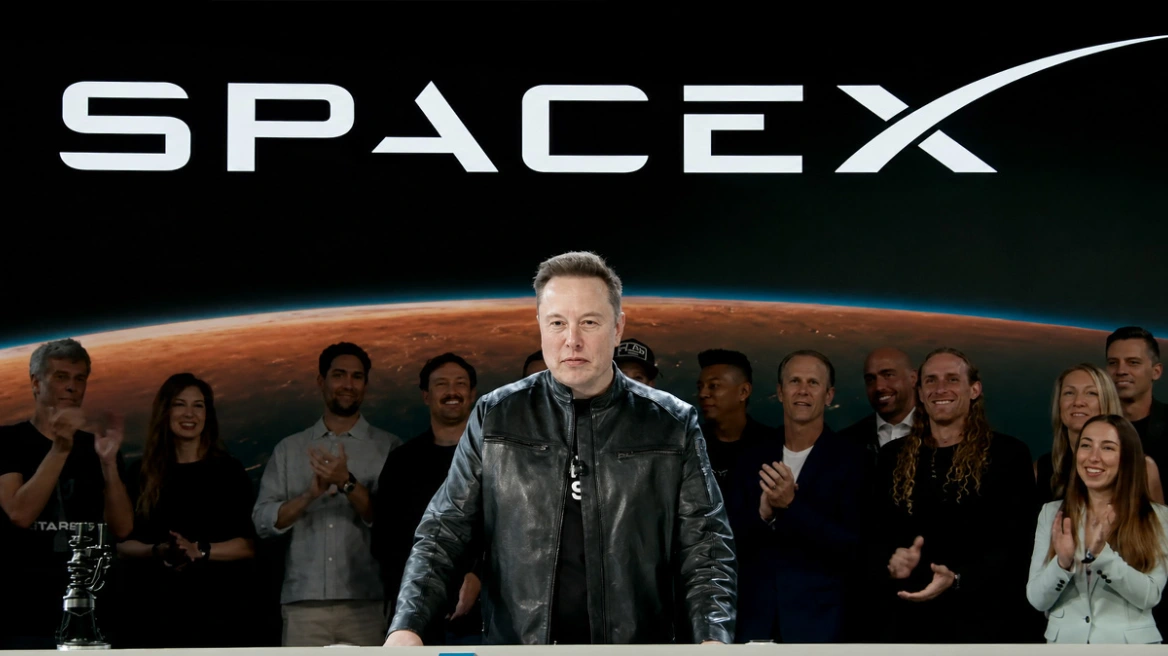
SpaceX shares posted strong gains in their Wall Street debut, pushing the company’s market capitalization above $2 trillion and making Elon Musk the first trillionaire on the planet.
SpaceX opened at $150 per share, climbed as high as $176.52 during trading, and closed at $161.11. Although the stock gave back some gains before the closing bell, it still finished 19.34% above its IPO target price of $135.
Analysts described the initial public offering (IPO) as a success, citing healthy gains, limited volatility, and record activity and demand from retail investors. SpaceX is now the sixth-largest publicly traded company in the United States.
Elon Musk and SpaceX President and Chief Operating Officer Gwynne Shotwell rang the opening bell on Friday, with Musk in Texas and Shotwell at the Nasdaq in New York. During the historic stock market debut of the aerospace company, Musk pledged to transport humans to Mars.
“SpaceX wants to be able to take you to the Moon, to Mars, and ultimately even farther, and I am convinced that together with the incredible team we have here at SpaceX, we will achieve it for you,” Musk said from the company’s headquarters in Starbase, Texas, moments before trading began on Wall Street.
Speaking from Starbase before the market opened, Musk said it was hard to believe that “a small company” had reached the point of going public through the largest IPO in history. In his characteristic style, he added that if someone had told him this would happen, he would have thought they were “smoking some really good crack,” because he had expected the company to fail.
“Given the initial demand for the shares, I think this was actually the likely outcome,” said Howard Chan, founder and CEO of Kurv Investment Management. Kurv Investment Management plans to launch an ETF with exposure to SpaceX in June.
The market’s performance was “in line with expectations,” said David Fetherstonhaugh, Executive Vice President of Investments at VistaShares.
According to people familiar with the process, major asset managers, Gulf sovereign wealth funds, hedge funds, and individual investors all sought allocations in the IPO. Orders from retail investors exceeded $100 billion, with a significant portion of shares allocated to individual investors.
SpaceX’s Nasdaq debut comes at a critical moment for Wall Street, as highly valued companies whose shares have surged over the past year have experienced significant volatility in recent days amid concerns that the market may be overheating.
For that reason, SpaceX’s performance in the coming trading sessions is being viewed as a key test of investor appetite for massive technology and artificial intelligence IPOs. The outcome will also be closely watched by other major industry players, as Anthropic, creator of Claude, and OpenAI, the company behind ChatGPT, are reportedly planning their own future public offerings.
SpaceX is thus transforming from a company that for years relied primarily on private funding and government contracts into one of the world’s largest publicly traded corporations, with activities ranging from rocket launches and the Starlink satellite internet network to broader ambitions in artificial intelligence. Its debut is more than just another stock market event; it is a test of whether Wall Street remains willing to pay extremely high valuations for companies that promise to shape the next technological era.
Ask me anything
Explore related questions




