





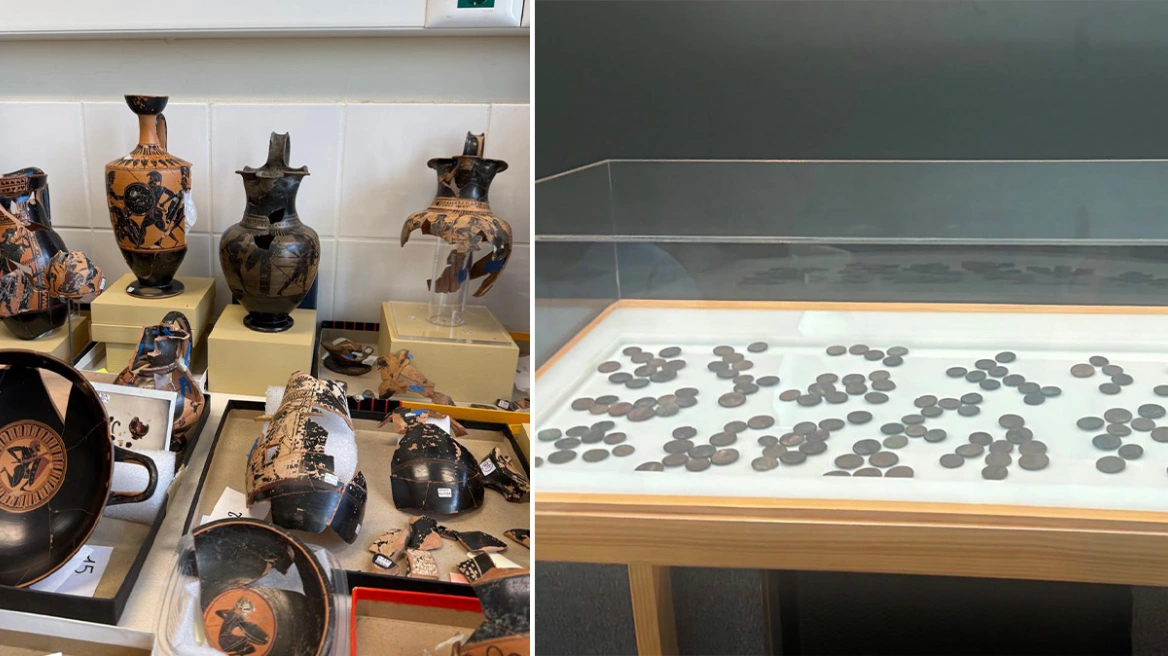
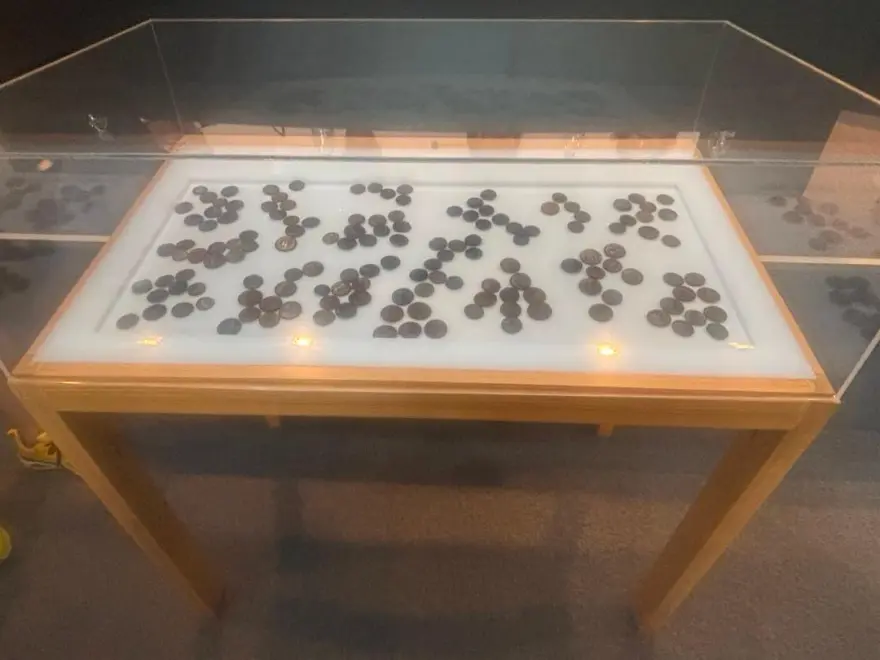
Italy has sent a strong twofold message in favour of the reunification of the Parthenon Sculptures by returning 145 ancient bronze coins to Greece, which had been transferred from Kos to Rhodes in 1930, and through its cooperation with Greece on the documentation and restoration of thousands of fragmented antiquities originating from illicit trafficking, which will be shared between the two countries.
“I recently reread a book by Christopher Hitchens advocating the return of the Parthenon Sculptures. I hope that today and Greek-Italian cooperation in the field of protecting archaeological heritage will serve as an example to our British friends. The return of cultural treasures to the place where they were created and to which they historically belong is not only an act of justice, but also a tangible recognition of the value of cultural heritage as a global public good,” Italian Culture Minister Alessandro Giuli said after the handover of the coin collection at the Archaeological Museum of Thessaloniki.
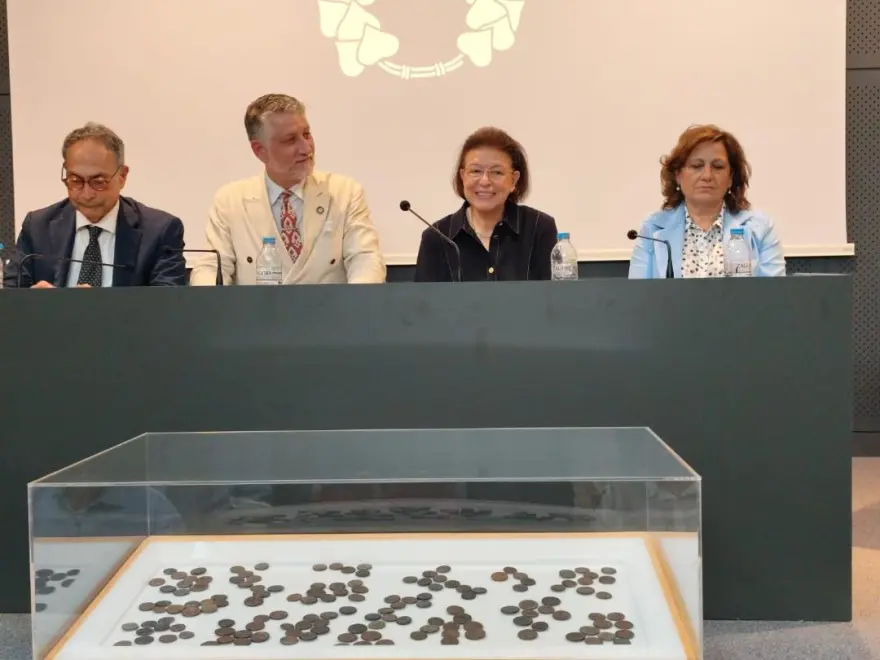
“This gesture confirms in the clearest possible way the power of cooperation and mutual respect. It goes beyond formal diplomacy and touches on the essence of our shared responsibility to protect cultural heritage. Today’s action by Italy is not merely an application of international law. It is an act of respect towards the history and culture of our countries and a powerful message that the integrity of cultural heritage is not negotiable, but is restored through acts of responsibility and cooperation,” Culture Minister Lina Mendoni stressed.
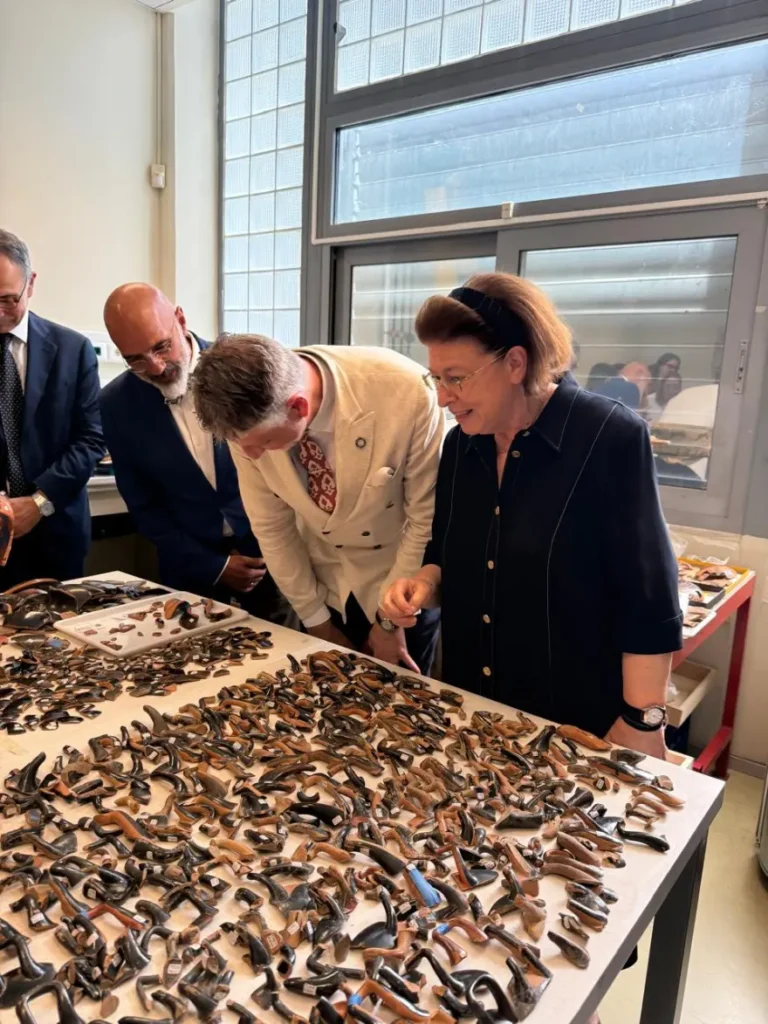
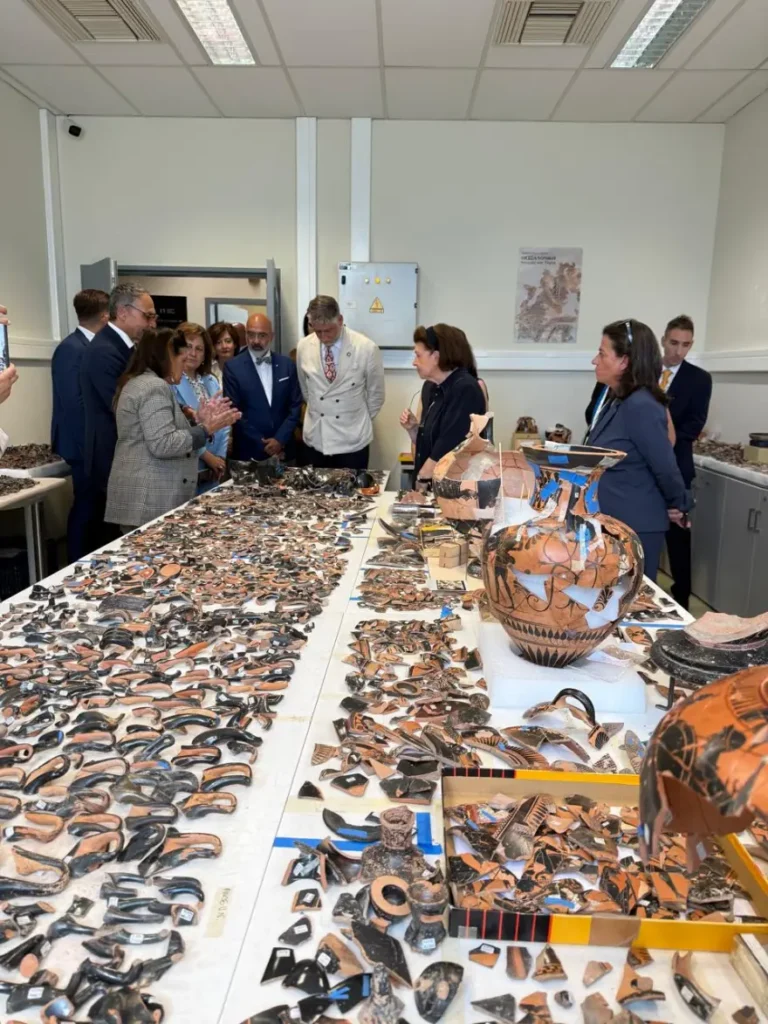
During a special event at the Archaeological Museum of Thessaloniki, the results of the Greek-Italian scientific collaboration on the study, documentation and restoration of fragmented antiquities linked to the high-profile Robin Symes case were also presented. The project is set to continue.
A collection of approximately 70,000 ceramic fragments is currently being classified, studied and reassembled by Greek and Italian specialists, with the aim of allocating an equal number of archaeological finds to each country.
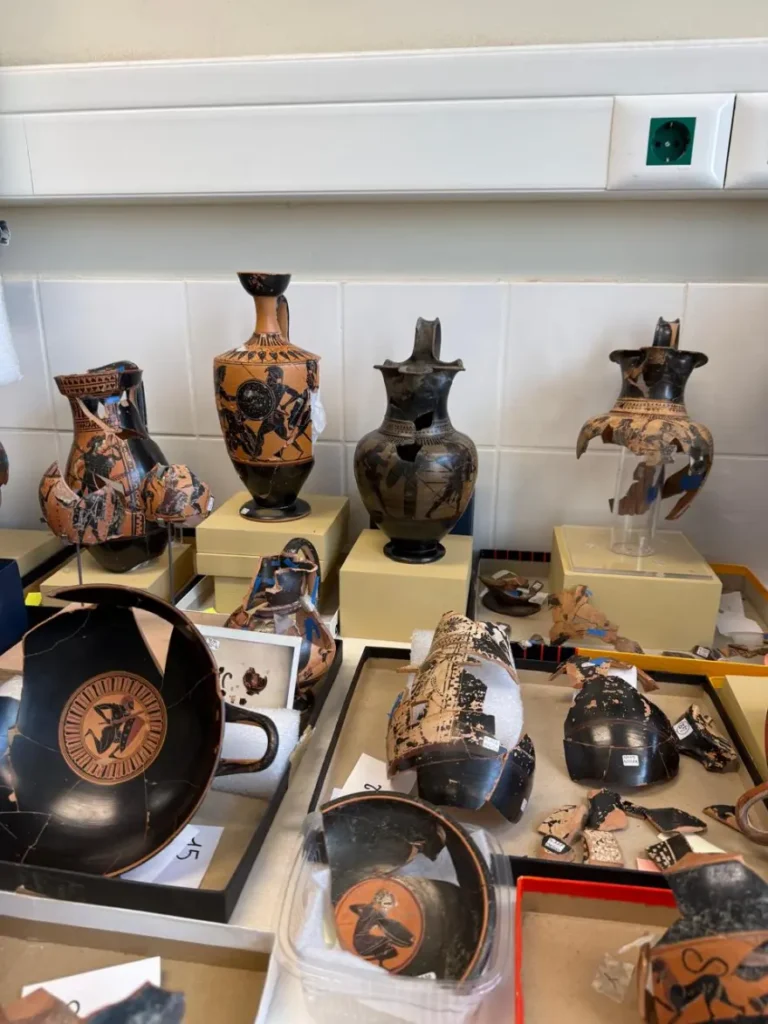
According to Lina Mendoni, 73 vessels have already been restored, many of which are of particular importance because of their quality, rarity, inscriptions and stylistic characteristics.
“Cooperation between Greece and Italy in the protection of cultural heritage is tangible proof that the shared historical responsibility of our two countries can be transformed into meaningful and effective action. The systematic documentation, conservation and restoration of antiquities originating from illegal excavations is not only a scientific undertaking of the highest calibre, but also an act of profound moral and institutional responsibility. Through the Memorandum of Understanding, we are putting into practice the principle of international cooperation between states that claim cultural assets of common or overlapping origin. We favour the consensual resolution of ownership issues over lengthy and uncertain legal disputes. We are creating a model for the interstate management of complex cases involving the illegal trafficking of cultural goods,” the Culture Minister said.
She added: “The continuation of the work of the Greek-Italian task force will undoubtedly, beyond restoring further antiquities and documenting the material, enhance our understanding of how these global organised crime networks operate against the heritage of humanity.”
For his part, his Italian counterpart agreed that “the work carried out by Italian and Greek experts is a practical example of the high scientific and cultural value that bilateral cooperation can produce” and that “the Memorandum of Understanding brought together outstanding expertise and professional excellence in pursuit of a common goal: to return to their communities of origin, through cooperation between friendly governments, what had been looted by transnational criminal networks.”
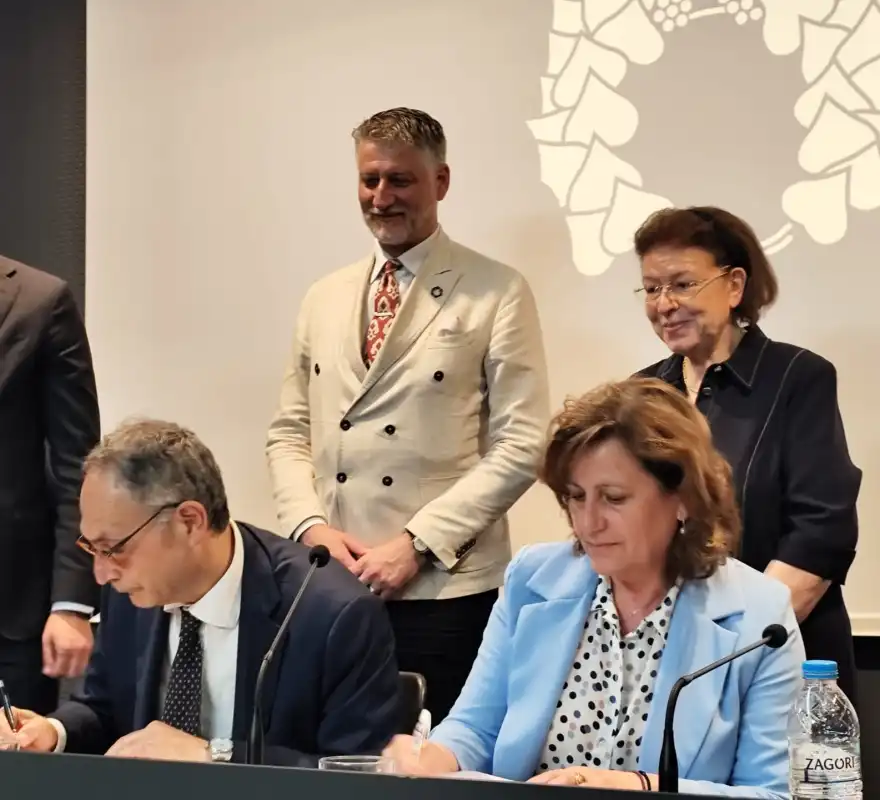
The Archaeological Museum of Thessaloniki also hosted the first official appearance of the new Secretary General of the Ministry of Culture, Olympia Vikatou, who took office only days ago following the resignation of Giorgos Didaskalou. Together with Luigi La Rocca, Head of the Cultural Heritage Department of the Italian Ministry of Culture, she signed the extension of the Memorandum of Understanding between the two countries until March 2027.
Ask me anything
Explore related questions




