





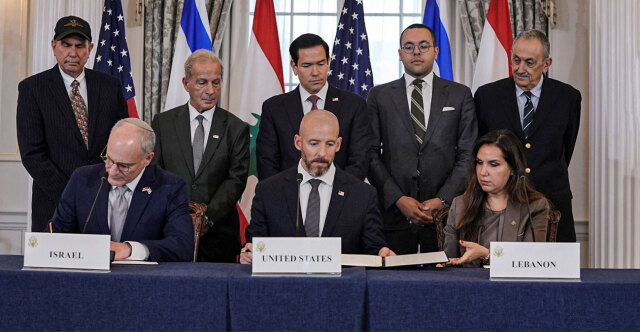
Following intensive negotiations, with US Secretary of State Marco Rubio personally joining the final phase of the talks, Israel, Lebanon and the United States signed a trilateral framework agreement on Friday.
“This is the beginning of the beginning,” Rubio said during the signing ceremony. “We have a lot of work ahead of us. Today is the first step. The first step is sometimes the hardest.”
Israel and Lebanon signed a U.S.-brokered framework agreement in Washington, marking the start of formal cooperation talks. pic.twitter.com/PkTa5UwspX
— Clash Report (@clashreport) June 26, 2026
The agreement follows five rounds of negotiations, including discussions over a US-backed proposal under which Israeli forces would hand over part of the territory they currently control to the Lebanese Army.
At the start of the talks, Lebanon had sought a full Israeli withdrawal from Lebanese territory. Israel, however, insisted that any withdrawal must be conditional on the complete disarmament of Hezbollah and guarantees that the group will not re-establish its military presence along the border.
Netanyahu: Israel’s Security Comes First
In a televised address shortly after the agreement was signed, Israeli Prime Minister Benjamin Netanyahu described the deal as a “significant achievement.”
Addressing the agreement’s provisions, Netanyahu said that Israel “will remain in the security zone in southern Lebanon. This is a major achievement, and we will maintain it for as long as Hezbollah remains armed and continues to pose a threat to the State of Israel.
“This is also a significant blow to Iran. Iran has sought to force us to withdraw from southern Lebanon through violence. In essence, Israel, Lebanon and the United States are telling them: this does not concern you. You have no role in Lebanon—not Iran, not Hezbollah, and not any terrorist organization.
“At the same time, we are allowing the Lebanese Army to begin organizing itself to take control of the area. We are creating two pilot zones, both at the recommendation of the Israel Defense Forces (IDF). One is entirely outside the security zone, south of the Litani River. The second is north of the Litani, with a small section extending into the expanded security zone established over the past two weeks—a zone that, according to the IDF, is no longer operationally necessary.
“We will always maintain the original security zone beyond artillery range. Hezbollah will not be allowed to enter it, nor will civilians be permitted to enter. That arrangement remains in place. And above all, Israel’s message is clear: Israel’s security comes first.”
Ask me anything
Explore related questions




