





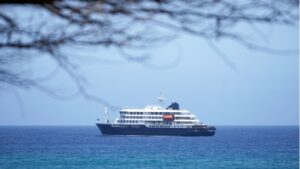
The World Health Organization has declared the end of the hantavirus outbreak linked to the cruise ship MV Hondius, after the last person connected to the case completed quarantine and tested negative.
“Today, the last person who had been in contact with someone exposed to hantavirus aboard the MV Hondius completed quarantine, tested negative and returned home,” WHO Director-General Tedros Adhanom Ghebreyesus said at a press conference in Geneva.
“No other cases have been recorded since May 25. Therefore, we are very pleased to announce that the WHO considers the hantavirus outbreak to be over,” he added.
The outbreak caused 13 confirmed or probable cases, including three deaths, and drew global attention because of the possibility of person-to-person transmission aboard a cruise ship. More than 650 close contacts were identified and monitored by health authorities across 33 countries and territories.
The WHO said it would continue working with partner governments to understand how the outbreak unfolded and how the virus spread.
“We are also coordinating an investigation involving 21 countries, with the aim of better understanding how the disease progresses,” Tedros said, adding that the findings could support the development of diagnostic tools, treatments and vaccines for future outbreaks.
Hantavirus infections are rare but potentially severe. Tens of thousands of cases are recorded worldwide each year, usually after direct exposure to infected animals, particularly rodents. What made the MV Hondius outbreak especially concerning was the strain involved: the Andes virus, the only hantavirus strain known to allow human-to-human transmission.
The Dutch-flagged MV Hondius departed from Ushuaia, Argentina, on April 1, bound for Cape Verde, with stops in the remote South Atlantic. After the outbreak was detected, the ship was diverted to Tenerife in the Canary Islands, where more than 120 passengers were disembarked on May 10.
The polar expedition vessel later docked in Rotterdam on May 18 with a reduced crew, who were required to remain in quarantine for several weeks.
Three deaths were linked to the outbreak. A Dutch passenger died aboard the ship in April, while his wife died later that month in South Africa after disembarking. A German woman also died in May. In the first case, a direct link to hantavirus could not be confirmed with certainty because no epidemiological investigation had been conducted at the time, but officials considered it likely in light of the outbreak that followed.
The source of the outbreak has not yet been identified. The Dutch passenger who died had spent 48 hours in Tierra del Fuego before boarding the ship and had previously travelled for several months in Argentina, with visits to Chile, where hantavirus is also present, and Uruguay.
Ask me anything
Explore related questions




