





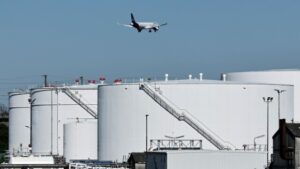
Europe has stepped up jet fuel imports from the United States and Asia, boosted refinery output and drawn on stockpiles to keep flights running, yet it remains the region most exposed to fresh supply shocks as renewed tension in the Middle East unsettles energy markets, according to Reuters.
Britain, France and Germany are considered particularly vulnerable, as decades of refinery closures have left the continent more dependent than most on Middle Eastern shipments routed through the Strait of Hormuz, the narrow waterway between Iran and Oman.
The strait, which normally carries around a fifth of the world’s seaborne oil and liquefied natural gas trade, partially reopened in June after a war triggered by US-Israeli airstrikes on Iran at the end of February. In July, however, the fragile truce has again come under strain amid strikes from both sides.
Deficit of nearly 600,000 barrels a day
Data from the energy consultancy Energy Aspects, dated 18 June, points to a European jet fuel deficit of close to 600,000 barrels a day in the third quarter of the year. By contrast, the United States is projected to run a surplus of 116,000 barrels a day, while the Asia-Pacific region is expected to post a surplus of 425,000 barrels a day.
European inventories stood at 38 million barrels in early June, against 99 million barrels in the United States. Reuters calculations show that European stocks cover fewer than 30 days of demand, the tightest margin among the world’s major jet fuel markets.
The latest figures from the International Energy Agency (IEA), the Paris-based body that monitors global energy security, show aviation fuel stocks were up 10% year on year at the end of May, while refinery output had risen by 30%. Even so, available reserves still amount to roughly a month’s consumption.
Janiv Shah, an analyst at the consultancy Rystad Energy, said the market should expect continued tightness through August at the current rate.
The European Commission has also flagged the risk of further strain. EU Energy Commissioner Dan Jorgensen said in June that the bloc faces tighter jet fuel stocks toward the end of the summer holiday season, and that Brussels would coordinate releases from national reserves should the need arise.
Ask me anything
Explore related questions




