





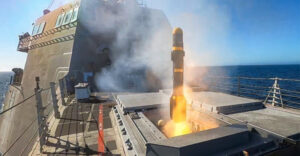
Tensions in the Persian Gulf have entered a new and particularly dangerous phase after the United States carried out the first forceful enforcement of its naval blockade against ships connected to Iranian trade, significantly raising the risk of military escalation and attacks on commercial shipping.
According to the latest assessment by EOS Risk Group, the threat level for all commercial vessels operating in the Persian Gulf and the Gulf of Oman has been upgraded to HIGH (4/5), meaning that an attack is now considered likely.
The threat level was raised following an incident on July 15, when US forces enforced blockade measures against the Curaçao-flagged tanker Belma.
U.S. Central Command (CENTCOM) forces have disabled the Curaçao-flagged tanker M/T Belma after the vessel ignored repeated warnings and continued toward Kharg Island, Iran's primary oil export terminal, in violation of the reimposed U.S. naval blockade.
— OSINTdefender (@sentdefender) July 15, 2026
According to CENTCOM, a… pic.twitter.com/M2EQpUPHxE
The vessel, which was sailing in ballast toward Kharg Island, Iran’s main crude oil export terminal, reportedly ignored repeated warnings from US forces to alter course.
According to a statement from US Central Command (CENTCOM), a US aircraft fired Hellfire missiles, striking the tanker’s funnel and disabling the vessel to prevent it from continuing into Iranian territorial waters.
CENTCOM also said that during the first 24 hours after the blockade was reinstated, two commercial ships complied with US instructions and changed course, while a third vessel was deemed non-compliant and rendered inoperable.
Fears of Iranian retaliation
EOS analysts noted that previous US enforcement actions of this kind have historically prompted responses from Tehran, including the seizure of commercial vessels and attacks on maritime traffic.
They therefore assess that the likelihood of Iranian retaliation has increased significantly, with potential targets including not only US interests but also commercial vessels transiting the region.
The most likely forms of attack include unmanned aerial vehicles (UAVs), missiles, and uncrewed surface vessels (USVs), all of which have been used repeatedly in previous security incidents in the area.
Recommendations for the shipping industry
Maritime security firms are urging commercial vessels to fully implement the Best Management Practices for Maritime Security (BMP-MS), minimize the number of crew members exposed on open decks, and maintain continuous vigilance using both visual watchkeeping and electronic surveillance systems.
They also recommend keeping firefighting equipment at full operational readiness, as potential missile or drone attacks could trigger fires or cause extensive damage.
All vessels operating in the Persian Gulf and the Gulf of Oman are also advised to remain registered with the UK Maritime Trade Operations (UKMTO) and NAVCENT NCAGS monitoring centers to receive timely operational updates and the latest security advisories.
The latest developments have heightened concerns that the US-Iran confrontation is entering a period of increased military tension, once again placing commercial shipping at the center of geopolitical risks.
Ask me anything
Explore related questions




