






For the 14th consecutive year, mathematician, education analyst, and career counselor Stratos Stratigakis has published his estimates for admission score thresholds for all university departments listed in Greece’s university application system (Michanografiko), aiming to provide candidates and their families with the most reliable picture possible of where admission scores are likely to settle following the completion of the application process.
As he emphasizes:
“Estimated admission scores are not the final admission scores. They are an effort to provide the most accurate possible answers to the concerns of candidates and their families.”
These estimates are based on available data and scientific analysis rather than certainty, since the final admission thresholds depend on several interacting factors that continue to evolve until the very end.
Why the estimates are published after applications close
Stratigakis explains that the guiding principle behind his work has always been to avoid influencing students’ choices.
“Our fundamental principle, which we followed again this year, is not to publish our estimates before candidates have completed their university applications, so that no one is influenced by our predictions and applicants remain focused on choosing the studies they truly want rather than chasing admission scores.”
This approach is particularly important in the age of social media, where early or unsupported predictions can create unnecessary anxiety and encourage students to focus on expected score thresholds instead of academic interests and career goals.
Education experts consistently stress that university applications should be based on genuine preferences, professional aspirations, and each department’s prospects—not on speculative admission forecasts, which ultimately reflect the collective choices of all applicants.
The four factors that determine admission thresholds
According to Stratigakis, admission scores are shaped by four main factors:
- The number of available university places.
- Candidates’ exam performance.
- Each department’s Minimum Admission Requirement (EVE).
- Applicants’ university preferences, as expressed in their submitted applications.
Each of these factors can significantly influence the final outcome.
Number of available places remains largely unchanged
The number of university places has remained relatively stable in recent years across most departments, limiting its overall impact on admission scores.
This year, however, military academies are an exception, as changes in the scientific fields through which applicants may apply have altered the competitive landscape.
Shared departments create greater uncertainty
One of the biggest challenges this year is the growing number of departments that accept applicants from multiple scientific fields.
As Stratigakis notes:
“The continuous increase in departments accessible from more than one scientific field complicates our estimates. This year, for example, military academies were added to additional scientific fields beyond the second field, where they had been for decades. We do not know from which field applicants are choosing these schools, making comparisons of exam performance much more difficult.”
Because candidates from different academic tracks now compete for the same places, precise forecasting becomes significantly more challenging.
Missing data from the Ministry of Education
Stratigakis also criticizes the Ministry of Education for failing to publish key statistical data.
“The exam performance data released by the Ministry is incomplete because it refuses to publish candidates’ average overall scores.”
Without these figures, analysts cannot determine how candidates performed across all four examined subjects.
For example, a student scoring 19 in Physics could have scored 13 in Biology, making admission to Medical School unlikely, or 18 in Biology, making admission highly competitive. Without average-score distributions, more accurate estimates are impossible.
According to Stratigakis, this lack of transparency complicates both analysis and the understanding of overall competition.
Physics reshapes this year’s competition
Performance in Physics has become one of this year’s biggest sources of uncertainty.
Stratigakis argues that this year’s Physics exam failed to differentiate top-performing students.
“This year’s Physics results were unfair because they essentially placed excellent students and moderately prepared students on the same level, with almost everyone achieving outstanding marks.”
With less differentiation in one of the core subjects, greater weight falls on candidates’ results in the remaining exams.
He believes this will narrow the gap even among Greece’s most competitive Medical Schools.
“One consequence will be that the admission score difference between the Medical School of Athens and the Medical School of Alexandroupoli will become smaller.”
When one subject no longer distinguishes candidates effectively, admission thresholds at similarly prestigious schools tend to converge.
The role of the Minimum Admission Requirement (EVE)
The Minimum Admission Requirement (EVE) continues to play a decisive role by excluding thousands of candidates each year.
As Stratigakis notes:
“Fortunately, we do have complete data regarding the EVE.”
Beyond determining who qualifies for admission, the EVE also affects the distribution of applicants across other university departments.
Applicants’ preferences can overturn every prediction
Even with exam scores and available places known, one unpredictable factor remains: applicants’ actual university choices.
According to Stratigakis:
“The final factor shaping admission scores is candidates’ preferences as expressed in their applications. These preferences change unpredictably and often produce surprises that cannot be explained by exam performance alone.”
In recent years, departments linked to high-demand professions—such as:
- Computer Science
- Artificial Intelligence
- Digital Technologies
- Cybersecurity
- Engineering
- Economics
have become increasingly popular.
Meanwhile, some regional departments and disciplines with fewer employment opportunities have seen declining demand regardless of previous admission thresholds.
Other considerations—including living costs in university cities, relocation expenses, transfer opportunities, and labor market trends—are also playing an increasingly important role in students’ decisions.
An estimate—not a prediction
Concluding his analysis, Stratigakis reiterates:
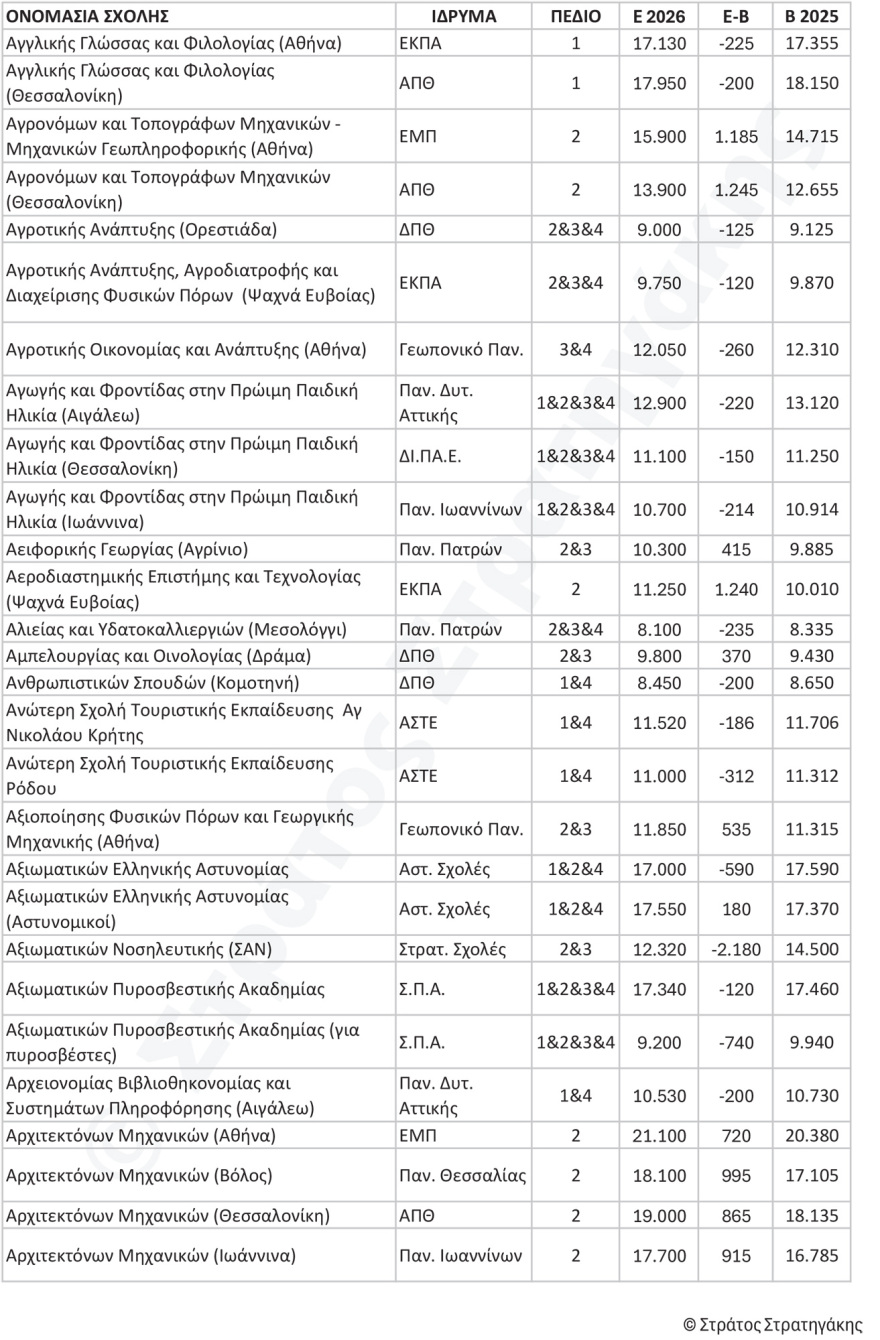
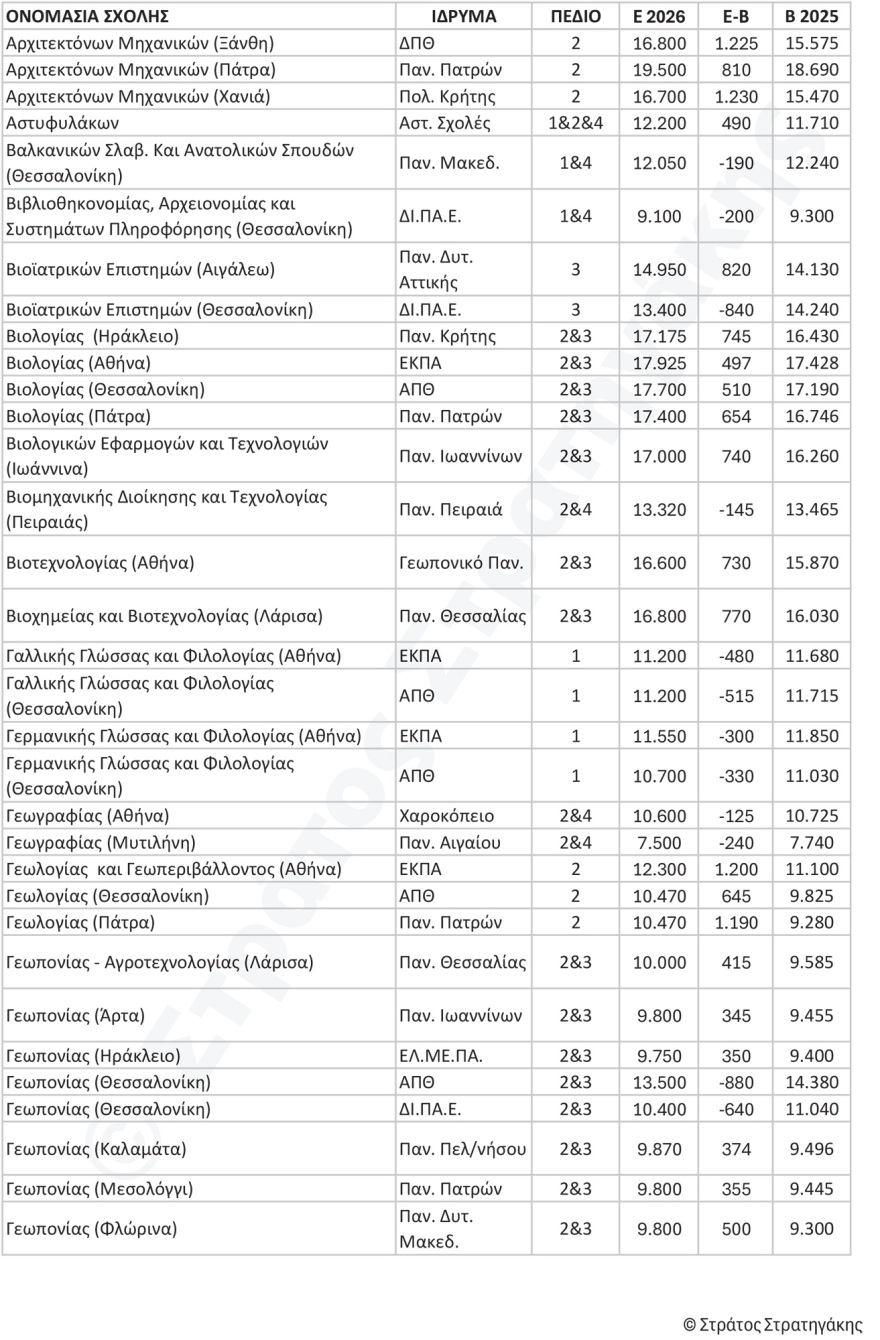
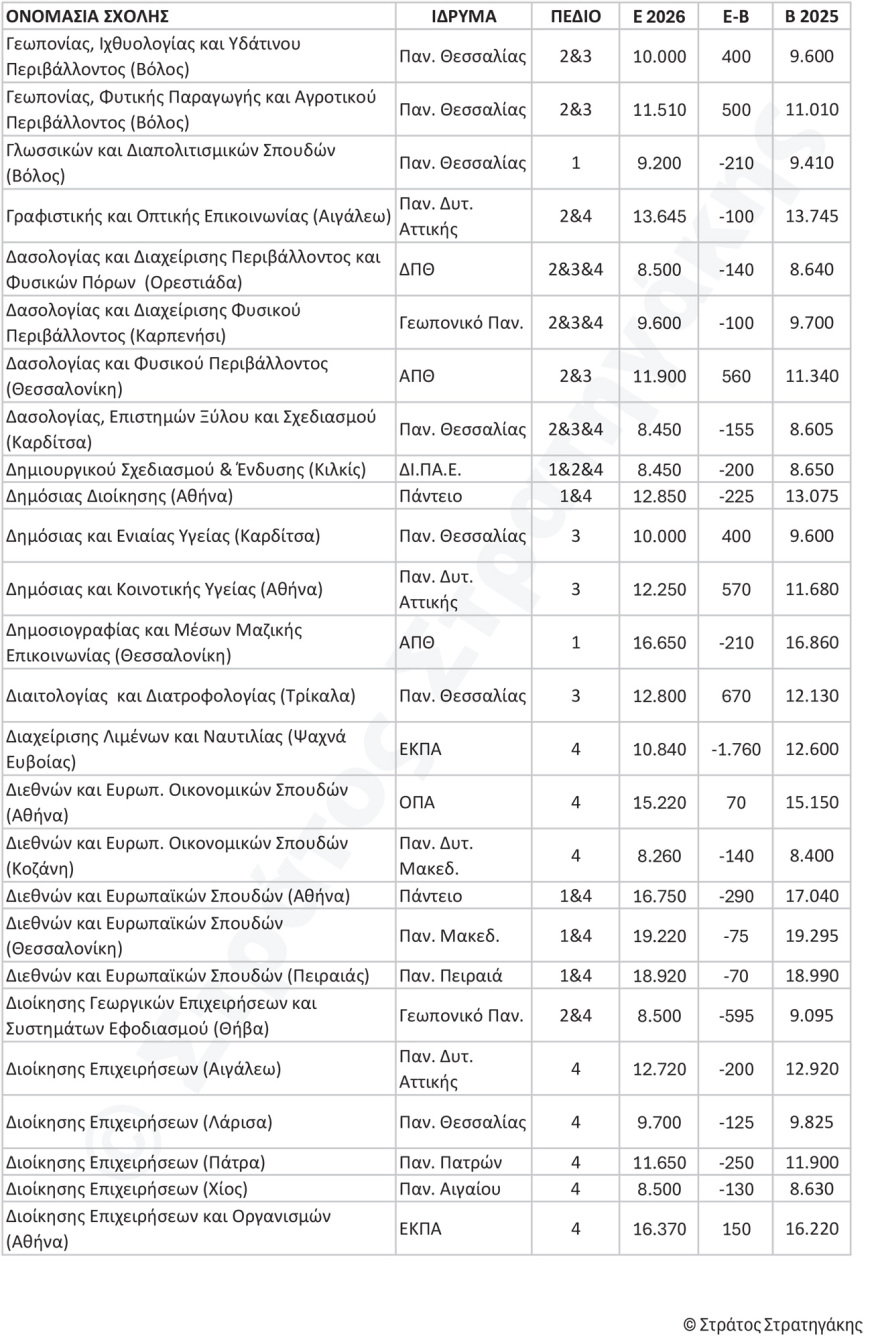
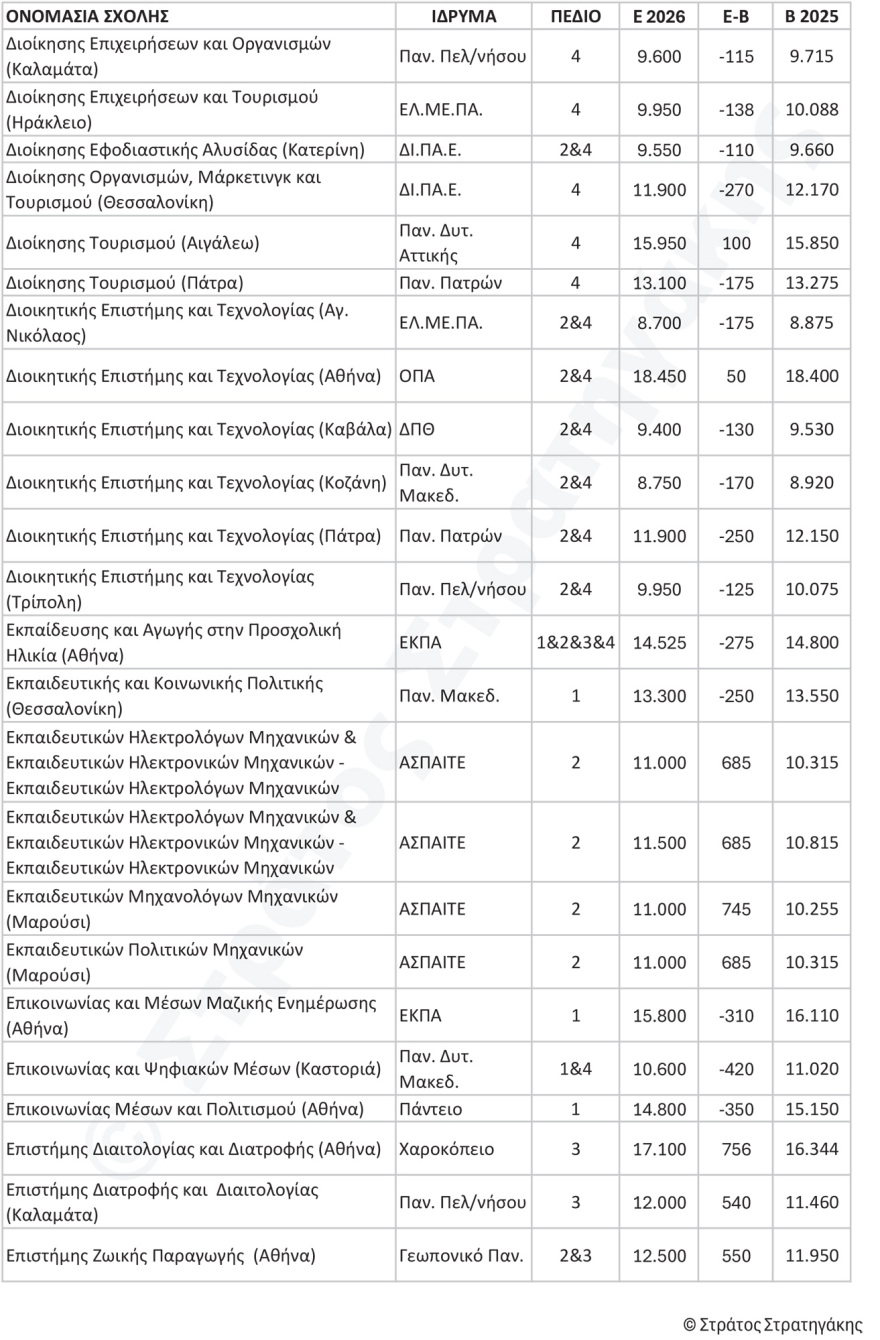
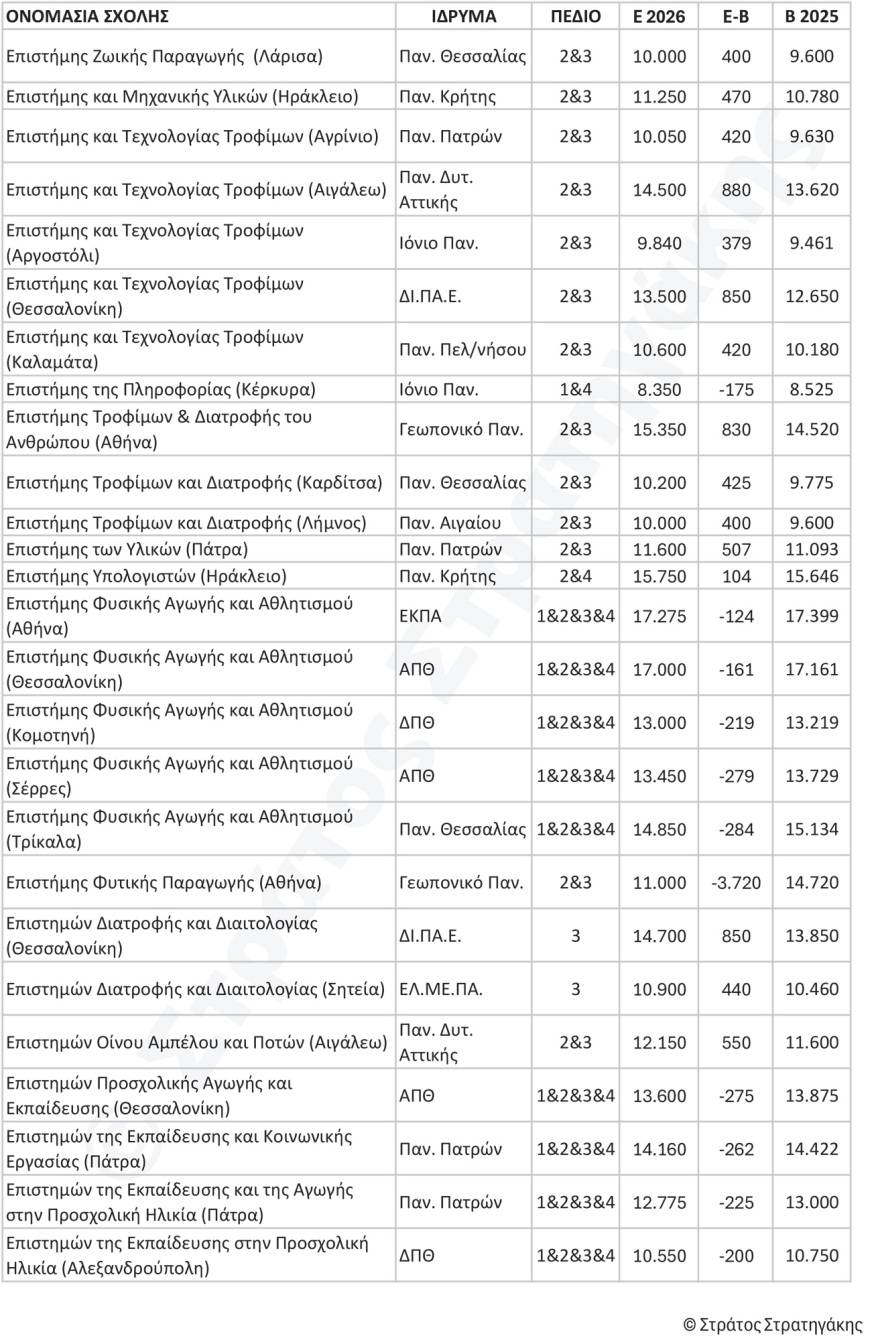
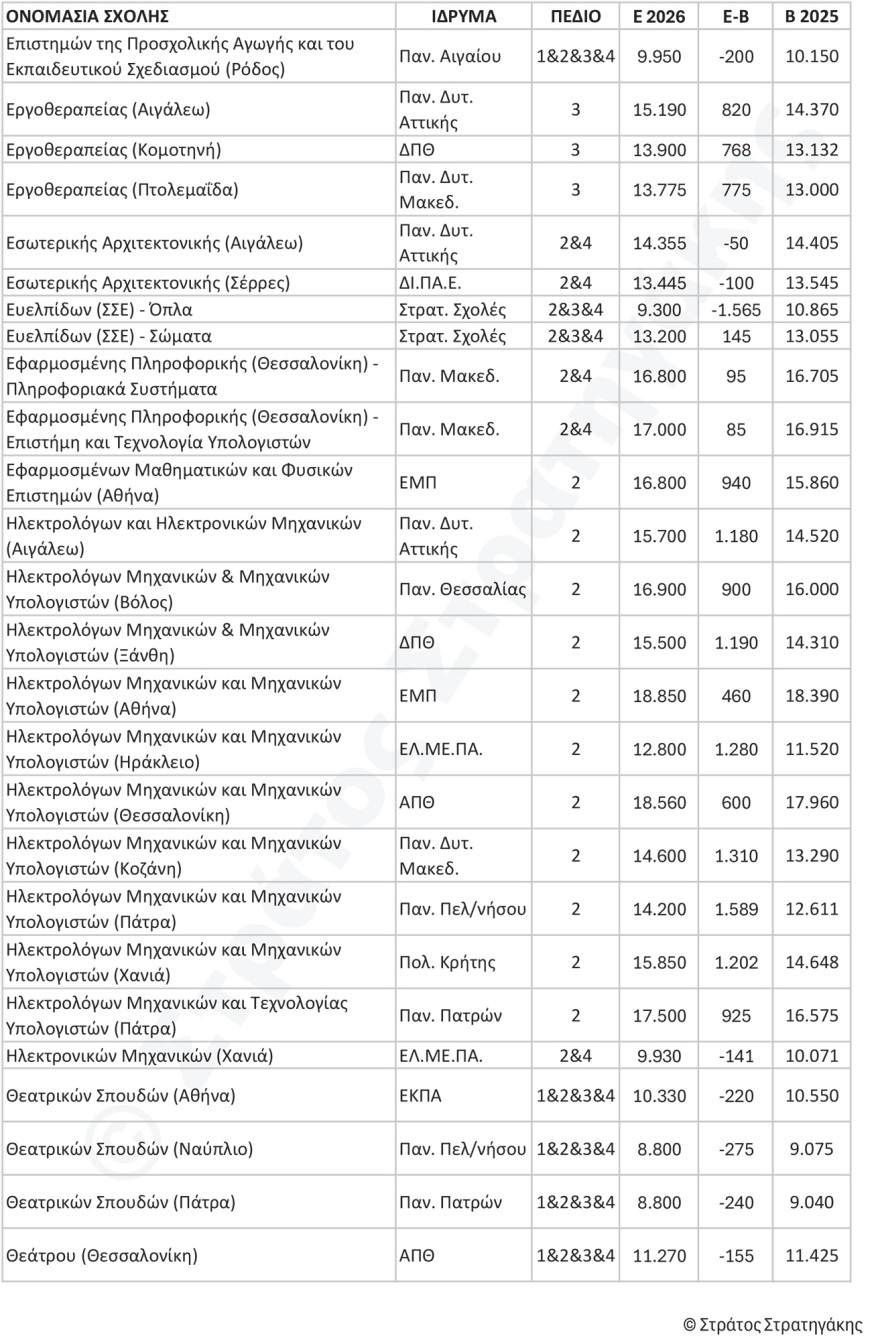
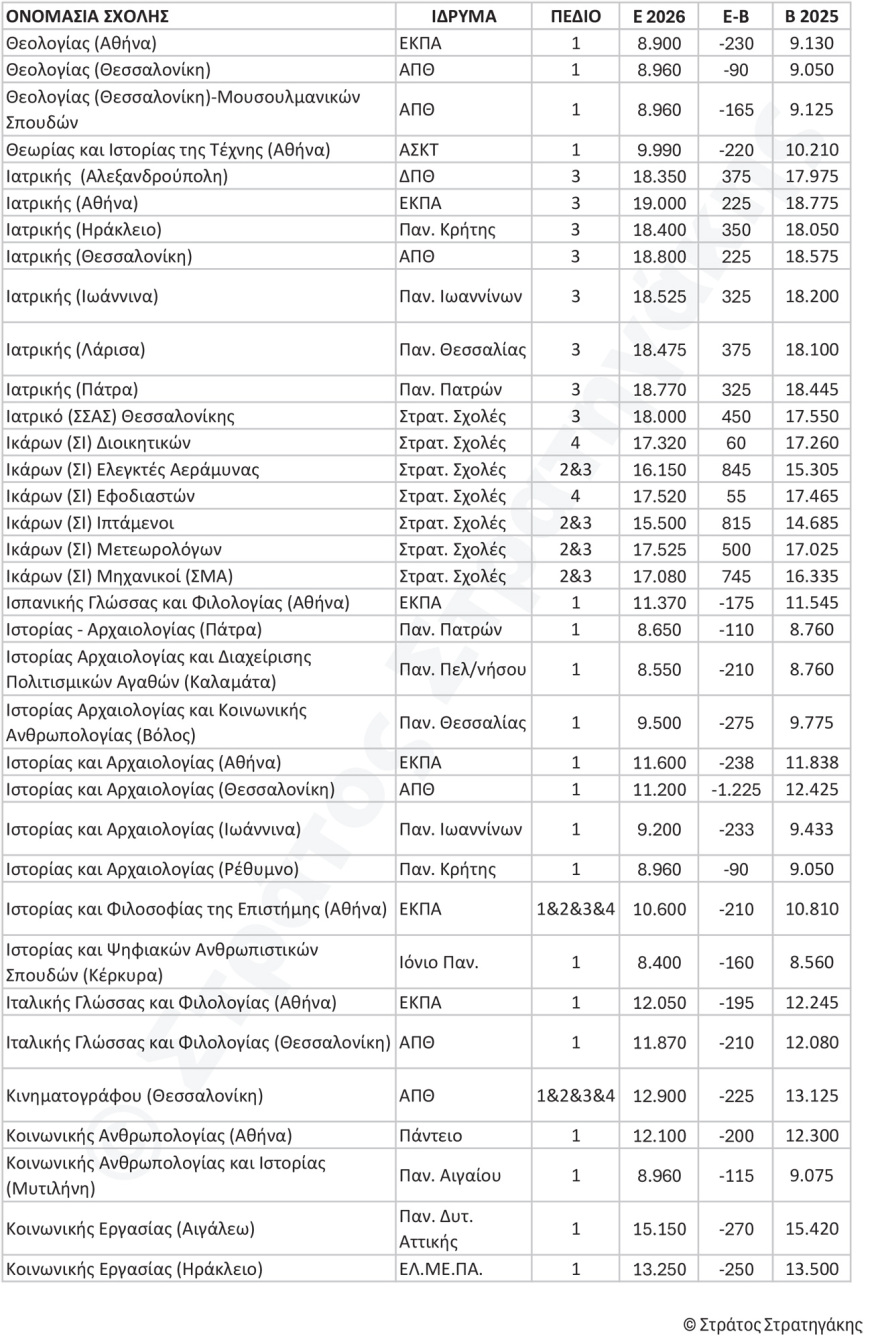
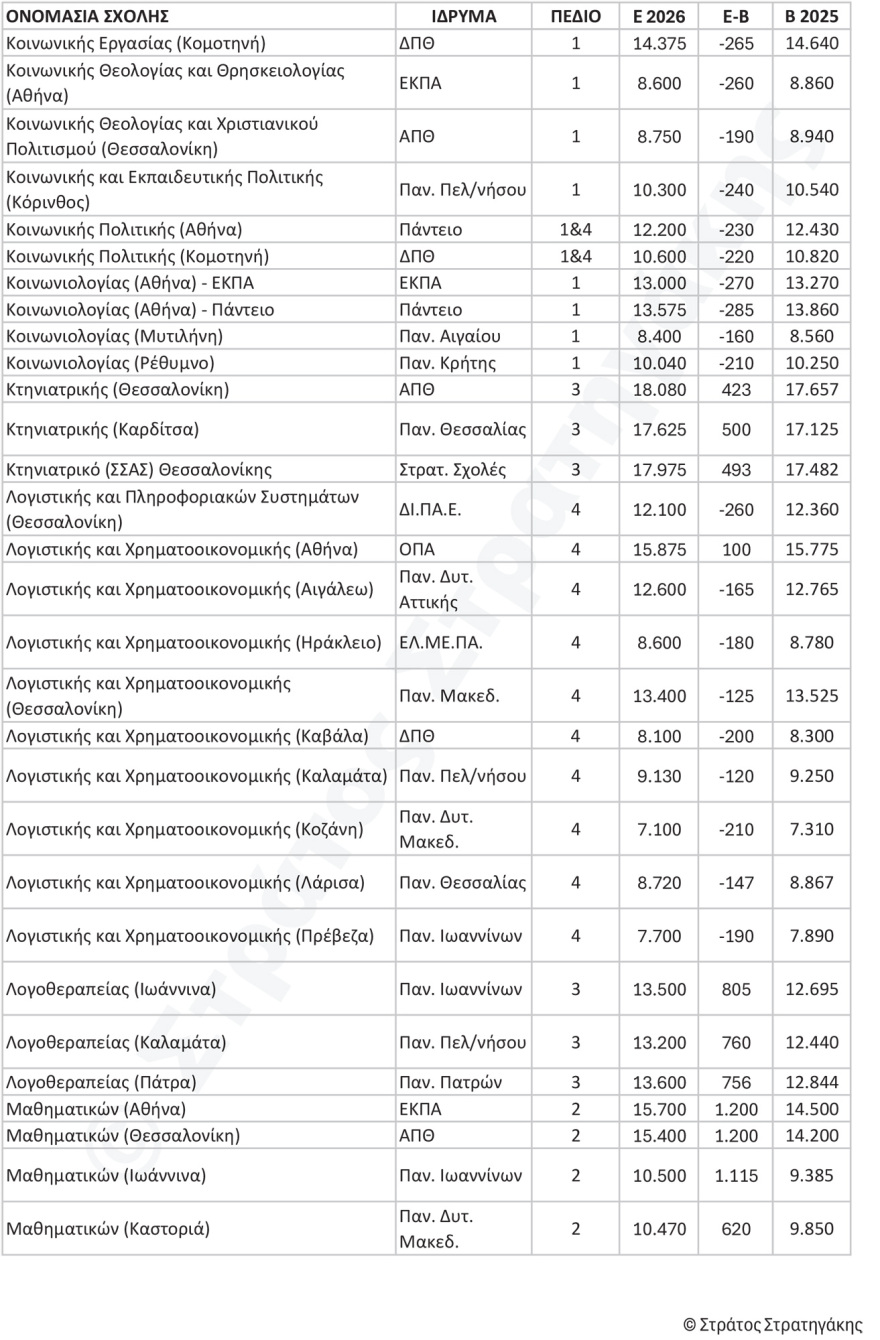
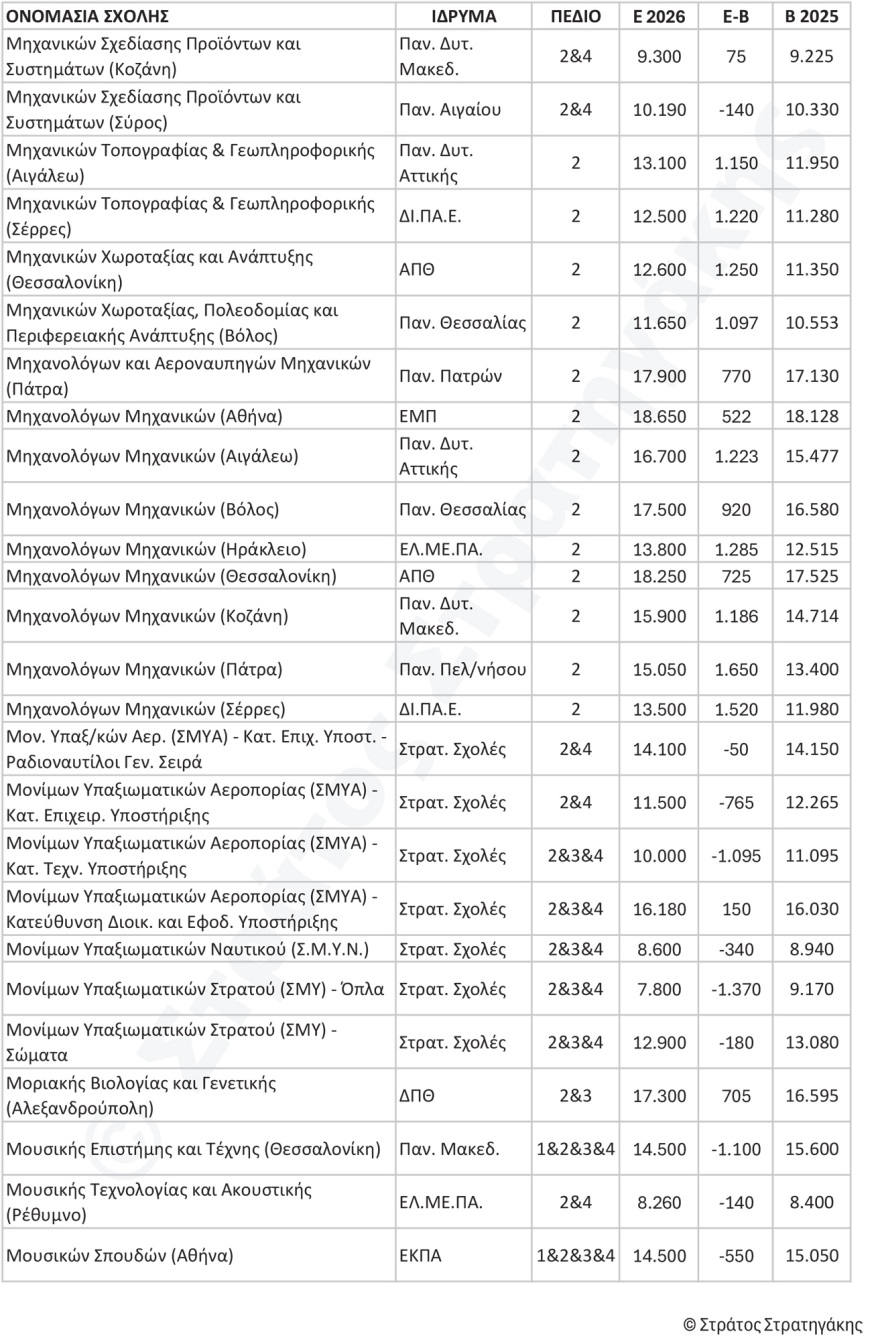
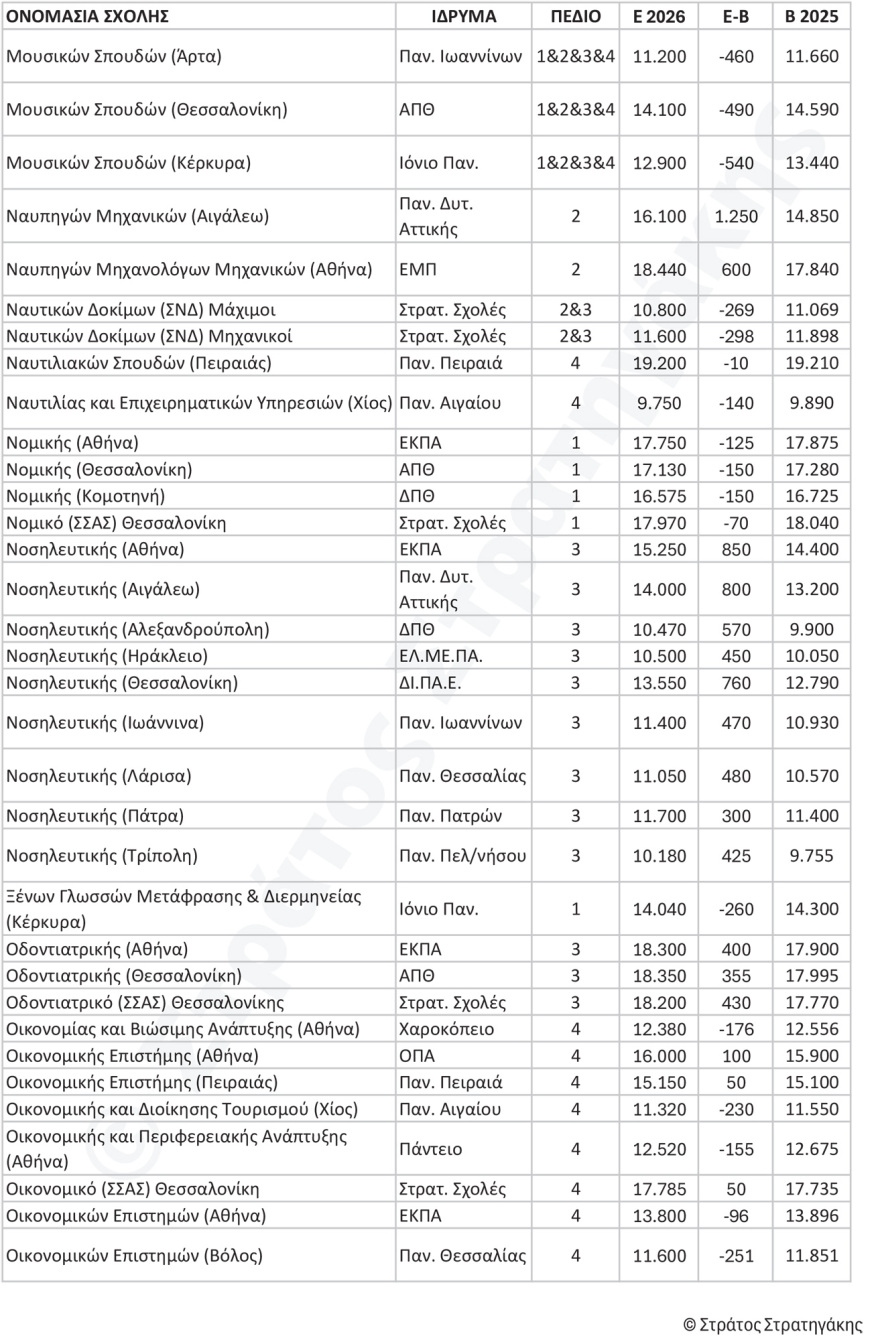
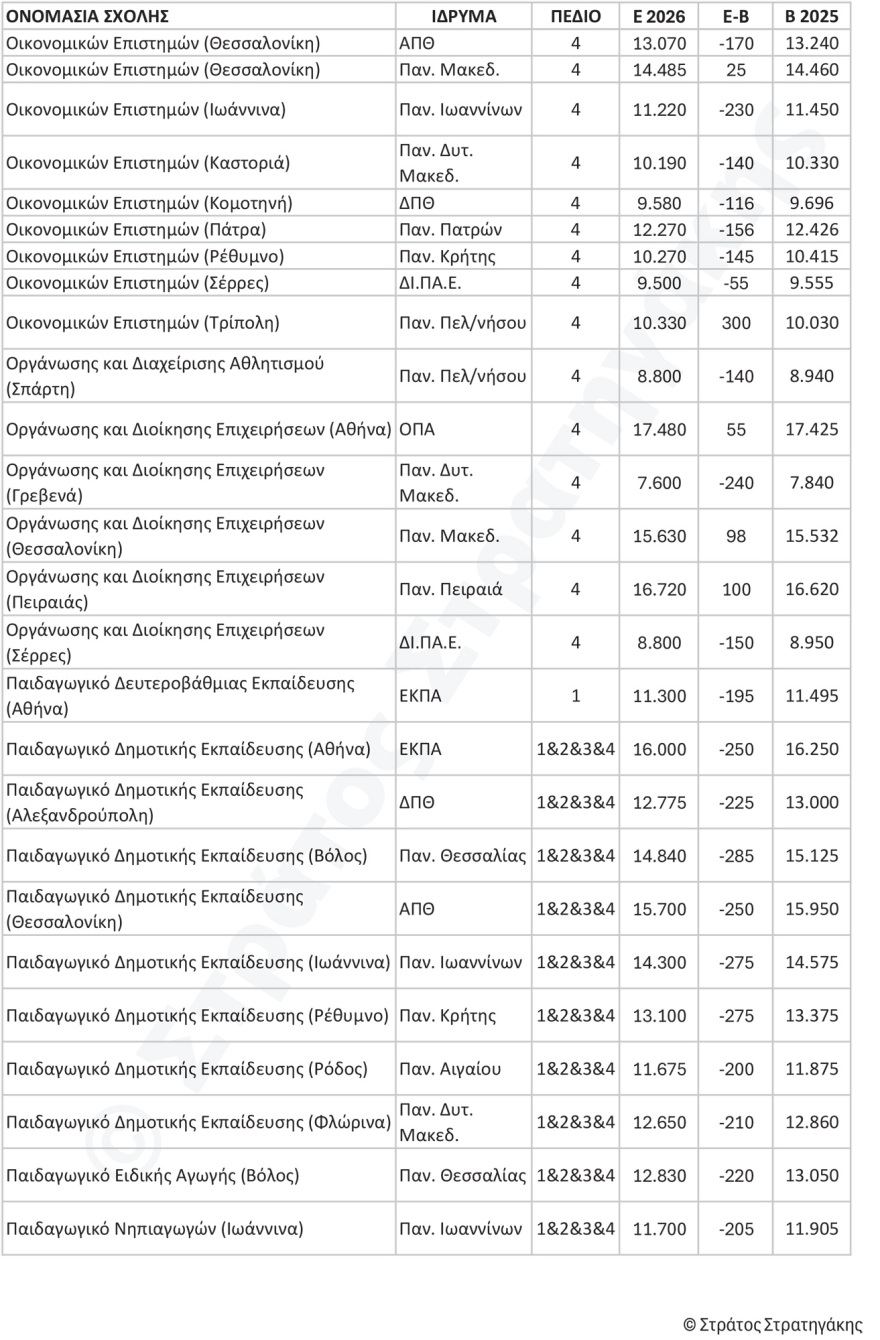
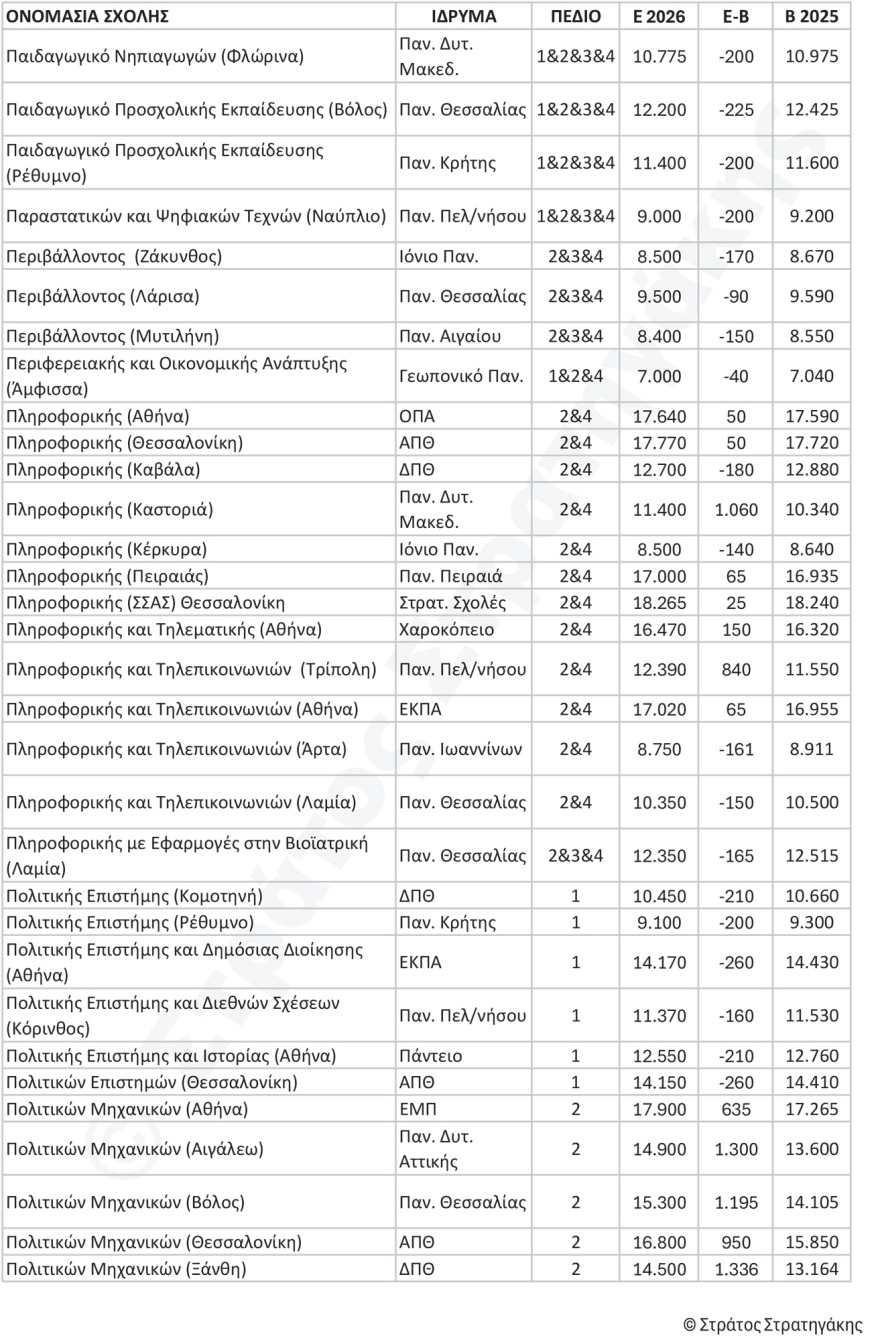
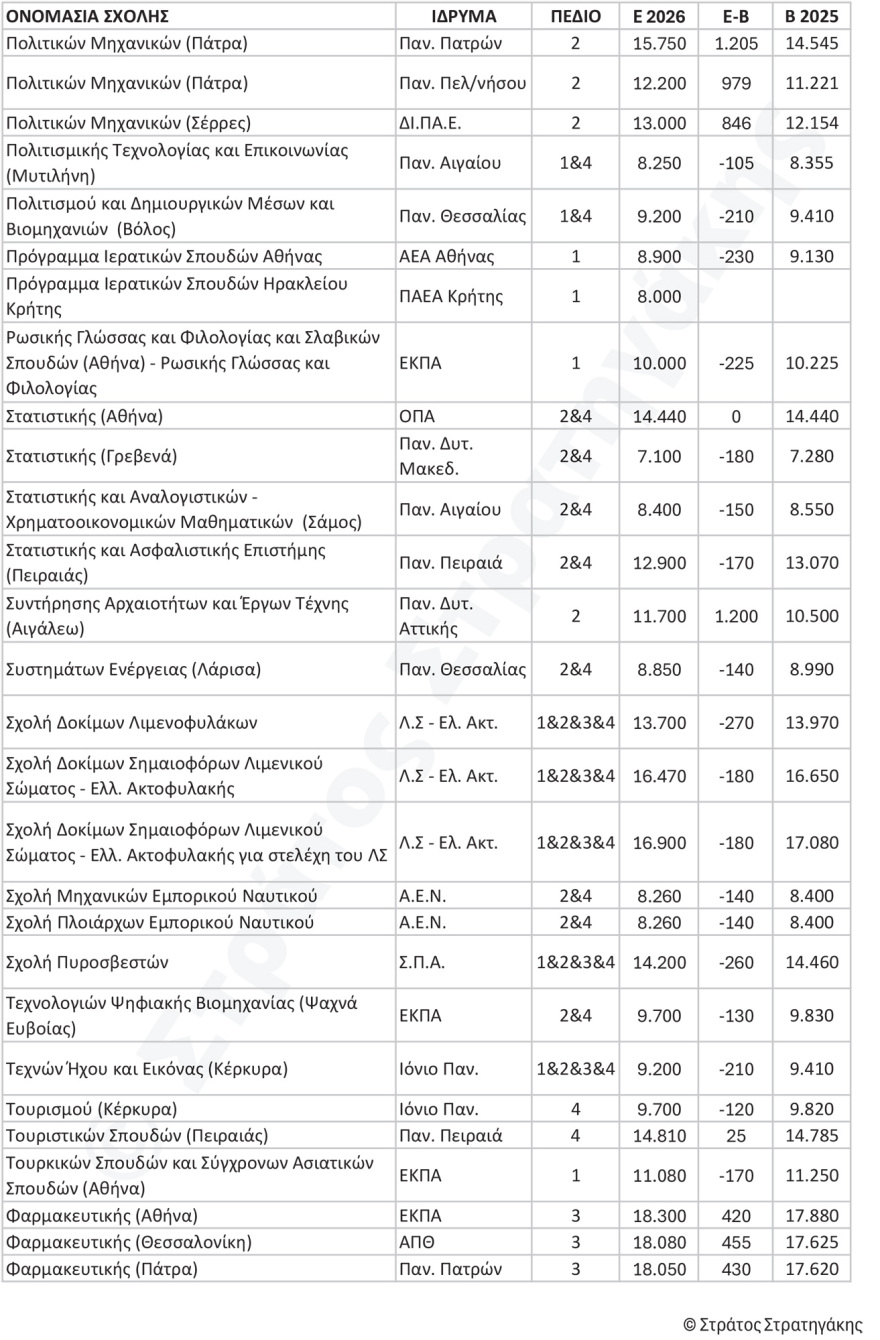
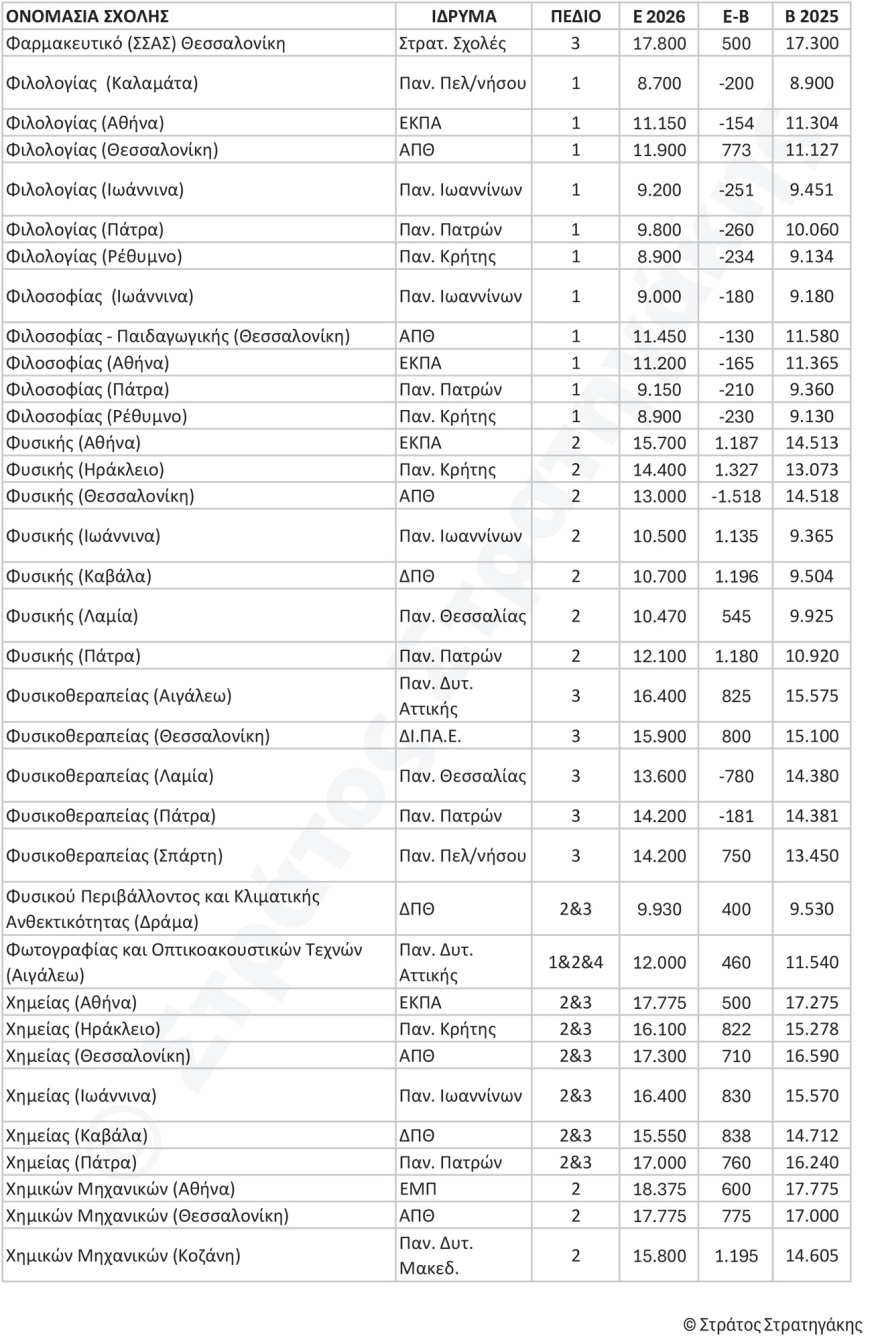
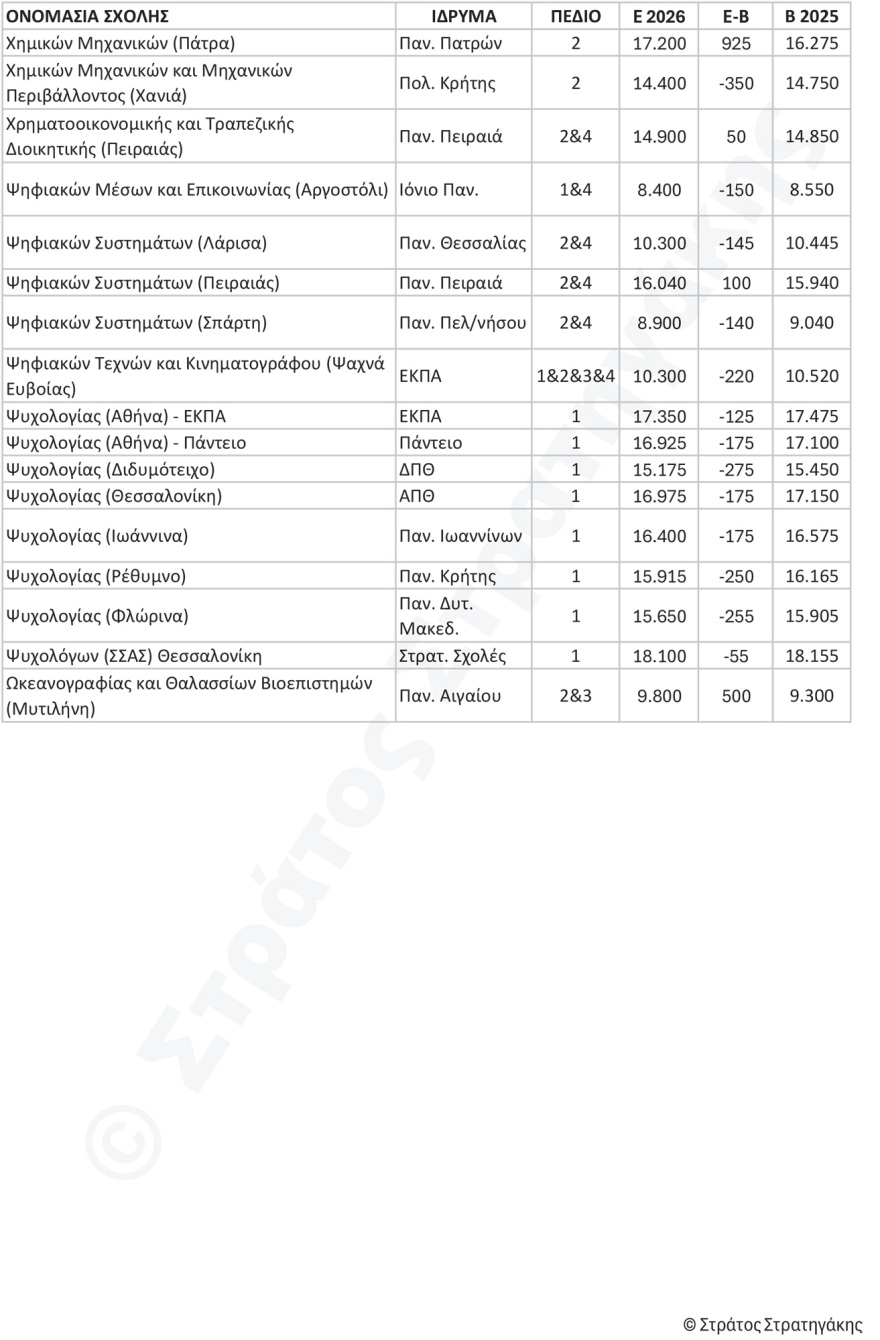
“We have tried to take into account as many relevant factors as possible in preparing the admission score estimates presented in the following tables.”
He stresses that these estimates are based on available statistical data, long-term analysis of applicant behavior, and years of experience studying Greece’s national university entrance examinations.
However, as every year, the official admission thresholds will only be known once the Ministry of Education has processed all submitted applications and finalized the results.
Detailed estimated admission score tables follow.
Ask me anything
Explore related questions




