





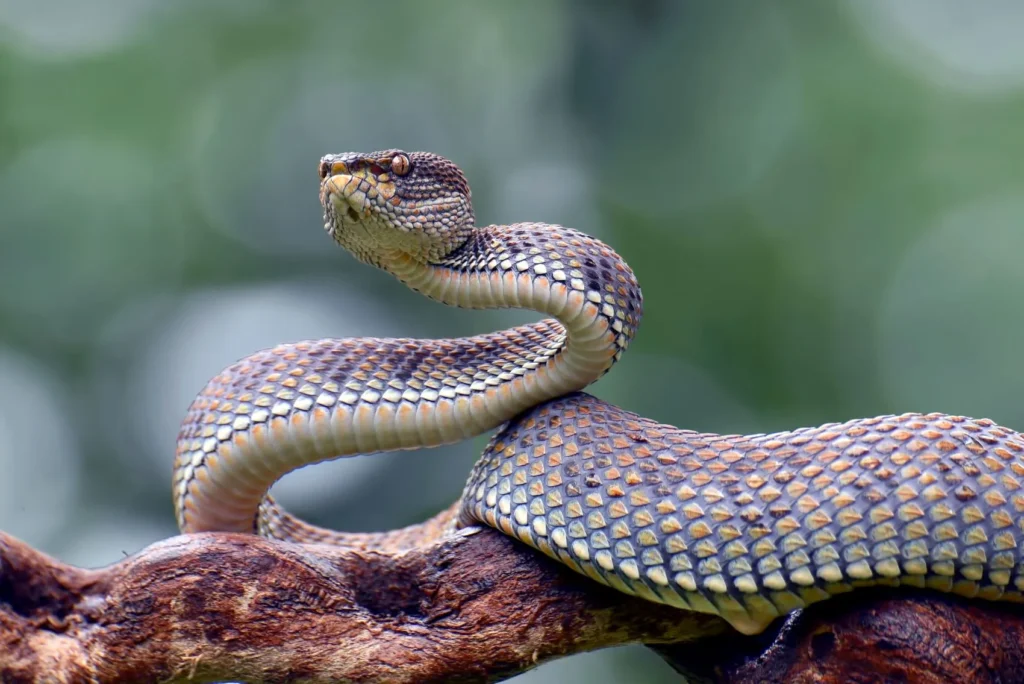
The further we venture from the city, the more wildlife we encounter. While some animals, such as foxes, have increasingly moved into urban areas in recent years, others are still found mainly in rural towns and villages. The snake is one of them, and the word alone is enough to send some people running.
What most people do not realise is that some snakes are completely harmless, such as the house snake and the four-lined snake. Others, however, are venomous, including the adder.
A snake bite is understandably frightening and painful. To help prevent that fear turning into panic, here are some precautionary measures recommended by experts at herpetofauna.gr, a Greek website specialising in reptile and amphibian conservation.
Symptoms of a venomous snake bite
The first signs are usually pain and swelling in the area of the bite. Symptoms can worsen as time passes.
What to do immediately
- Stay calm, and if it has happened to someone with you, try to reassure them. Panic after a snake bite can lead to poor decisions and make the situation worse. Try to get to the nearest hospital or health clinic. Always have the local health centre’s number saved on your phone.
- Move away from the snake and do not attempt to kill it, as this could put you at greater risk. If possible, take a photograph from a safe distance. Doctors will base first aid on your symptoms. In Greece, an antivenom is used depending on the case.
- Remove anything that could constrict the affected area or limb as it swells, such as rings, bracelets or shoes.
- The victim, whether that is you or someone else, should remain still, as should the bitten area. Lie down or sit in a fully relaxed position. Keep the bite site lower than the heart. Staying still slows the spread of the venom and delays the progression of symptoms.
- Do not cut or tear the skin, and do not attempt to suck out the venom. The resulting wound and shock will only make things worse.
- Do not tie or bind the bitten limb. It is crucial not to restrict blood circulation, as this raises the risk of blood clots and tissue death in the limb. Venom spreads mainly through the lymphatic system, so a tight tourniquet that cuts off blood flow is both useless and dangerous.
- Do not apply ice to the bite area.
- The victim should not take painkillers or alcohol, with the exception of paracetamol.
- Do not use venom extraction devices. Evidence suggests these are likely to worsen the situation.
- Call 166 (EKAV, Greece’s national ambulance service) or 112, the pan-European emergency number, for help, or transport the victim calmly and safely to the nearest appropriate hospital, having first notified them. The victim should neither drive nor walk, and must remain still throughout.
How to prepare for a walk in an area where you might encounter a snake
If you are in the countryside or in a house with a garden, you may already have had some unwelcome visitors of your own.
There are a few basic rules to keep in mind if you are planning a walk through areas with dense vegetation, where snakes are more likely to be encountered, or indeed any area known to carry some risk.
- Avoid flip-flops; wear shoes that protect your feet.
- Choose clothing that covers your skin rather than leaving it exposed.
- Carry a fully charged phone and a power bank, so you can call for help if needed.
- Avoid walking alone; go with company so you can help one another if something happens.
- Before choosing an area to visit, check whether there is a hospital or health centre nearby.
Calling for help and staying still are the two most important steps.
Ask me anything
Explore related questions




