






Athens is grappling with the fallout of a major regional crisis, one that is also reshaping patterns of regional cooperation as a security vacuum opens up in today’s multipolar world.
The Mecca Agreement, a trilateral pact between Turkey, Saudi Arabia and Pakistan, is a product of the shifting conditions across the wider region. Although it is not aimed at Greece, it has direct implications for the country because of Turkey’s involvement and the deepening strategic partnership between Ankara and Riyadh, a relationship with which Athens believed it had reached a high degree of mutual understanding.
The crisis in the Middle East, which began in Israel on 7 October 2023 and continued with the war in Gaza, escalated further with the US-Israeli war against Iran and still has many chapters left before it is resolved. It has created a broad zone of instability and a dangerous security vacuum.
This became strikingly clear when the Arab kingdoms of the Gulf, which throughout their existence have relied on strong American backing and guarantees, found themselves exposed to Iranian strikes carried out in retaliation for actions taken by their own protector.
While the uncertainty continues, with a war that was expected to last only a few days now approaching its seventh month, it is clear that Gulf states are being forced to look for alternative security providers, a shift that in theory also responds to calls from US President Donald Trump for allies to shoulder the cost of their own defence and security.
For Athens, from the moment the crisis erupted, two priorities were clear: maintaining close ties with Israel, while clearly distancing itself from the excesses committed in Gaza and Lebanon, and at the same time balancing relations with the Arab regimes of the Gulf.
If, a few years ago, that balance was relatively easy to maintain, it is no longer so straightforward now that Turkey, in one more of the major shifts in its foreign policy driven by Foreign Minister Hakan Fidan, has mended its relations with Arab states.
A fragile rapport
The restoration of Turkish-Egyptian relations has exposed the fragility of Greece’s strategic relationship with Egypt, in which Greek foreign policy had invested heavily. At the same time, it is now clear that new camps are forming across the Gulf, and striking a balance between them is neither easy nor free of cost and significant risk.
The initial assessment in Athens, following contact between Greek Foreign Minister Georgios Gerapetritis and his counterparts in the United States, Saudi Arabia and Egypt, namely US Secretary of State Marco Rubio, Saudi Foreign Minister Prince Faisal bin Farhan Al Saud and Egyptian Foreign Minister Badr Abdelatty, is that the trilateral pact is largely symbolic. That view is shared by the head of American diplomacy, since the agreement mainly reflects Saudi Arabia’s desire to use its close ties with two countries, perhaps the only ones with direct channels to Tehran, as a deterrent against Iran. The State Department, however, remains cautious, aware that such moves risk revealing rival groupings in the Middle East and fresh rounds of competition.
According to sources, the Saudi Foreign Minister has assured Athens that the Mecca Agreement does not affect Greece’s relationship with Saudi Arabia. Turkey, meanwhile, is clearly seeking to exploit the moment to strengthen its regional role, a prospect Athens is following closely.
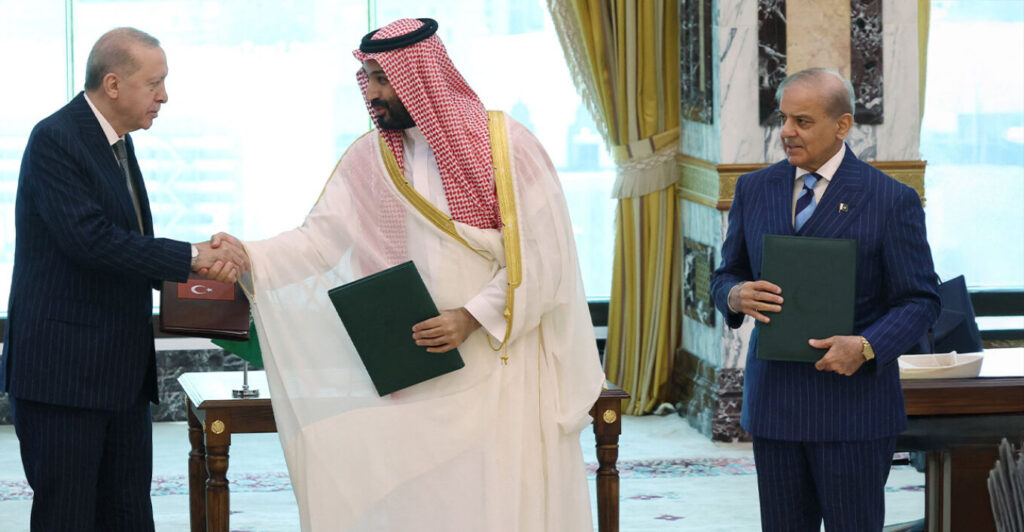
For a long time, complacency prevailed over the effectiveness of Greek foreign policy in winning favour among Gulf states. That was not unrelated to the breakdown in relations between Turkey and those countries, caused by Ankara’s alignment with Qatar during the intra-Arab rift. In the same way, the strategic relationship with Egypt was built on the fierce rivalry between Turkish President Recep Tayyip Erdoğan and Egyptian President Abdel Fattah el-Sisi, dating back to when the Egyptian general seized power by overthrowing the government of Mohamed Morsi, the most authentic expression of the Muslim Brotherhood movement.
All of this made it easier for Greece to build relations with countries such as Egypt, the United Arab Emirates and Saudi Arabia. But this was clearly a favourable set of circumstances rather than a durable foundation. It provided a basis for deeper cooperation, but no foundations solid enough to make those relationships genuinely resilient, as recent developments have shown.
In the Gulf, Saudi Arabia, keen to preserve its leading position in the Arab world, is seeking regional alliances that would give it a wider geopolitical footprint and greater deterrent capability. Iran remains the principal threat to Riyadh, along with the Houthis, who target Saudi Arabia directly because of its involvement in Yemen’s civil war. Yet it has become clear that Saudi Arabia’s most important ally, the United States, did not hesitate to make a strategic choice alongside Israel over the attack of 28 February, disregarding the kingdom’s security concerns.
The mutual assistance clause included in the Mecca Agreement is largely symbolic, intended to reassure Saudi concerns, since it is clear that neither Turkey nor Pakistan would take military action against Iran in support of Saudi Arabia. Nor, for that matter, would Pakistan expect military backing from Riyadh or Ankara in the event of a conflict with India.
The nuclear dimension
At the strategic level, the greatest risk is that the Mecca trilateral alliance could acquire a nuclear dimension, something officially avoided in public statements. It is nonetheless known that Saudi Crown Prince Mohammed bin Salman has expressed a wish to acquire nuclear capability, while Erdoğan has made no secret of his ambition to obtain a nuclear weapon. As the war against Iran demonstrated, even the mere suspicion of possessing strategic nuclear technology provides a stronger deterrent than any other form of defence.
With Pakistan’s participation, a nuclear dimension within the trilateral alliance would represent a major regional threat, fuel an arms race and, after Iran, present Israel with another target it would regard as an existential threat, given that it considers the acquisition of nuclear weapons by countries with which it is locked in strategic confrontation to be exactly that.
Through moves such as the trilateral alliance, Saudi Arabia is seeking above all to negotiate a fresh security guarantee from the United States, rather than to abandon that relationship altogether. President Trump’s decision to link a nuclear cooperation agreement with Riyadh, offering nuclear capability for peaceful purposes under very lenient terms, to the normalisation of Saudi relations with Israel and Saudi accession to the Abraham Accords, most likely accelerated the signing of the trilateral pact.
The way Israel has handled the war in Gaza, as well as its relations with Lebanon and Syria, has left it more isolated in the region than at any point before and has cost it significant international support, making it almost impossible, under current conditions, to normalise relations with Saudi Arabia before a comprehensive peace agreement is reached on the Palestinian question.
By contrast, in the context of its intense rivalry with Saudi Arabia, the United Arab Emirates, which preserved its place in the Abraham Accords even after the war in Gaza, makes no secret of maintaining an extremely close relationship with Israel, including in defence procurement, which proved particularly useful during the war with Iran, as well as in intelligence sharing and on regional issues such as Somalia and Sudan.
Turkey is building a long-term strategy. Initially, this involved encircling countries opposed to the Muslim Brotherhood by establishing bases in Qatar, Sudan, Somalia and Libya. Now, through its alliance with Saudi Arabia and, of course, Qatar, it is consolidating a significant regional presence in the Horn of Africa as well.
Beyond the significant diplomatic footprint this provides, it also offers Turkey the ability to gain influence across the region, including through the supply of advanced defence systems, mainly drones, which are now flying over the Gulf, Sudan, Somalia, Ethiopia and Libya.
A stronger Turkey is clearly something Athens cannot afford to overlook.
Energy corridors
The trilateral pact also carries a message for the wider race now under way to build new connectivity corridors linking the East with Europe.
Turkey is hostile to any project that bypasses it, including the India-Middle East-Europe Economic Corridor, known as IMEC. Cairo, too, views the corridor unfavourably, since it bypasses the Suez Canal, a major source of revenue for Egypt.
A key question now is how Riyadh will handle this major issue, given its commitments to the United States and India over the implementation of IMEC. What is certain is that as long as the crisis in Gaza and the wider confrontation between the Arab world and Israel continue, any connectivity project that terminates in Israel will face strong resistance.
Turkey, which has been actively working in recent months to develop alternative export routes for Gulf oil and gas that bypass the Strait of Hormuz, wants to capitalise on the moment and establish itself as the main, if not the only, hub linking the East with Europe. Israel’s isolation creates a favourable opening for Turkey, allowing delays or cancellations of major connectivity projects that use Israel as a gateway to the Eastern Mediterranean to work in its own favour.
The Mecca Agreement complicates the outlook for IMEC, and any delay or challenge to the corridor represents a setback for Greece, which has invested diplomatically in its participation in this ambitious project, one that has the backing of the United States and major European countries.
The contest under way in the Middle East is, of course, far bigger than Greece, and criticism suggesting that Athens somehow failed to prevent the trilateral agreement misses the point.
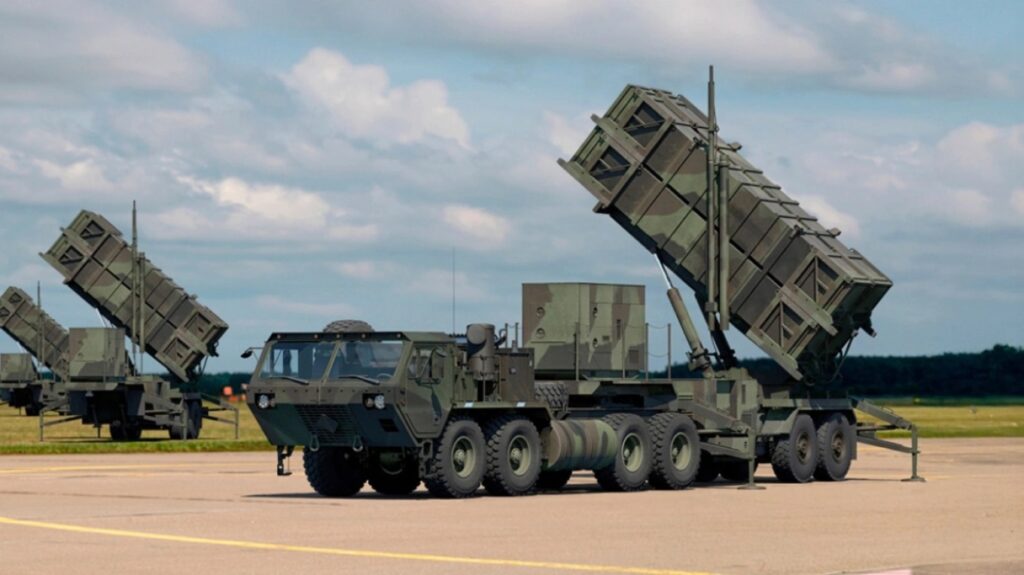
That does not mean complacency has taken hold, since warning signs have existed for some time. Close ties with the United Arab Emirates and the transfer of a Patriot missile system to Saudi Arabia were positive steps, and without them the situation today could well be considerably worse.
Even so, Greek foreign policy will need to take a longer view, in order to serve the country’s national interests and avoid a scenario in which it finds itself facing Turkish revisionism backed by major Muslim powers, Pakistan and Saudi Arabia.
The latest developments highlight something every diplomat experienced in Arab affairs already knows: that the credibility of agreements and alliances in this sensitive and distinctive part of the world is extremely limited.
The fact that the trilateral alliance creates one pole, set against a rival pole forming around the United Arab Emirates and India as part of intra-Arab competition, with Egypt attempting to balance between the two, raises fresh challenges for Greece as well.
Athens must avoid abrupt moves or actions that would create a permanent rift in relations with Saudi Arabia, while also avoiding any appearance of championing a new alignment with Israel and the United Arab Emirates against the Mecca Agreement.
The Patriot missile question
Even before the Mecca Agreement, there was already concern in Athens over the continued deployment of Greek Patriot systems in Saudi Arabia, and a broader reassessment is expected, weighing costs against benefits in consultation with Riyadh.
Securing the relationship with Egypt is of critical importance for Greece, and that effort cannot rest solely on frequent phone calls between the Greek Foreign Minister and his Egyptian counterpart. According to sources, Abdelatty himself expressed serious concern over moves such as the Mecca Agreement, warning that they risk fuelling polarisation and regional rivalry.
At the same time, it should not be overlooked that Turkey and Saudi Arabia are both seeking to position themselves as leading powers within the Muslim world, in competition with Egypt, still the most populous and militarily powerful Arab country.
Athens must also work to rebuild communication channels with Washington and, in cooperation with Congress, press for the continued spirit of the East Med Act, the legislation that forms the official foundation of US policy in the Eastern Mediterranean and recognises the important role played by Greece and Cyprus.
Photo: Reuters
Ask me anything
Explore related questions




