





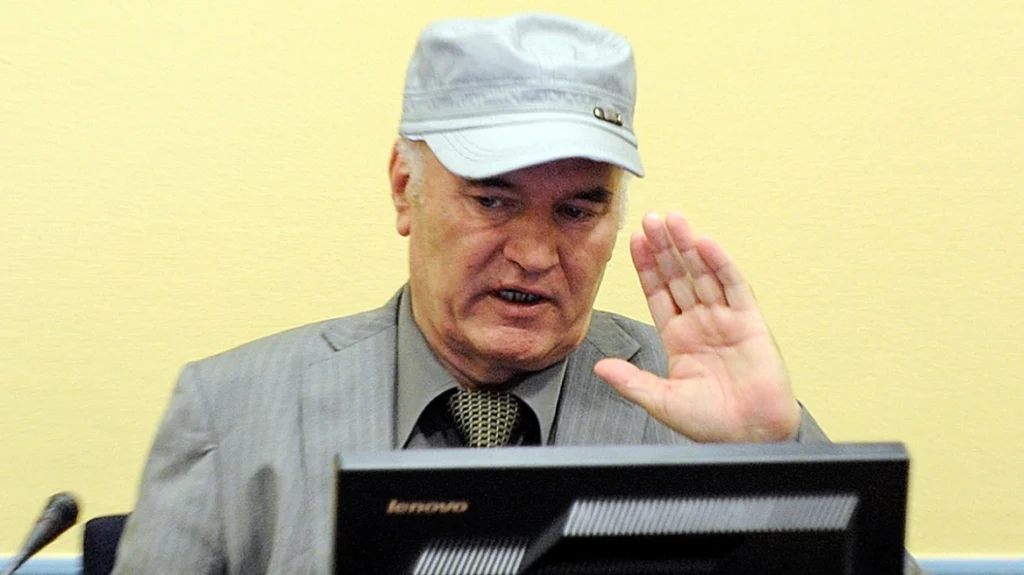
Former Bosnian Serb military leader Ratko Mladić, who had been sentenced to life imprisonment by international justice authorities, primarily for the genocide of Bosnian Muslims in Srebrenica in 1995, died today at the United Nations detention center in The Hague, where he was serving his sentence, Serbian public television reported.
“Ratko Mladić, former commander of the Army of the Republika Srpska died at the age of 84,” Serbian television reported. His death was confirmed by a UN official.
Mladić was the commander of Bosnian Serb forces during the Bosnian War, from 1992 to 1995. He was found guilty of genocide, crimes against humanity, and war crimes, including the 43-month siege of Sarajevo and the Srebrenica massacre in 1995, in which more than 8,000 captured Muslim men and boys were killed.
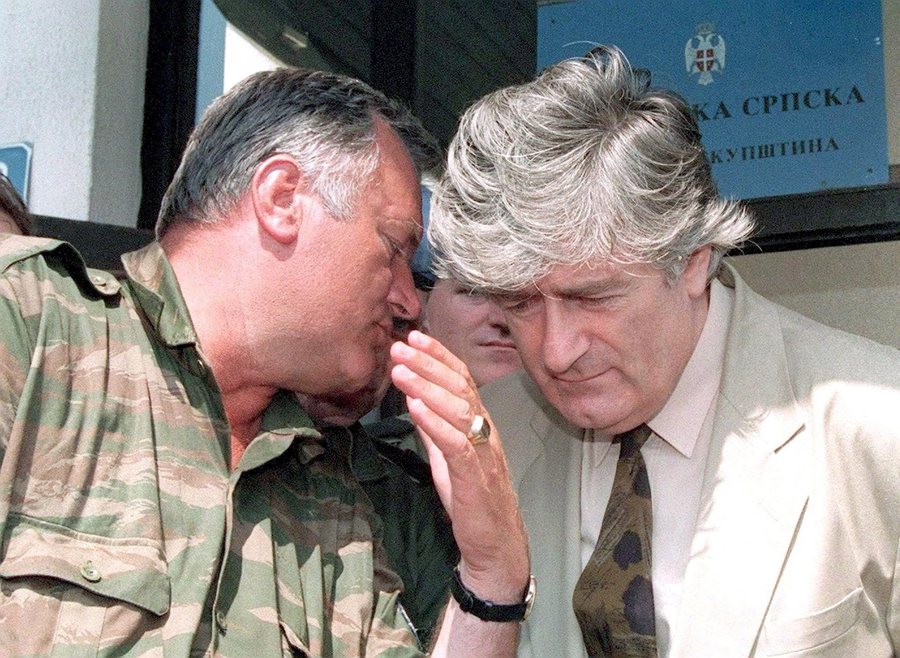
Some Serbs still regard Ratko Mladić as a war hero, and his name, and even portraits of him, frequently appear on the walls of the capital, Belgrade. According to the Youth Initiative for Human Rights (YIHR) in Serbia, more than 250 references to Mladić—portraits or graffiti—were recorded in the city in March 2023. Some of them, just a few meters from Republic Square, are accompanied by inscriptions denying the Srebrenica genocide.
Together with his political alter ego, Radovan Karadžić, he was allegedly “the architect of the policy of ethnic cleansing” in part of Bosnia in order to create an exclusively Serbian state.
Born on March 12, 1943, in Bosnia, Mladić pursued a military career in the Yugoslav People’s Army. Following the breakup of Yugoslavia and the outbreak of war in Bosnia, he took command of the Bosnian Serb army in May 1992, a position he held throughout almost the entire conflict. Under his command, Bosnian Serb forces carried out extensive operations against Muslim and Croat populations.
His name became primarily associated with two of the bloodiest chapters of the war: the siege of Sarajevo and the Srebrenica massacre. In Sarajevo, his forces were accused of conducting a years-long campaign of bombardment and sniper attacks against the civilian population. In July 1995, following the capture of Srebrenica, more than 8,000 Muslim men and boys were murdered in a crime that international justice classified as genocide.
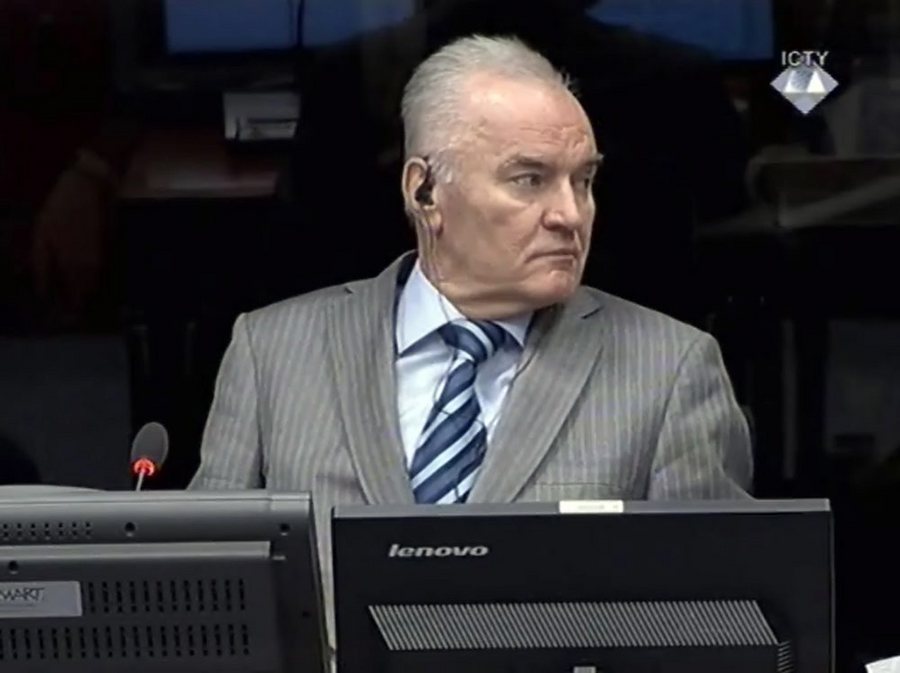
Although he had already been indicted by the International Criminal Tribunal for the former Yugoslavia in 1995, Mladić managed to remain a fugitive for approximately 16 years. He was finally arrested in Serbia in May 2011 and transferred to The Hague. His trial began in 2012, and in November 2017 he was found guilty of genocide in Srebrenica, crimes against humanity, and war crimes and sentenced to life imprisonment.
For many Serbs, Mladić remains a military hero. For the relatives of the victims and for international justice his name became synonymous with ethnic cleansing, Srebrenica, and some of the gravest crimes committed in Europe after World War II. His death in The Hague closes the chapter on one of the central figures of the Bosnian War, but not the long-running Balkan dispute over the legacy of that period.
Life imprisonment for genocide, war crimes, and crimes against humanity
Mladić was sentenced to life imprisonment in 2017 by the International Criminal Tribunal for genocide, war crimes, and crimes against humanity. In 2021, the court’s ruling was upheld on appeal.
The court had ruled that Mladić, who commanded Serbian forces during the conflict of the 1990s, personally directed the massacre of more than 8,000 Bosnian Muslim men and boys in the Srebrenica area, which was under UN protection, in July 1995.
Mladić, known as the military figure of the Bosnian Serb war, had political ties with former Yugoslav President Slobodan Milošević and Bosnian Serb leader Radovan Karadžić. Before his arrest in 2011, he had lived as a fugitive for a full 10 years.
In May, the court rejected a request by Mladić’s lawyers for temporary release so that he could undergo treatment in Serbia.
Serbian President Aleksandar Vučić sent a letter to the Hague court a week ago, requesting Ratko Mladić’s release, citing his deteriorating health, so that he could spend the final days of his life in Serbia. The court rejected the request.
Mladić’s trial lasted a total of 530 days
Mladić was transferred to the International Criminal Tribunal for the former Yugoslavia (ICTY) in The Hague on May 31, 2011, to stand trial. His trial began on May 16, 2012, and concluded between December 5 and 15, 2016, with the parties delivering their closing arguments.
Mladić’s trial lasted a total of 530 days, during which 591 witnesses testified and 9,914 pieces of evidence were admitted.
The original indictment against the former Serbian commander was issued on June 25, 1995. After being amended for the first time on November 14, 1995, the indictment took its final form following further amendments on October 10, 2002, June 1, 2011, and December 16, 2011.
Mladić was tried on November 22, 2017, on the 11 charges listed in the final indictment and was sentenced to life imprisonment.
Mladić, who was found guilty on 10 of the 11 counts in the indictment, was convicted for the 1995 Srebrenica genocide, as well as for crimes against humanity (deportation, extermination, murder, persecution, and inhumane acts) and violations of the laws and customs of war (murder, terror, unlawful attacks against civilians, and hostage-taking).
The judicial panel did not accept the prosecution’s claim that “genocide” had also been committed in the cities of Foča, Ključ, Kotor Varoš, Prijedor, Sanski Most, and Vlasenica in 1992.
Ask me anything
Explore related questions




