





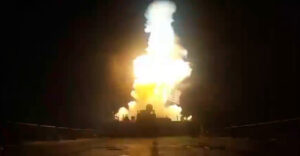
The conflict between the United States and Iran has entered a new and particularly dangerous phase following a second wave of US bombings within a few days and extensive Iranian retaliation against US military facilities across the Middle East. Tehran announced attacks on bases in Jordan, Iraq, and Bahrain, while Kuwait said it had come under missile and drone attacks. At the same time, Donald Trump threatened Iran with even harsher strikes if it continued its retaliation.
Targets of the new US bombings
The US Central Command (CENTCOM) announced that a new wave of strikes against targets belonging to Iran’s Islamic Revolutionary Guard Corps (IRGC) had been completed.
According to the announcement, the strikes hit air-defense installations, radar systems, naval facilities and assets, mine-laying capabilities, and communications infrastructure.
It was the second wave of US attacks within a few days. On Sunday, the United States had bombed military targets on an Iranian island, marking the first such strikes after roughly a month of relative calm.
Iranian retaliation in three countries
Iran responded by announcing a “decisive retaliatory operation,” using missiles and attack drones against US “bases and interests” in the region.
The Islamic Revolutionary Guard Corps announced attacks on US facilities in Jordan, Iraq, and Bahrain.
In Jordan, the armed forces said they had intercepted and destroyed ten ballistic missiles launched from Iran. Another three landed in remote, uninhabited areas, with no injuries reported.
Meanwhile, Kuwait said it had been targeted by missile and drone attacks, while air-defense sirens sounded in Bahrain early in the morning.
Trump: “They will be hit much harder”
Donald Trump warned Tehran that any further response to the US strikes would trigger an even more forceful reaction.
“If Tehran retaliates against this completely justified attack, they will be hit again, much harder and more forcefully,” he said on Truth Social.
For his part, Iranian military command spokesman Ebrahim Zolfaghari warned of “larger and more devastating retaliation” if US attacks continued.
He also issued a warning to “any country that cooperates with the attacking American military.”
Four killed at a wedding celebration
Meanwhile, the death toll from the bombings is rising.
According to the Iranian Red Crescent, four people, including a child, were killed and more than 50 injured by a US missile strike in southern Iran while a wedding celebration was taking place.
According to the Iranian news agency IRNA, in addition to the four people killed at the wedding ceremony, another seven people were killed and nine injured in a missile attack in Khuzestan province in southwestern Iran.
Iranian state television also reported multiple explosions in the southern part of the country, near Bandar Abbas and Qeshm Island in the Gulf, where a strategically important oil-export terminal is located.
Iranian state media also reported that an airport in Kerman province had been targeted.
The strikes came after Pezeshkian’s proposal for dialogue
The new US bombings began just hours after Iranian President Masoud Pezeshkian proposed a return to diplomacy, despite the fact that negotiations between the two sides have been deadlocked for some time.
Pezeshkian said that if the United States honors the commitments it undertook under the so-called Islamabad memorandum of understanding, signed in mid-June but collapsing a few weeks later, “the Islamic Republic will immediately take reciprocal measures.”
Tankers in the Strait of Hormuz and soaring prices
The new wave of US strikes was launched after two very large oil tankers were hit by “projectiles of unknown origin” while transiting the strategically important Strait of Hormuz.
Iran is also seeking to impose fees for services on ships passing through the strait, where navigation had been free before the war began.
The renewed hostilities triggered an immediate reaction in energy markets. The price of US WTI crude surpassed $90 per barrel for the first time since late July, while in Europe the price of natural gas reached a three-year high.
Washington threatens economic “strangulation”
Beyond the military strikes, the Trump administration has announced a campaign aimed at causing economic “strangulation” in Iran through new sanctions, although the exact form they will take has not yet been clarified.
Iranian authorities have already urged citizens to reduce fuel consumption, particularly gasoline, as the country faces difficulties importing supplies because of the US Navy’s naval blockade of Gulf ports.
In the previous round of attacks on Sunday, Iran also retaliated by striking US facilities in Jordan and the United Arab Emirates.
USS “Abraham Lincoln” arrives in Thailand
Thousands of miles away from the Middle East, the US aircraft carrier USS Abraham Lincoln arrived in Thailand in the morning after spending more than nine months at sea.
The aircraft carrier had initially been deployed to the South China Sea, but when the war began in late February, it was ordered to head toward the Middle East.
Its prolonged deployment and the significant deterioration in the crew’s living conditions have recently sparked intense controversy in the United States.
Ask me anything
Explore related questions




