





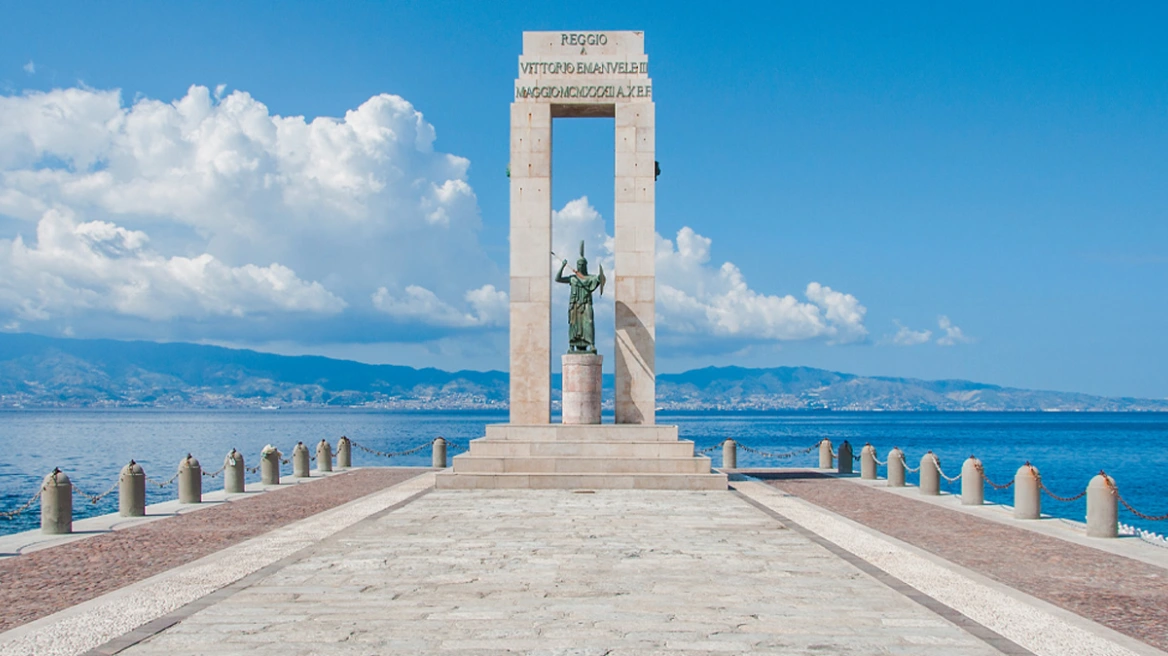
In the southern tip of Calabria, where the Aspromonte mountains descend towards the Ionian Sea, there are still villages where Greek memory can be heard like a whisper, in songs, place names, family stories and words passed down through generations. Chora tou Voua, the old name for what is now Bova, along with Bova Marina, Gallicianò and Roghudi, the small settlements of the so-called Area Grecanica, carry a history that begins with Magna Graecia and reaches into today’s efforts to save a language that refuses to fade.
The Greek presence in southern Italy dates back around 2,800 years, to the first Greek colonies founded in the 8th century BC. Magna Graecia was one of the great centres of Greek expansion across the Mediterranean: cities, trade, philosophy, art, religion and language. In the centuries that followed, Roman rule, the Byzantine period, Latin and Italian domination, emigration and the gradual depopulation of the villages all reshaped this presence. But something deeper endured in Calabria: the sense that the Greek world does not end at the borders of the Greek state.
Today Grecanico, the Greek dialect of Calabria, survives on a thin line between memory and revival. Greek is recognised as a historic minority language in Italy under Italian legislation protecting linguistic minorities.
This is exactly what has been happening in recent years, through small, persistent initiatives in Calabria, Italy, Greece and the diaspora. Cultural associations, teachers, researchers, musicians, people with roots in the region and young people reconnecting with family memory are all trying to keep alive a language closely tied to the continuity of Greek culture in southern Italy.
Part of the same effort was a recent visit to the Greek-speaking villages of Calabria by Eleni Sourani, the Greek Ambassador to Italy. The visit took place as part of the cultural events of “vdomada greco” (Greek Week), an initiative held every year in Bova Marina, on the Voua seafront, which includes Greek-language lessons, educational routes and activities introducing visitors to the area’s historic villages.
Another such effort is the album “Aionia”, recently covered by protothema.gr, the work of an artist using music in Grecanico to support the preservation of Calabrian tradition. The Greek-Italian artist Alessandra Talarico has been in Bova in recent days, speaking with local people and active citizens who are fighting in every way they can not to lose their identity.
“A revolutionary act”
Those keeping this tradition alive know well that it is no easy task. In Bova Marina, Egidio Musitano, president of the region’s Artistic and Cultural Association “Calliurghía” (from the Greek words for beauty and work), describes the creation of culture to Talarico as an act of resistance.
“Creating culture in Bova Marina is a revolutionary act,” he says, explaining that the community has been through periods of decline, pressure and forgetting. In his view, outside influences and historical choices led many people to drift away from their own cultural memory, to undervalue it, or even to turn against it.
Musitano insists that those who kept the tradition alive over the centuries are now waging a tiring but valuable battle to carry it into the future. The cultural association is trying to revive this heritage through every art form. One particular loss, its members say, is the disappearance of the art of icon painting, which survived in the region until around 1700 before fading from the community’s living cultural fabric.
Language remains the most sensitive issue. For decades, Grecanico carried social stigma. It was seen as the language of the poor, of villagers, of the “backward”, people who had to leave the old ways behind to join the new Italian reality. Musitano speaks of a deliberate erasure of culture, through which the local language became linked with underdevelopment. This historical wound is also at the root of today’s difficulty: for the language to return to people’s lips, its standing must first be restored.
This is why learning initiatives matter so much. Professor Pasquale Casile teaches Grecanico lessons by video call, opening up a new route for those who live far from the villages but still want to connect with the language. In a video she posted, Talarico invites people to take part: “Come and join the university on the video call, where the lessons are held. I’m waiting for you. Come, everyone, because we are the language. Wonderful things!” The phrase, with its own particular rhythm, says almost everything: the language is not an external subject of study. It is the people themselves.
Language and music
Talarico, the Greek-Italian artist from Montreal who, under the stage name Iatria, released her first album featuring songs in Griko and Grecanico, is tied to the same thread. Her album is called “Aionia” and became the starting point for her interview with protothema.gr. Talarico has Greek roots on her mother’s side and Calabrian roots on her father’s side. She grew up and works in Canada, but the distance from Greece and Calabria brought her closer to her origins.
Her first deep encounter with the Greek language of southern Italy came through music and poetry. Listening to Canzoniere Grecanico Salentino, she has said, felt like something waking up inside her. Later, reading Griko poetry, she was moved by the people behind the language: by their love for Greece, for their villages, for the Greek language, for an identity they had tried to preserve over time. As someone from the diaspora, she immediately recognised the need to return to her roots.
In her music, electronic sound meets live instruments such as flute and cello. The result brings Grecanico to a new audience, people who might otherwise never encounter it through a traditional route. She sees it as a small contribution: if one young person from the diaspora hears the song and goes looking for their own story, then something has already shifted.
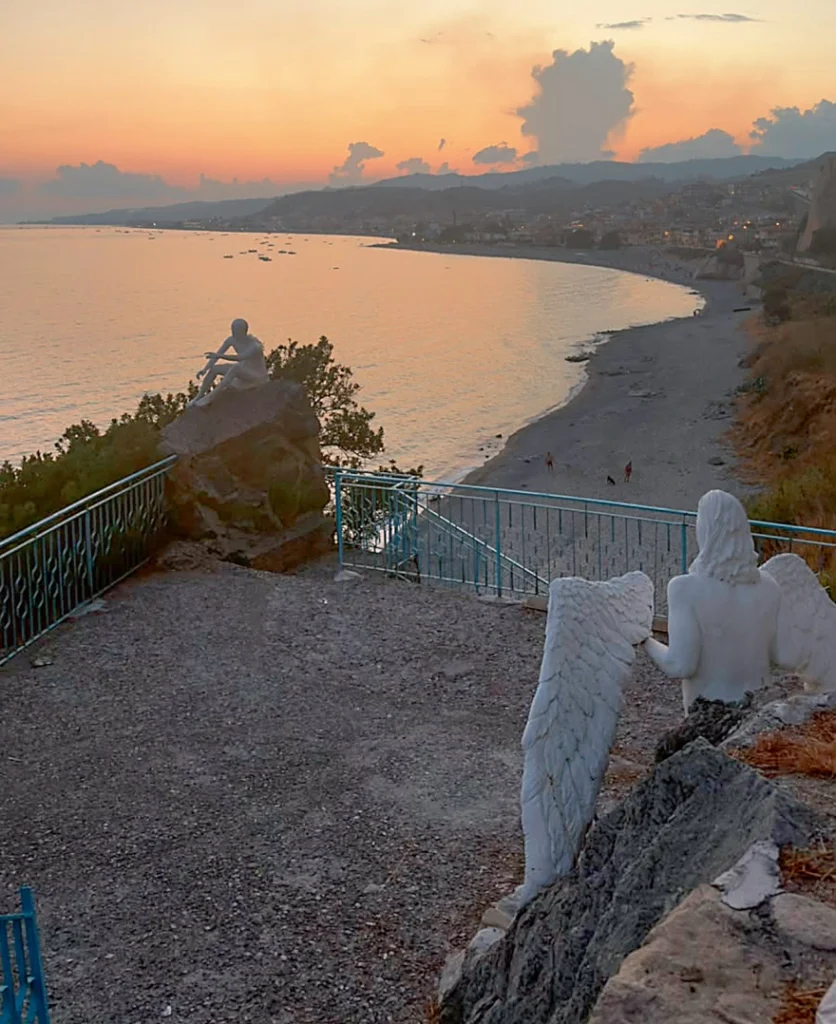
Talarico’s case also shows something else: saving a language does not only happen where it was born. It can also happen from afar, when the diaspora picks up the thread of its origins again.
In the Greek-speaking villages of Calabria, daily life remains difficult. Many of them have small populations. The younger generation often moves to bigger cities or abroad. Italian dominates every aspect of public life. The use of Grecanico is limited, native speakers are dwindling, and its transmission within families has weakened. But the picture is not only one of retreat. It is also one of search. Every lesson, every song, every festival, every publication, every video, every visit, every collaboration with Greece works as a small point of restart.
The Greeks of Italy and Magna Graecia
The historical journey explains why this heritage carries such weight. The first Greeks arrived in southern Italy and Sicily during a period of major expansion towards the western Mediterranean. They founded colonies in the 8th century BC that grew into cities with strong political, economic and cultural life. Calabria, Puglia, Basilicata, Campania and Sicily formed part of a wider Greek world. Magna Graecia was not a periphery of the Greek world. It was one of its most dynamic centres, in many cases more developed than mainland Greece itself.
Under Roman rule, the Greek cities were gradually absorbed into a different political and administrative framework, but the Greek language and education retained a strong presence. Rome took a great deal from the Greek world: the arts, literature, philosophy, religious forms and educational models. In southern Italy, Greek influence did not disappear with the change of rule. It transformed.
The Byzantine period gave fresh momentum to the Greek presence in Calabria. From the 6th century and for much of the Middle Ages, southern Italy was reconnected with the Greek-speaking world of the Eastern Roman Empire. Administration, church life, Greek monasticism, population movements and intellectual output reinforced the region’s Greek linguistic and cultural layers. Greek monasteries, copying centres and communities that kept the Greek element alive long after antiquity developed in Calabria.
Victims of nationalism
In more recent centuries, Latin and Italian pressure intensified. Nationalism and the drive to build a homogeneous nation state pushed Greek speakers to the brink of disappearance. Calabria’s Grecanico and Lecce’s Griko survived mainly in isolated, mountainous or semi-mountainous communities, thanks to the strength of oral tradition and local identity.
Today, this survival looks almost like a small miracle. But it is a miracle that needs care. A language cannot live on memory alone. It needs people like Pasquale Casile, calling students to video lessons, people like Egidio Musitano, who sees culture as an act of rebirth, people like Alessandra Talarico, who turns a personal search into music.
On the Voua seafront, on the slopes of Bova, in cultural halls, in online classes, on music platforms and in family stories, the Greek of Calabria continues to demand space. Not as a monument, but as a voice. And perhaps that is the most moving element of this story: that after 2,800 years, Magna Graecia does not exist only in books. It still exists in people who say, in their own way, that they themselves are the language.
Ask me anything
Explore related questions




