






One in three private sector employees in Greece is now paid an average salary of €1,572.59. That figure covers 900,000 full-time male employees at companies with more than ten staff. A further 250,000 salaried workers, including chief executives and specialists in technology and energy, spread across 46 sectors of the economy, take home generous salaries of more than €2,000 to €3,000. However, the labour market has a less glamorous side too, with the majority of workers settling for wages close to €1,000.
Greece’s best-paid professions are mainly in IT, finance, cybersecurity, data analysis, energy and aviation, sectors that show strong demand and high pay due to a shortage of specialised staff.
More specifically, the highest-paying sectors are banking, shipping, pharmaceuticals, construction and, for senior executives, tourism. Salaries for management positions, including chief executives, chief financial officers and managers, as well as for specialist doctors, judges and technology executives, exceed €3,000 to €5,000 gross a month. Workers aged 35 to 44 have the highest earnings, with many taking home more than €2,700.
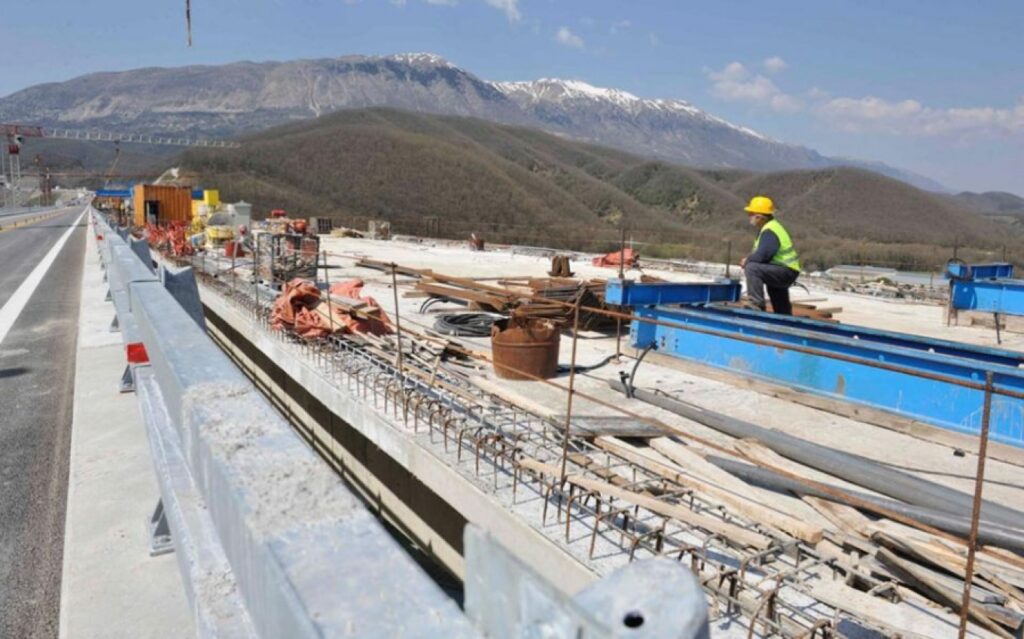
Companies offering the highest salaries in Greece in 2025 include Papastratos, Costa Navarino, Vianex, Sklavenitis, Aegean, Motor Oil, Athens International Airport, HellenIQ Energy, Demo and Intralot.
These high-productivity sectors have seen a significant rise in job numbers, pushing salaries up too. According to figures from the Labour Ministry, these include:
Finance, with an average salary of €2,940 across 39,162 employees.
Energy supply, at €2,613 across 23,071 employees.
Computer programming and consultancy services, with an average salary of €2,324 across 48,515 employees.
Research and development activities, completing the top five with €2,175 across 12,023 employees.
Pharmaceuticals, rounding off the list with a salary of €2,108 across 17,272 employees.
The €1,000 workers
However, the labour market has a less glamorous side too, with most workers settling for pay close to €1,000. In other words, outside the well-paid top 10%, average salaries remain stagnant, according to a report on wages in Greece by IOBE (the Foundation for Economic and Industrial Research), despite the cost-of-living pressures already being felt as a result of international developments.
Specifically, according to figures from Ergani, the Labour Ministry’s employment information system, only 126,963 people, or 5.16%, earn between €2,001 and €2,500, while even fewer, 112,075 employees, or 4.55% of private sector workers, earn more than €3,000. At the same time, one in three salaried workers earns up to €1,000 a month.
This picture is not expected to change. Economists estimate average salaries will rise by no more than 1.5% in 2026, as employers opt for a cautious approach, mainly due to concerns over the international situation and rising energy costs. Businesses have a standing demand for a reduction in the so-called “tax wedge,” which pushes up operating costs. Meanwhile, inflation is on an upward trajectory and is expected to close the year at 4%.
On the positive side, the way has opened for more collective agreements to be signed, and in particular for these to be extended to cover all workers in a given sector. This follows a new framework created by the social partners’ social agreement law, which introduces more flexible conditions and makes the process easier.
Gender inequality
According to figures from EFKA, Greece’s Unified Social Security Fund, for January 2026, the average salary at large companies, including part-time work, stands at €1,354.05. As previously mentioned, this rises to €1,572 for full-time male employees alone. Women are in a worse position, with their average full-time salary at large companies reaching €1,397.31, meaning they earn €175.28 less than men.

In part-time work, where women outnumber men, the average salary is higher for women, reaching €617.10 compared with €546.09 for men. At small companies with fewer than 10 staff, the average salary is €1,108.59 for men and €1,036.24 for women. These differences are worth examining in light of a new Labour Ministry law titled “Strengthening the application of the principle of equal pay between men and women for equal work or work of equal value, incorporating EU Directive 2023/970,” passed at the end of June.
According to the latest figures, women’s average hourly pay in Greece is 13.4% lower than men’s, compared with a pay gap of 11.1% across Europe as a whole. By sector, the gap is widest in information and communication, at 25.3%, followed by wholesale and retail trade at 20.1%, a rate that remains consistently high.
Financial and insurance activities rank third with a gap of 19%, while real estate management shows a pay gap of 18.7%. Manufacturing also shows high inequality at 17.4%, confirming that women continue to be paid significantly less in industrial sectors.
These are followed by health and social care activities at 14.4%, professional, scientific and technical activities at 11.8%, and transport and storage at 10.1%. The pay gap by age group tells its own story: the older the age bracket, the wider the gap between men and women. The surprise, however, comes from women under 25, who earn more than their male counterparts. This is put down to young women’s higher levels of education, and their greater representation in more highly skilled professions in the early stages of their careers compared with men.
Pay differences between the sexes are not just a Greek phenomenon but are found across the globe, 70 years after the principle of “equal pay for equal work” was enshrined in the 1957 Treaty of Rome. Equality remains stubbornly on paper only, with just modest improvements recorded in recent years. Europe has moved forward, women have won rights and risen to top positions, but payslips continue to show they remain in a lesser position.
By way of illustration, in 1963 women earned just 59 cents for every dollar earned by men. By 2010, that figure had risen to 77 cents per dollar, an average annual improvement of about half a cent. The outlook is discouraging: according to Forbes, full pay equality between men and women is not expected to be achieved before 2056.
Across the EU, only Luxembourg is close to closing the gap entirely, while Belgium, Italy, Romania, Malta and Slovenia have relatively small pay gaps. By contrast, Latvia records a large gap of 19%, followed by Austria (18.3%), Czechia (18%), Hungary (17.8%) and even Germany (17.6%). The gender pay gap means women face a greater risk of poverty in old age. In 2020, women in the EU aged over 65 received pensions that were, on average, 28.3% lower than those received by men.
The causes of the gap
The main reasons behind the pay gap relate to levels of education, work experience and part-time employment. According to 2022 figures, almost a third of women (28%) work part-time, resulting in lower pay, while a third of employed women in the EU have interrupted their careers to focus on childcare.
About a quarter of the overall gender pay gap can be explained by the overrepresentation of women in relatively low-paid sectors such as care, health and education. Although the number of women in positions of responsibility has grown, it still lags behind that of men. In 2021, for example, women held an average of 34.7% of managerial positions across the EU. Even so, female managers still earn 23% less per hour than their male counterparts.
What the new law provides
The Labour Ministry’s law to strengthen pay equality between men and women is attempting to change this landscape. It introduces a comprehensive framework for pay transparency, both before hiring and during employment. In practice, the key provision states that where pay differences exceed 5%, employers must make corrections, in other words pay rises, to close the gap. Where employers fail to comply and correct the pay gap, the EU directive gives workers the right to claim compensation.
Ask me anything
Explore related questions




