





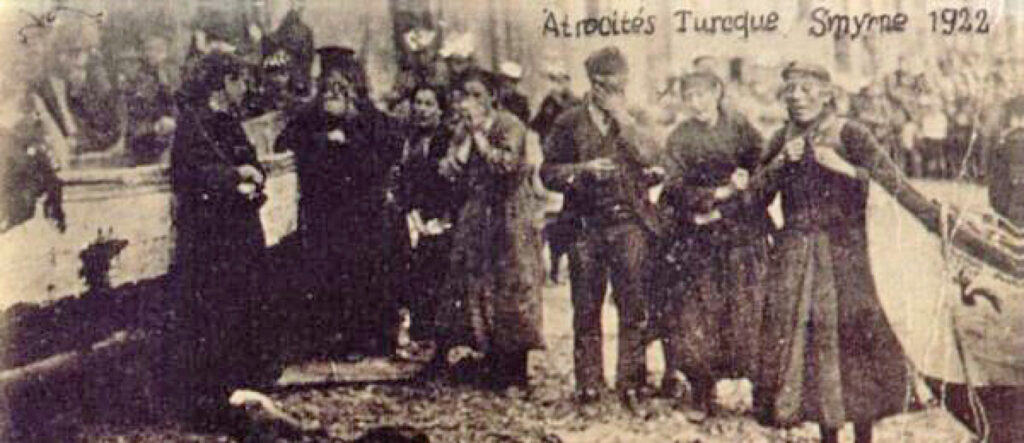
Greece observes September 14 as the Day of National Remembrance of the Genocide of the Greeks of Asia Minor, honoring hundreds of thousands of victims of persecution, massacre, rape, ethnic cleansing and exile that culminated in the burning of Smyrna in 1922.
The date was established by unanimous vote of the Hellenic Parliament in 1998. Lawmakers chose September 14 because it coincides with the height of the Great Fire of Smyrna, when the city’s Greek and Armenian quarters were destroyed after Kemalist forces entered the city. The commemoration, however, covers a longer campaign of violence against Greek communities in Ionia, Pontus, Cappadocia and Eastern Thrace from the final years of the Ottoman Empire.
Historians estimate that more than one million Greeks were killed, deported or died in forced marches between 1913 and 1923. The collapse of the Greek front in August 1922 and the subsequent flight of civilians to the Smyrna waterfront remain the most vivid symbols of the catastrophe. Metropolitan Chrysostomos of Smyrna was among those murdered. The 1923 population exchange then uprooted more than a million remaining Greeks and Orthodox Christians from ancestral lands they had inhabited for millennia.
The day also falls on the Orthodox Feast of the Exaltation of the Holy Cross, giving the anniversary a dual civic and religious character. Greece pursues the demand for international recognition of the genocide.
Turkey rejects the genocide designation and marks late August as a…military victory just as they do with the Armenian Genocide. The dispute continues to shape Greek-Turkish relations and diaspora advocacy. Greek officials and Pontian and Asia Minor associations argue that recognition would not rewrite borders but would acknowledge historical fact and the destruction of a 3,000-year Hellenic presence in Anatolia.
For many families, September 14 is personal. Descendants of refugees still keep keys, photographs and recipes from Smyrna, Aivali, Vourla and the Pontic coast. The official remembrance day is intended as a minimum tribute to those who were killed and to those who rebuilt their lives in Greece after arriving with almost nothing.
As another anniversary arrives, the core message remains the same: the events of 1922 were not only a military. They ended the millennia of Greek presence east of the Aegean. Remembering them is framed in Greece as a duty of history.
Ask me anything
Explore related questions




