





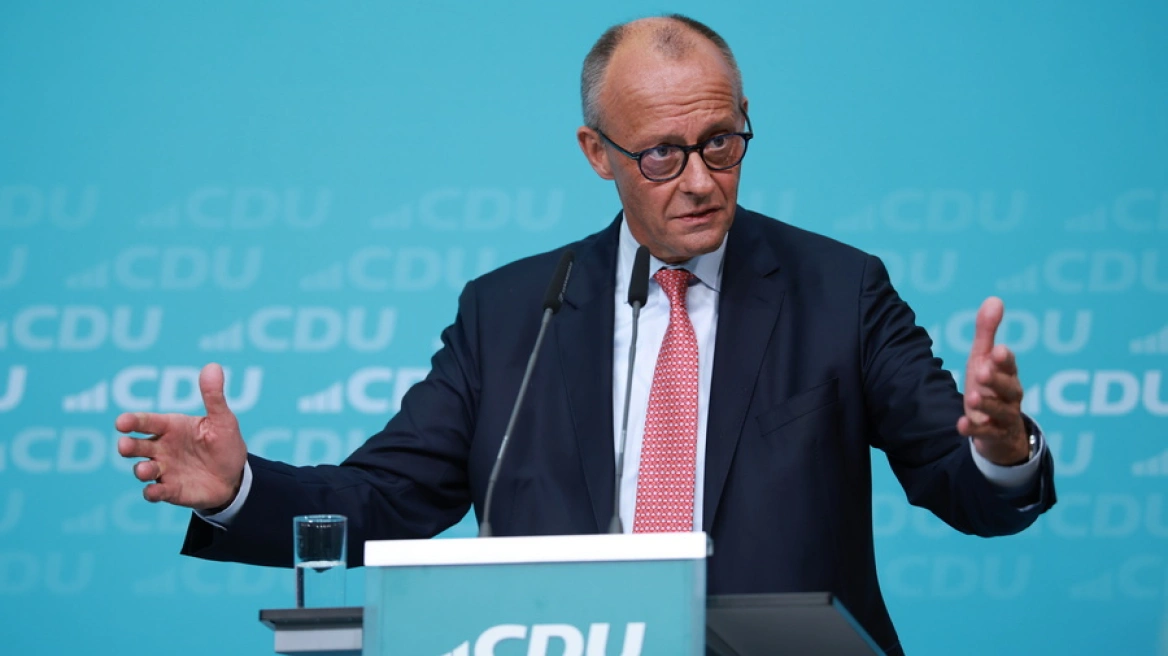
German Chancellor Friedrich Merz sparked intense debate last week after telling young scientists that critics should not “come to me with free speech” while advocating tighter controls on social media and an end to online anonymity.
Speaking at a meeting with winners of the “Jugend forscht” competition on 15 September, Merz was asked how a proposed real-name requirement would protect whistleblowers and investigative journalists. Unsurprisingly, he did not answer the question directly. Instead he contrasted the “analogue world” of his youth—where newspapers could be sued for false claims—with the digital public square, where users hide behind pseudonyms and bots. “Please, nobody come to me with Free Speech. That has nothing to do with Free Speech anymore,” he said. He dismissed America’s tradition of unrestricted free speech as a “libertarian” philosophy he personally rejects. A liberal society, he insisted, must still protect citizens “from false information, personal degradation and discrimination.”
The remark is not a technical policy detail. It is a statement of governing philosophy. In a constitutional democracy the right to speak and to receive information is not a gift the state bestows when it deems speech sufficiently “hygienic.” Article 5 of Germany’s Basic Law protects the right to express opinions freely and to inform oneself from generally accessible sources. That protection exists precisely as a defence against those in power who claim the authority to decide which information is “false.”
Merz’s formulation inverts the relationship. The government, not the citizen, becomes the judge of truth. Anonymity—historically essential for exposing corruption and holding officials to account—is recast as a threat rather than a safeguard. When the chancellor of a liberal democracy treats free speech as an inconvenient American import rather than a foundational European right, the conversation has already moved from regulation to permission.
Critics, including journalist Julian Reichelt, argue the chancellor’s view of the public is paternalistic and borders on constitutionally hostile. Democracies do not survive by shielding citizens from information the government dislikes. They survive when citizens can test official claims, including those of the chancellor himself. Merz’s words reveal a deeper discomfort with that test.
Statements like these have fueled mistrust of the German government and weaken its argument every time it warns about “extreme” forces that may threaten the country’s democracy. So when Chancellor Merz sees the election results tonight, he had better not act surprised…
Ask me anything
Explore related questions




