





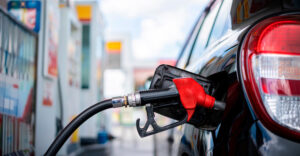
As conflicts in the Middle East and between Russia and Ukraine continue unabated, causing serious disruption to energy markets, record fuel prices are putting intense pressure on drivers, businesses and governments across Europe, with diesel reaching historic highs in France, where shortages are also being reported.
According to French authorities, increased demand at cheaper filling stations is creating localized supply problems. On Sunday, the average fuel price in the country reached a record high of €2.41 per litre, while 14% of filling stations were experiencing shortages of at least one type of fuel. Notably, consumption of liquid fuels in the country fell by 30% over the past ten days compared with the previous period.
Seeking to limit the impact of the shock, the French government announced yesterday that it would allocate €450 million to extend fuel subsidies through the end of the year. The new measures include a subsidy of 15 cents per litre for diesel used by farmers for non-road activities, while construction companies’ trucks will receive support of 20 cents per litre.
At the same time, the subsidy for low-income workers who need their cars for commuting to work is being doubled. The support will rise from 20 to 40 cents per litre, with nurses who make home visits being a typical example.
Fuel: Why Europeans Pay Widely Different Prices
The reason European consumers pay widely different fuel prices depending on the country they are in is mainly explained by differences in taxation and subsidy policies.
Julien Matonier, an economist at Energy Intelligence, told Agence France-Presse that “Europe taxes fuel particularly heavily,” with the minimum tax per litre standing at 33 cents for diesel and 35.9 cents for unleaded gasoline. VAT is then added, with the rate in Europe standing at a minimum of 15%. In France, for example, it is 20%.
“Each EU country can add its own taxes” above the minimum levels, Matonier explained to AFP, creating significant differences in final pump prices. On September 14, according to data from the European Union, a litre of diesel cost around €2.50 in Denmark and Finland, €2.29 in France and €1.83 in Spain.
In general, taxes often account for more than two-thirds of the final fuel price in Europe, according to Matonier.
Fuel Prices in EU Jump 23.8% in August – Diesel Surges 8.3% in One Month
The data published yesterday by Eurostat on fuel prices in August are indicative of the situation. Prices for fuels and lubricants for personal transport in the EU increased by 23.8% year-on-year, following an increase of 13.7% in June and 16.9% in July. It should be noted, however, that Greece was among the five countries with the smallest increases, behind Hungary, Sweden, Ireland and Estonia.
The increase in diesel prices was particularly pronounced. Across the EU, diesel prices rose by 8.3% in August compared with July, while gasoline prices increased by 3.3%. In July, compared with June, prices had risen by 4.3% for diesel and 4.7% for gasoline.
The Diesel Surge Costs European Drivers an Additional €203 Million a Day
Due to the explosive rise in diesel prices, a new analysis by the non-governmental organization Transport & Environment (T&E), based on European Commission data, shows that European drivers are paying around €30 more each time they fill their diesel tanks.
Analysis of European Commission data shows that drivers are now paying 40% more than at the beginning of the year, adding around €30 to the cost of filling a 50-litre tank. By comparison, gasoline prices have increased by 28% during 2026.
Across Europe, the additional cost of diesel is estimated at €203 million per day since the conflict began. This estimate does not include fuel tax reductions, which, according to the organization, will ultimately have to be covered either through other tax measures or additional borrowing.
Why Europe Is More Exposed
Diesel accounts for more than 40% of petroleum product consumption in the European economy, a higher share than in any other region and approximately twice that of the United States. This makes Europe particularly vulnerable to price increases.
“As long as our road transport relies on internal combustion engines, we depend on an extremely volatile commodity over which we have no control. Electrification can make us more resilient during periods of crisis,” said Juliette Eggel, T&E’s lead data analyst.
The EU has set a target of doubling the share of electrification in the economy by 2040, reaching 46% of energy demand. Increased electrification could reduce the global energy import bill by more than $400 billion, according to a report by the International Energy Agency (IEA).
European Commission President Ursula von der Leyen said last week that imported fossil fuels have cost Europe an additional €90 billion since the start of the war in Iran, “without adding a single molecule of energy.”
The Legacy of the “Diesel Era”
As the Financial Times points out, Europe’s heavy exposure to diesel prices is largely a legacy of policies implemented in the 1990s and 2000s that encouraged its use. The greater efficiency of diesel engines at the time meant lower carbon dioxide emissions and lower costs for drivers compared with gasoline.
This trend gradually began to reverse as the impact of diesel vehicles on air pollution became clearer. The Dieselgate scandal was a decisive factor, revealing that real-world nitrogen oxide emissions from diesel-powered cars were far higher than those recorded in laboratory tests.
Despite this shift, millions of diesel-powered vehicles continue to operate on European roads. According to T&E data, four out of ten cars in Europe run on diesel.
The organization also points to short-term measures proposed by the IEA to reduce diesel demand. These include lowering motorway speed limits by 10 km/h and encouraging remote working wherever feasible.
At the same time, it is calling on Brussels to maintain its goal of gradually phasing out internal combustion engines, despite pressure from the European automotive industry, which is facing significant challenges.
Ask me anything
Explore related questions




