





Repeated attacks on refineries in Russia, Ukraine and the Middle East have removed vast quantities of petrol and diesel from the world market, pushing pump prices higher across the globe.
The latest blow came on 20 September, when Ukrainian drones hit the Moscow oil refinery in the Kapotnya district, which is operated by Gazprom Neft and supplies about 40% of the capital’s fuel. Moscow Mayor Sergei Sobyanin said it was the largest drone attack the city had faced, and that several drones reached the refinery grounds. Damage to energy facilities around the Persian Gulf has deepened the shortfall.
Fuel prices are no longer set by Brent crude alone. What matters now is how much oil the world is able to refine.
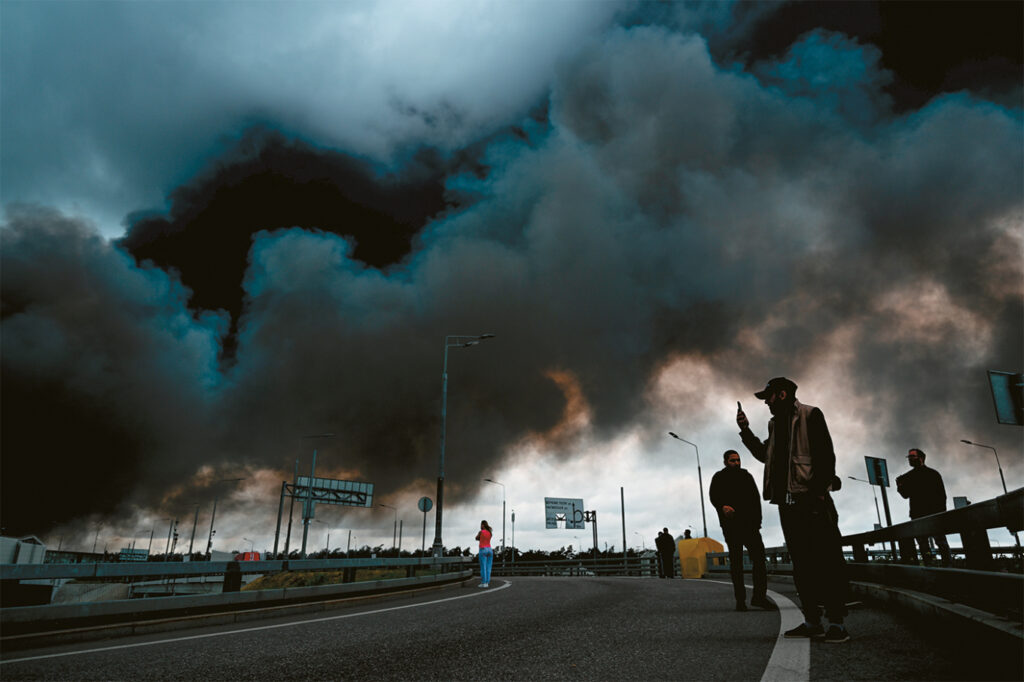
Global domino effect
In the space of five years, war has turned refineries into front-line targets. Since 2022, at least 40 major refineries worldwide have been badly damaged, destroyed or forced to shut for long periods by military strikes.
Russia was historically the world’s third-largest producer of refined products, behind the United States and China, and supplied 10% of global diesel. Its refining output has now fallen to 3.8 million barrels a day, according to the International Energy Agency (IEA). That is 30% lower than a year ago and the weakest level in 20 years. Petrol production is down 20% and diesel output has dropped by 30%.
The pace of the attacks is relentless. During the first eight months of 2026, a Russian refinery was hit on average once every three days. Of the country’s 32 large refineries, 27 have been struck. Ukrainian drones are now reaching targets more than 2,500 kilometres away, including the vast Omsk refinery in Siberia.
The campaign mirrors what Ukraine itself suffered in 2022, when Russian forces wrecked its refining industry. The Kremenchuk refinery, then the largest and only one still operating in the country, was hit by dozens of missiles and drones. It was put permanently out of action and must be rebuilt from the ground up. The facilities at Odesa and Lysychansk met the same fate, wiping out Ukraine’s domestic production.
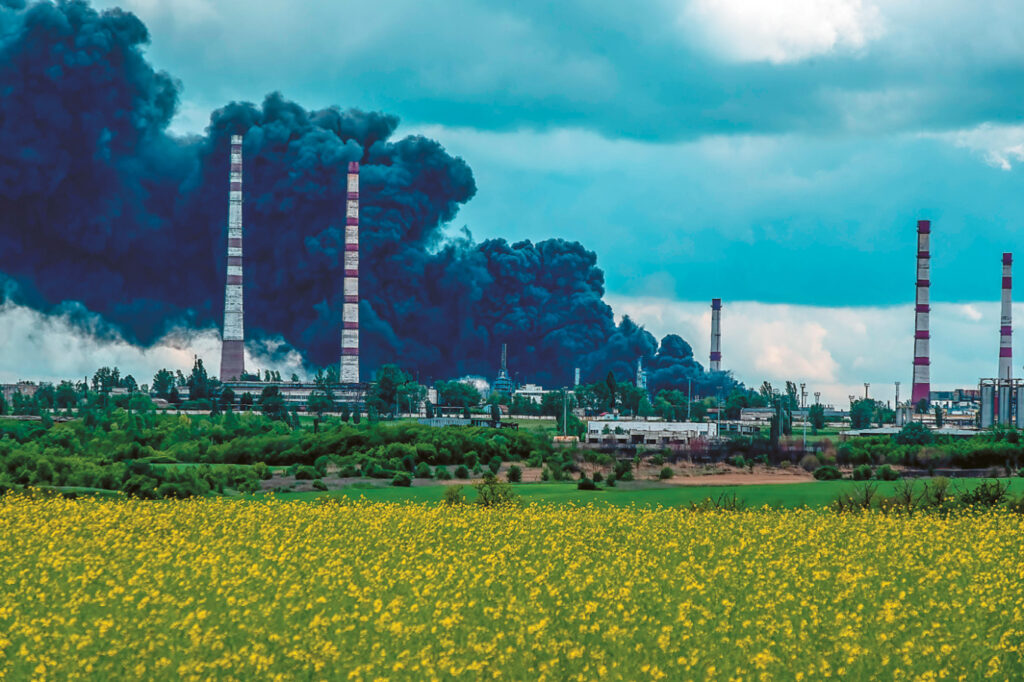
The Middle East front
A second, equally destructive front has opened in the Middle East, where successive conflicts have hit some of the biggest refining hubs in the world. In Israel, Iranian missiles repeatedly struck the Bazan complex in Haifa Bay, which supplied 65% of the country’s diesel and 59% of its petrol. The attacks badly damaged its power generation units and forced a partial shutdown.
The fallout in the Persian Gulf was even greater. In Saudi Arabia, the giant Ras Tanura refinery, with a capacity of 550,000 barrels a day, was forced to suspend operations temporarily, while ExxonMobil’s Samref refinery was hit by drones launched by Yemen’s Houthi rebels.
Extensive fires broke out at the Ruwais refinery in the United Arab Emirates. In Bahrain, Bapco declared force majeure at its Sitra refinery after its diesel hydroprocessing units suffered severe damage. Energy facilities were similarly hit in Kuwait (Mina al-Ahmadi), Qatar (Ras Laffan) and Iraqi Kurdistan.
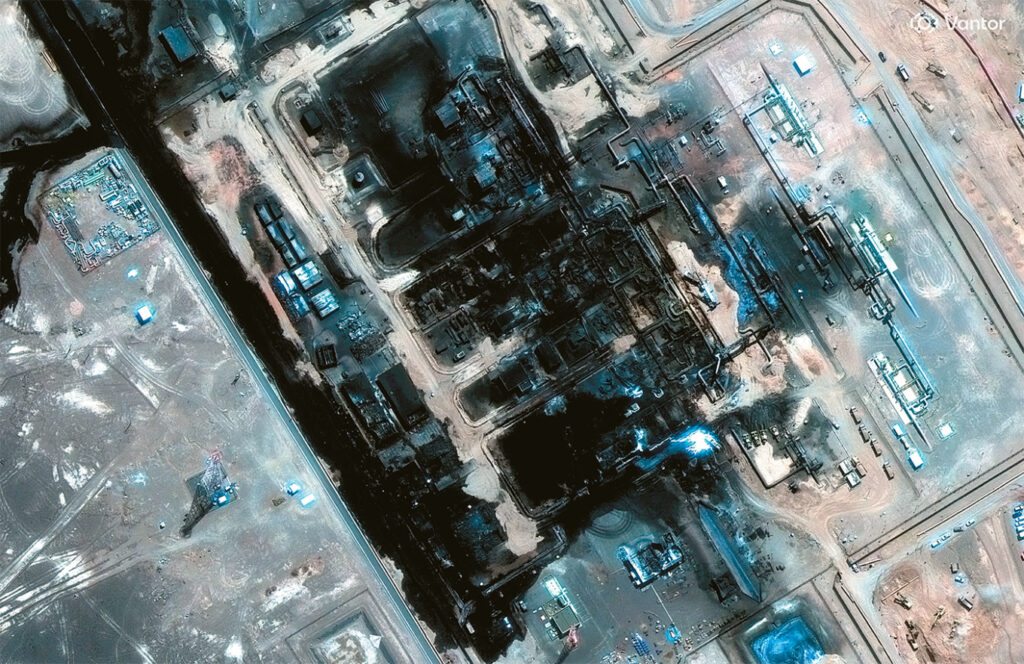
Figures from the international monitoring body IIR show that the conflicts have knocked out up to 3.52 million barrels a day of refining capacity, equivalent to 3.5% of global output. Refining across the region has fallen to 7.3 million barrels a day from 9.9 million before the crisis. Repairing the Gulf’s infrastructure is expected to cost $25 billion.
Europe feels the squeeze
When the world loses output from its two biggest sources of finished fuel, Russia and the Persian Gulf, at the same time, the market is thrown violently off balance. Had the crisis restricted only crude supplies, consuming countries could have drawn on strategic reserves or turned to other producers. This time the problem lies entirely at the final stage of the chain: the conversion of crude into usable fuel.
Combined diesel exports from the Middle East and Russia have fallen 75% compared with previous years, a historic drop. The shortage has pushed the diesel crack spread, the gap between the price of the finished fuel and that of crude, above $100 a barrel in the Atlantic and north-west European markets.
Europe, which has spent decades closing older and less efficient refineries, has found its reliance on imports to be an Achilles heel. The average price of diesel across the EU’s 27 member states has reached a record €2.23 a litre, reflecting geopolitical scarcity rather than the cost of crude. According to Eurostat, European consumers have seen fuel prices climb steeply within a matter of months, raising transport costs and reviving inflationary pressure.
The IEA warns that refining in the OECD countries is now operating at the limit of its practical capacity. In 2022, Europe avoided the worst thanks to an unexpected wave of finished fuel exports from China, but a repeat looks uncertain. Widespread damage, combined with seasonal maintenance at the refineries still working, leaves no room to spare.
The risks to the European and Greek economies are immediate and wide-ranging, because diesel is the lifeblood of supply chains. A rise in its price feeds straight through to the cost of everything that is transported, produced or built. With winter approaching, the tight supply will also push up the price of heating oil, threatening household budgets. If attacks spread to major export ports, a shortage of products would turn into a full-blown crisis in oil supply.
The US diesel question
On the other side of the Atlantic, the shortage has produced a contradictory picture. The average US diesel price has hit a record $6.529 a gallon, and diesel futures on the CME exchange have reached their highest level since 1978.
Yet the same squeeze has delivered the biggest profits in the history of American refiners. Marathon Petroleum, Valero and Phillips 66 have seen their refining margins more than double, and together made $12.6 billion in a single quarter. The US has become the world’s main supplier, shipping more than 1.5 million barrels of diesel a day to fill the gap in Europe and Latin America, and earning about $25 billion in just 90 days.
That flow to Europe has hung by a thread. Under pressure from Republicans representing farm states, where growers are being hammered by the cost of diesel, US President Donald Trump seriously weighed cutting off exports. On the sidelines of the UN General Assembly, he left open the prospect of a ban or tight restrictions on exports of refined products to bring down prices at home. On 22 September, Trump said he had called for a ban on diesel exports, while Treasury Secretary Scott Bessent said officials were examining whether a full or partial ban would work.
On 2 October, however, Trump reversed course. He said the United States would not authorise a diesel export ban, hours after the G7 agreed to release diesel and crude from emergency reserves. The G7 pledged to release 100 million barrels of fuel over four months, with a substantial diesel release front-loaded in the first 20 days.
A ban would have meant another uncontrolled jump in prices at European petrol stations, whatever crude was trading at.
Greek refineries provide a buffer
Against this bleak international backdrop, Greece finds itself in an unusually favourable position. While Europe suffers from years of underinvestment in refining, Greece has one of the most modern and efficient refining sectors on the continent. Industry data show it is one of only three EU countries that consistently produce a surplus of oil products.
Crucially, that surplus is in precisely the fuels in shortest supply worldwide: road diesel and jet fuel (kerosene). This structural advantage has allowed the country’s two big refining groups, Motor Oil and HELLENiQ ENERGY (formerly Hellenic Petroleum), to become powerful exporters and post historic profits, while also safeguarding Greece’s own energy supply.
Motor Oil recorded one of the best half-years in its history. Group turnover for the first half of 2026 rose 42.89% year on year to €7.524 billion, driven mainly by an 18.06% increase in sales volumes. Operating profit (EBITDA) jumped 170% to €1.047 billion, and net profit after tax more than quadrupled to €689.3 million.
The group’s weighted average margin more than tripled to $174.72 a metric tonne, against just $54.61 a year earlier. Management attributed the jump directly to geopolitical tensions, disruption to global supply chains and the blockade of shipping lanes in the Persian Gulf.
A key factor was the full return to operation of the Agioi Theodoroi refinery in Corinth, Greece’s largest industrial complex, with a capacity of 255,000 barrels a day. Motor Oil processed 6.596 million tonnes of feedstock in total, and its crude processing more than doubled. Its production machine reached full power just as the international market was prepared to pay historically high premiums for every available tonne of finished fuel.
The group’s export focus strengthened further, with sales abroad and shipping accounting for 78.10% of total output. It also showed considerable flexibility in sourcing crude while the Strait of Hormuz remained closed. Some 60% came from Iraq and 26% from Libya, with the remainder from Saudi Arabia, Kazakhstan and the North Sea.
Exports
HELLENiQ ENERGY, which controls the refineries at Aspropyrgos, Elefsina and Thessaloniki, is performing just as strongly. Comparable EBITDA for the first half of 2026 reached €734 million, up 83% on last year, while comparable net profit came to €393 million.
Refining and supply are clearly at the heart of the group’s profits. Its international refining margin rose to $9.5 a barrel, at a time when Brent had stabilised at high levels.
Its refineries produced 3.5 million tonnes, with 56% of output made up of diesel and jet fuel. They supplied more than 60% of the Greek domestic market’s needs, ensuring a steady flow to petrol stations, and exported 1.7 million tonnes. Exports of diesel and jet fuel rose 35%, going almost entirely to the undersupplied markets of the rest of Europe.
As HELLENiQ ENERGY chief executive Andreas Shiamishis pointed out, the current crisis is not a shortage of oil but a clear shortage of refined products.
Reduced output from refineries across the Mediterranean and the Middle East, whether because of war or years of underinvestment in maintaining capacity, has opened a huge gap in supply. Greek refineries, which carried out major modernisation programmes in good time, have been able to exploit the situation by selling products abroad at much improved margins.
Photos: Reuters, Getty Images / Ideal Image
Ask me anything
Explore related questions




