






Kimberly Guilfoyle has, in the end, managed to make history as US ambassador to Greece. But it would be premature to complete that statement with the familiar cliché that she did so “in her own way”.
Guilfoyle made history as the first female US ambassador to Greece, but essentially did so in the style of US President Donald Trump. The cynicism, arrogance, complete disregard for the standards of decorum expected of an ambassador, and above all her brazen and offensive rhetoric, combined with an ostentatious and provocative public persona, amounted to a degree of hubris that even the US President was ultimately unwilling to tolerate.
Guilfoyle certainly never concealed who she was. From her very first moments in Greece, she made clear what she liked and disliked, how and where she wanted to be seen, whom she wished to associate with and whom she preferred to avoid. She also made it apparent that the most prominent figure in her entourage would not be her chief of staff or personal assistant, as might traditionally be expected, but her personal stylist.
She behaved like an eccentric diva, a showbusiness personality, a socialite and cosmopolitan celebrity, rather than the representative of a superpower in a European country. In her personal hierarchy of importance, a popular singer or a sports club appeared to command much the same level of respect as the institutional representatives of the Greek state, with little distinction between them.
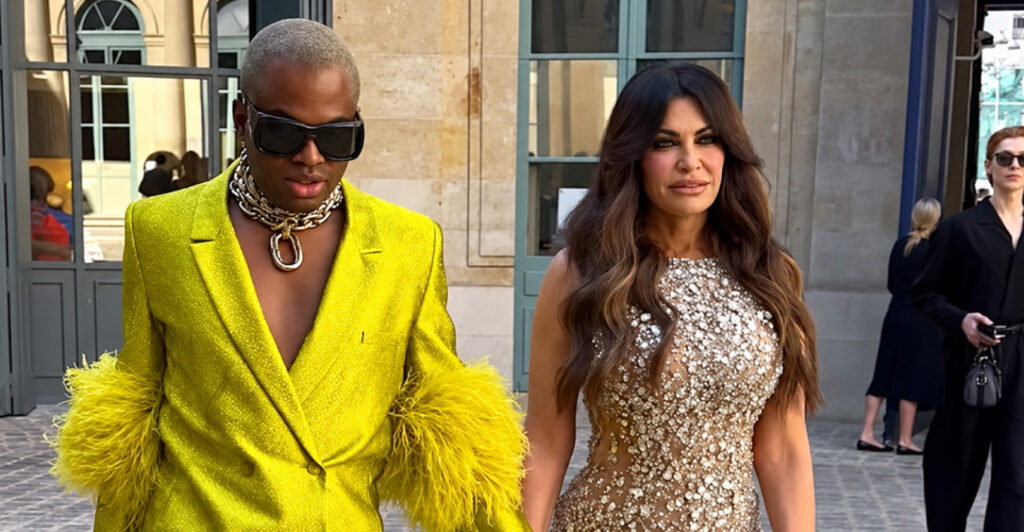
Initially, she was given the benefit of the doubt as an unconventional and somewhat different ambassador, particularly in light of the standards Trump has introduced into international politics. In a sense, Guilfoyle was merely attempting to emulate his way of operating and conducting himself as convincingly as possible.
Did she take things too far and lose all sense of proportion? Quite possibly. After all, her diplomatic training consisted of accelerated courses undertaken between Trump’s decision to nominate her as the next US ambassador to Greece and her eventual arrival in Athens a year later.
Before that, her career had followed an unpredictable and unconventional path. Having established herself as a successful lawyer, she moved to the other side of the courtroom as a prosecutor in California before deciding to become a journalist and television presenter. She subsequently became a communications adviser to aspiring politicians, excelling at mobilising support and, above all, raising funds for the candidates who paid for her services.
Yet beyond the revelations published by The Wall Street Journal about Guilfoyle, including what the American newspaper described as thoroughly substantiated evidence that she had demanded $100,000 from an American businessman, suggesting that she had accepted money while serving as ambassador, the most serious issue for Greek-American relations was of an entirely different nature from her personal integrity. It concerned a remark about the power of the United States to bring governments to power or remove them whenever it wishes, in whichever country it chooses.
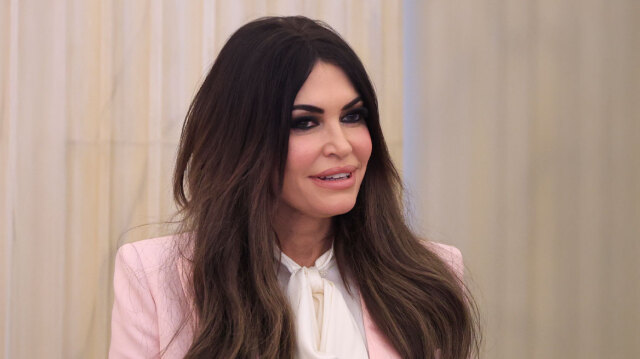
According to reliable sources who spoke to protothema.gr, the incident did indeed take place, despite widespread efforts on both sides to keep it quiet. It involved an exchange between Guilfoyle and Environment and Energy Minister Stavros Papastavrou that could have escalated into a full-blown diplomatic incident and potentially a serious crisis in Greek-American relations.
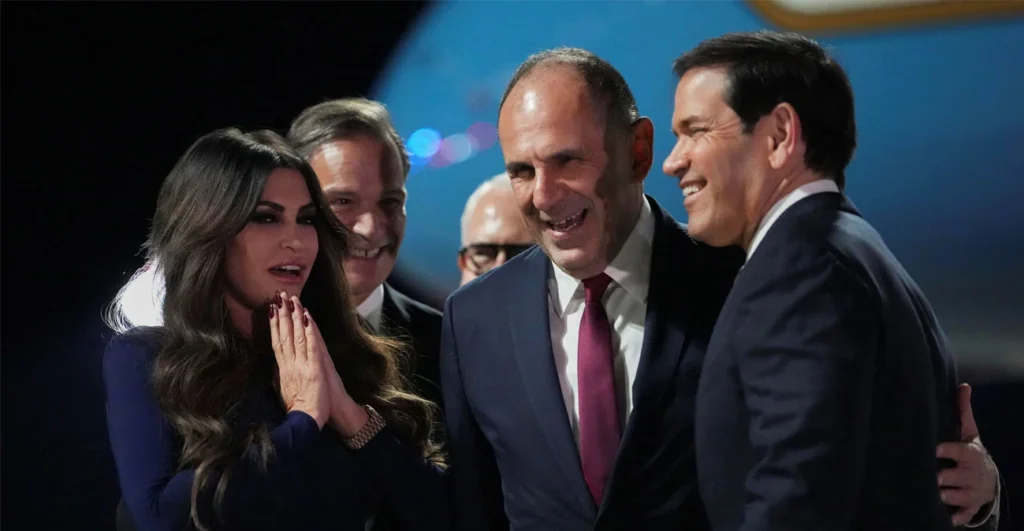
The Wall Street Journal, evidently well informed by insiders and apparently determined to bring Guilfoyle down from her prestigious diplomatic position, published its revelations just as she was preparing for further publicity surrounding a visit to Athens by her superior, US Secretary of State Marco Rubio.
Last spring, during a dinner at the US Embassy in Athens, Guilfoyle, displaying the sort of casual arrogance that only a genuinely overbearing political official could muster, reportedly boasted: “Did you see what happened in Romania [referring to the collapse of the country’s government]? I can assure you we can do the same in any country we want. We can do it here too.”
Unless she was drunk, which might at least have offered some mitigation for what she said, Guilfoyle should have regretted her words immediately. The insult to Greece was extraordinary, unacceptable and unforgivable. And that was precisely how Papastavrou regarded it.
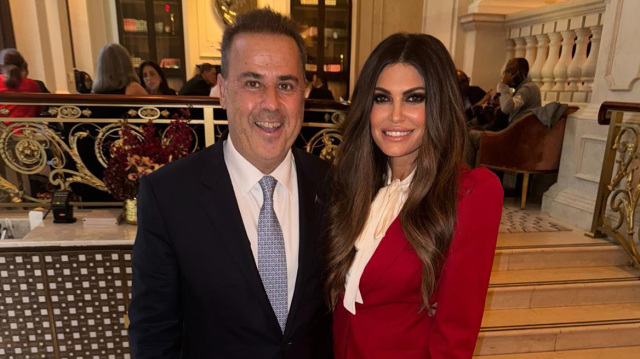
The Environment and Energy Minister, who until then had developed the closest relationship with Guilfoyle of any member of the Greek government because of highly significant developments in bilateral energy agreements, reacted forcefully to the ambassador’s extraordinary audacity. He reminded her that even in the relaxed atmosphere of a social gathering, the slightest suggestion of foreign interference in the domestic political affairs of a sovereign, democratic country governed by the rule of law, such as Greece, was unacceptable. Papastavrou made it clear that Greece had the government elected by the Greek people and that he took instructions from no one other than Prime Minister Kyriakos Mitsotakis.
Witnesses who overheard the exchange recall that Papastavrou appeared to restrain his anger, recognising that Guilfoyle had overstepped the mark without appreciating the gravity of her remarks. He chose not to pursue the matter further, content to put the ambassador firmly in her place and establish the limits of what he was prepared to tolerate. Later, when The Wall Street Journal accused Guilfoyle of a series of controversial or openly improper actions in the performance of her duties, her lawyers described the incident as “far less significant than portrayed”.
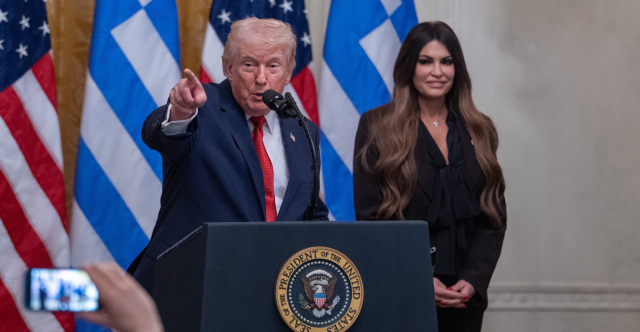
One of Guilfoyle’s biggest mistakes, and one that has now proved self-destructive, was her decision to imitate Trump’s manner and behaviour, inevitably doing so even more crudely and clumsily than the man who inspired her. After all, if Trump himself, who might have become her father-in-law had her relationship with his son, Donald Trump Jr., led to marriage, can talk about annexing Greenland, become furious when someone else receives the Nobel Peace Prize, demonstrate contempt for the European Union, congratulate himself for wars he claims to have prevented or ended while the United States remains embroiled in conflict with Iran, and boast of defeating the “corrupt justice system” that dared to prosecute him for a series of serious offences before staging a comeback to win the November 2024 election, then it is perhaps inevitable that someone like Guilfoyle would regard his conduct as a doctrine to follow.
But just as Trump became the first US President in history to face dozens of criminal convictions, the former partner of one of his sons could find herself facing charges over some of the most controversial actions she allegedly took while protected by her official position as US ambassador to Greece.
If Trump’s political opponents, particularly Democratic senators angered by The Wall Street Journal’s revelations, press for her prosecution, Guilfoyle could face allegations of financial and institutional abuses. At the very least, such proceedings could end her diplomatic and political career and permanently extinguish any ambitions she may have of advancing into the highest circles of power.

Guilfoyle’s colourful life and career have already become the stuff of sensational headlines and will undoubtedly attract even greater public interest. At the same time, her case threatens to inflict further damage on Trump’s already battered reputation as he approaches the midterm elections in a few weeks, hoping to emerge with as little damage to his presidential standing as possible.
Nevertheless, one crucial fact must not be overlooked: Guilfoyle was the US ambassador to Greece. This is the country that Rubio praised so lavishly only days ago, invoking its ancient democratic tradition, philosophy and role as the birthplace of democracy. His references also served as indirect expressions of his own vision for governing the United States, as the current Secretary of State is widely seen as a potential successor to Trump, a contender for the Republican presidential nomination and, ultimately, the White House.
The central question, therefore, is what the Guilfoyle fiasco means for Greece more broadly, what implications the scandal surrounding her may have, whatever its precise nature, and what consequences the country could face as a result. Put simply, has Greece gained or lost from the extraordinarily brief tenure of a personality such as Guilfoyle as US ambassador?
For a start, Guilfoyle’s downfall represents at least a partial collapse of Trump’s unconventional belief that the diplomatic service, even at its highest levels, can be staffed not by experienced and specialised professionals but by political outsiders whose principal qualification is their absolute and demonstrable loyalty to Trumpism and the Make America Great Again movement. Ideally, such appointees should also belong to the Trump family, at least in the broader sense.
It is no coincidence that, alongside Guilfoyle’s premature dismissal, serious doubts are reportedly gathering over the future of Charles Kushner, the father of Jared Kushner and a member of Trump’s extended family by marriage, who serves as US ambassador to France. Following his attacks on the French government for allegedly failing to support Israel strongly enough and doing too little to protect the country’s Jewish community, Kushner’s position in Paris is reportedly looking increasingly precarious.
Returning to Greece, the headline of a New York Times report on Greek public attitudes towards Guilfoyle is particularly revealing: “Exasperation and Resignation in Greece Over Allegations Against Kimberly Guilfoyle”. Its message is one of disappointment, indeed profound disillusionment. The word “resignation” does not refer to the ambassador’s departure but to a sense of weary acceptance that the United States does not hold Greece in particularly high regard, as reflected in its decision to appoint someone like Guilfoyle to represent it.
The New York Times correspondents quoted ordinary Athenians expressing their views on the affair. “Greece is a small country and, more or less, has to dance to the tune of the United States. Whether a corrupt diplomat stays or goes won’t make much difference,” said P.H., a 47-year-old pizza restaurant owner.
A.R., a 52-year-old former nurse, offered a similarly critical assessment: “By choosing Guilfoyle, the United States showed that it looks down on my country as a reliable ally. Instead of honouring the friendship between our two peoples, they sent us Kimberly as though they were doing her a favour. Because Greece is a small country, we have to have friends, and we need America. But we’ll dance to their tune only as long as it serves our own interests. We are not their subjects.”
Guilfoyle’s brief and controversial, if not outright reprehensible, tenure in Greece has certainly done the country no favours. On the contrary, it has been damaging in several respects. The most immediate practical consequence is that the post of US ambassador will remain vacant at a particularly turbulent and uncertain time for the wider Mediterranean region.
Meanwhile, developments of critical importance are under way in the energy sector, affecting not only Greece but Europe more broadly, including its dealings with the Middle East and the Balkans. Guilfoyle had attempted to identify the more serious side of her presence in Greece with the development of new energy corridors. Inevitably, any continuation of those initiatives will have to build on agreements bearing her signature.
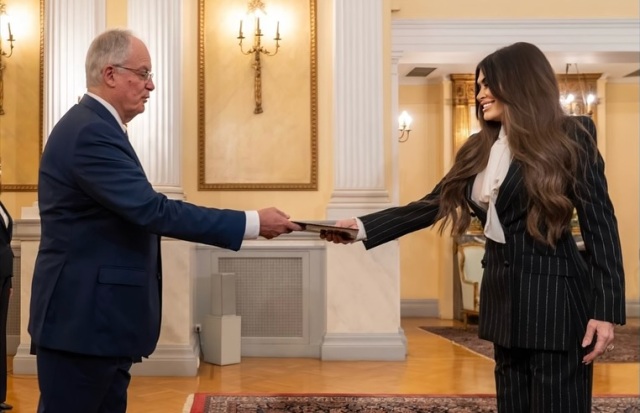
On the other hand, it is worth remembering that almost the entire upper echelon of Greece’s political establishment sought contact with Guilfoyle. This included not only the government and the Presidency of the Republic but virtually every political leader across the parliamentary spectrum, all of whom either paid their respects or attempted to establish relations with the ambassador.
There is no shortage of photographic evidence. Nor is there much point in criticising the government more harshly than the opposition for doing what was, after all, entirely natural: seeking to engage with the US ambassador, a representative chosen by Washington, not by the Greeks.
Today, Trump is attempting to distance himself from the burden and embarrassment of Guilfoyle. Yet when he selected her in December 2024, he lavished praise on her leadership and management abilities, her experience and, above all, her “sharp intellect”, describing her as a “close friend and ally” in the pursuit of the great MAGA vision. Guilfoyle had, after all, raised millions of dollars to help Trump return to the White House.
When the time comes for Guilfoyle to tell her own version of events, perhaps in her memoirs, and hopefully more convincingly than her belated and ineffective response to the corruption allegations, she may reveal uncomfortable truths about Trump and his administration.
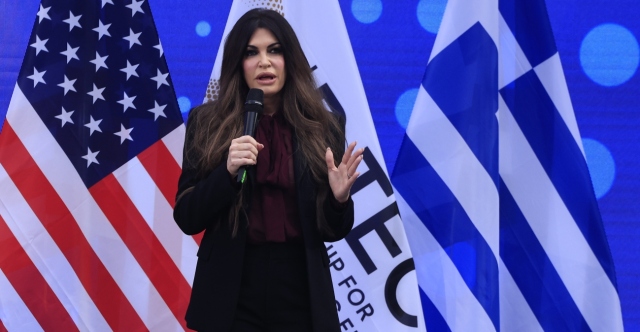
One thing is certain, however: she will hardly be able to repeat the boast she made when taking up her post, that “the President’s confidence in me, the fact that he chose me specifically, demonstrates how highly he regards Greece”.
In the story of her life, should she ever choose to write it, Guilfoyle may have many achievements of which to be proud. But her 11 months and 10 days as US ambassador to Greece are unlikely to be among them.
Her tenure ranks as the second shortest of any American ambassador to Greece, surpassed only by a certain Alexander Kirk, who served for approximately six months in 1943, during the German occupation of Greece, based outside Athens alongside the Greek government-in-exile in Cairo.
Ask me anything
Explore related questions




