





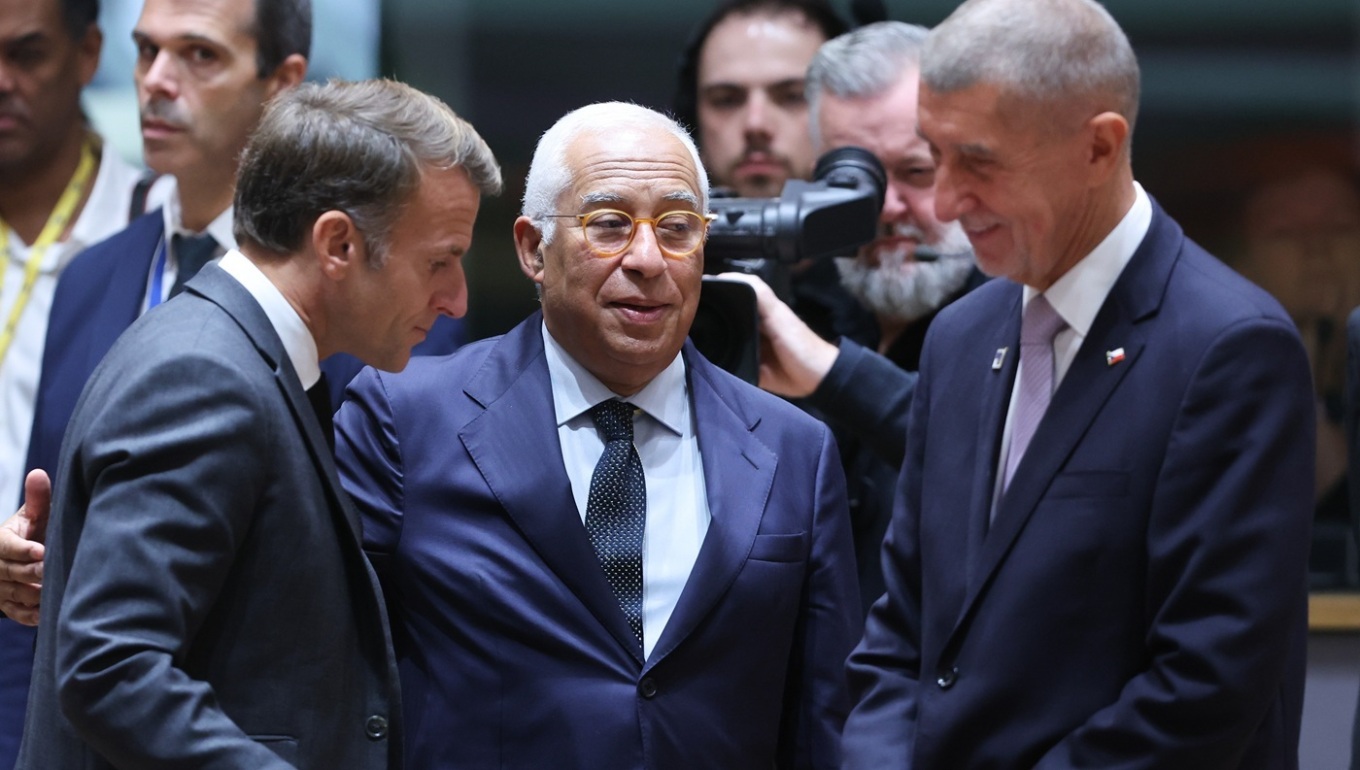
A behind-the-scenes account of Thursday’s EU summit, which ended without an agreement on either energy policy or the bloc’s next long-term budget, has revealed deep divisions among European leaders and mounting frustration with European Council President António Costa.
According to Politico, diplomats described Costa as “two-faced” and questioned his handling of the negotiations, with some accusing him of losing control of the proceedings.
Thursday’s summit marked the fiercest criticism Costa has faced since taking over the presidency of the European Council nearly two years ago. Unlike many of the EU’s most influential political figures, Costa is a socialist, a distinction that has become increasingly significant in the negotiations over the bloc’s next seven-year budget.
EU governments had hoped to make progress on both soaring energy costs and the long-term budget during the two-day summit. Instead, after 14 hours of discussions, the talks produced little tangible progress and, in some cases, appeared to deepen existing divisions.
The deadlock comes as European governments face growing pressure to ease the cost-of-living crisis and reach a budget agreement ahead of national elections in several member states. Adding to the difficulties are US President Donald Trump’s moves toward Russia over the war in Ukraine and intensifying economic competition from China.
The ETS2 showdown and Merz’s anger
According to Politico, which spoke to 16 EU diplomats, Thursday’s negotiations were dominated by a bitter dispute over the second phase of the EU’s carbon emissions pricing system, known as ETS2.
The controversy concerned both the existing Emissions Trading System and its second phase, which has already been legislated and is due to introduce carbon pricing for heating and road transport from 2028.
The negotiations became so contentious that Costa was forced to cancel the summit’s scheduled press conference and postpone further discussions until after dinner, as the situation descended into what diplomats described as “chaos.”
German Chancellor Friedrich Merz was reportedly furious over what Berlin viewed as the uncompromising position of Italian Prime Minister Giorgia Meloni.
The dispute divided European leaders into two opposing camps.
On one side stood Germany, Spain, France, Portugal, the Nordic countries and the Netherlands. On the other was a bloc led by Italy and supported by Hungary, Czechia, Slovakia and Poland — the four countries collectively known as the Visegrád Group.
Rome and the Visegrád countries pushed for a postponement of ETS2, arguing that its implementation would place an additional financial burden on households through higher energy bills, according to five diplomats cited by Politico.
Diplomats describe ‘absurd chaos’
Several EU leaders were reportedly angered by Costa’s failure to prevent the negotiations from spiraling out of control.
Although the draft summit conclusions prepared in advance did not envisage reopening negotiations over ETS2, several governments attempted to overturn that position during the meeting, putting Costa in an increasingly difficult position.
One diplomat expressed “enormous frustration” with the proceedings, describing the negotiations over the wording of the EU’s energy policy as “absurd chaos.”
According to the diplomat, Italian proposals were repeatedly circulated while earlier submissions from other countries were disregarded, suggesting that those managing the negotiations had failed to grasp the political sensitivities surrounding the emissions trading system.
Another diplomat accused Costa of having “lost the room,” saying he was unable to keep track of the proposed amendments or circulate them to leaders in time for meaningful discussion.
As a result, European leaders reportedly continued debating without having the latest amendments in front of them, pushing negotiations well past midnight.
‘Worse than Charles Michel’
Costa’s performance also prompted comparisons with his two immediate predecessors as European Council president.
One diplomat told Politico that Costa had performed “worse than Charles Michel,” whose tenure was frequently criticized by national governments over his ability to broker agreements.
Another EU official expressed frustration that the negotiations were not being managed in a manner more reminiscent of Donald Tusk, who enjoyed broad support throughout his presidency of the European Council.
The comparisons reflected growing dissatisfaction among some governments over Costa’s ability to manage increasingly complex and politically sensitive negotiations.
North-South divisions over the EU budget
Criticism of Costa extended beyond energy policy, with several European governments also questioning his approach to negotiations over the EU’s next long-term budget.
As European Council president, Costa is expected to act as an impartial mediator and help the bloc’s 27 governments reach a compromise.
However, some northern European countries are concerned that he is favoring southern member states in the budget negotiations.
One EU diplomat accused Costa of being “two-faced” and failing to act as an honest broker.
Another diplomat, representing a country that favors a smaller EU budget, said Costa was personally and politically aligned with the opposing camp.
The EU’s traditionally frugal countries are pressing Costa to propose further spending cuts ahead of an extraordinary summit devoted to the budget, which was confirmed on Thursday and scheduled for November 26.
The disagreement reflects longstanding divisions between member states demanding tighter control over EU spending and those seeking a larger budget to finance the bloc’s priorities.
Costa’s defenders push back
Despite the criticism, Costa received support from several European leaders.
Belgian Prime Minister Bart De Wever defended him after the summit’s first day, describing him as “capable” and “astute.”
De Wever praised Costa for generally avoiding detailed negotiations over the precise wording of summit conclusions, contrasting his approach with that of Charles Michel.
Under Michel, he argued, European leaders were frequently forced to remain in negotiations until three in the morning, debating individual words, commas and minor textual changes to the point where they could barely distinguish between different versions the following day.
Other diplomats similarly rejected the suggestion that Costa was responsible for the disorder.
They argued that the real problem lay with leaders who attempted to reopen legislation that had already been agreed, particularly Meloni and the countries of the Visegrád Group.
One diplomat noted that Costa had not wanted to reopen the draft conclusions and that it was Italy and the Visegrád countries that had insisted on doing so.
The diplomat questioned what Costa could realistically have done differently under the circumstances.
As Politico concludes, the coming weeks will provide a clearer indication of whether the criticism of Costa is justified, with the EU facing renewed pressure to bridge its divisions over energy policy and the next long-term budget.
Ask me anything
Explore related questions




