





Easter in Greece is full of old traditions and customs, followed faithfully throughout the decades, making the season a colorful one amid the mourning for the Passion of Christ.
Many of the Easter customs are particular to the region and may look peculiar to other parts of Greece, yet they are exciting and crucial for locals.

On the islands
In Heraklion, Crete, Easter feasting is not only for the living, but for the dead as well.
On Holy Friday, Cretans begin preparations to dine with their dearly departed on Easter Monday — this peculiar feast takes place in the local cemetery.
On Easter Monday people visit the graveyards bearing food and wine to the burial sites which have already been cleaned and decorated.
Relatives and friends of the deceased go to the cemetery and have lunch including traditional dishes and sweets and exchange greetings. In this way, they believe they are honoring the memory of their dead and spreading the message of Christ’s Resurrection.
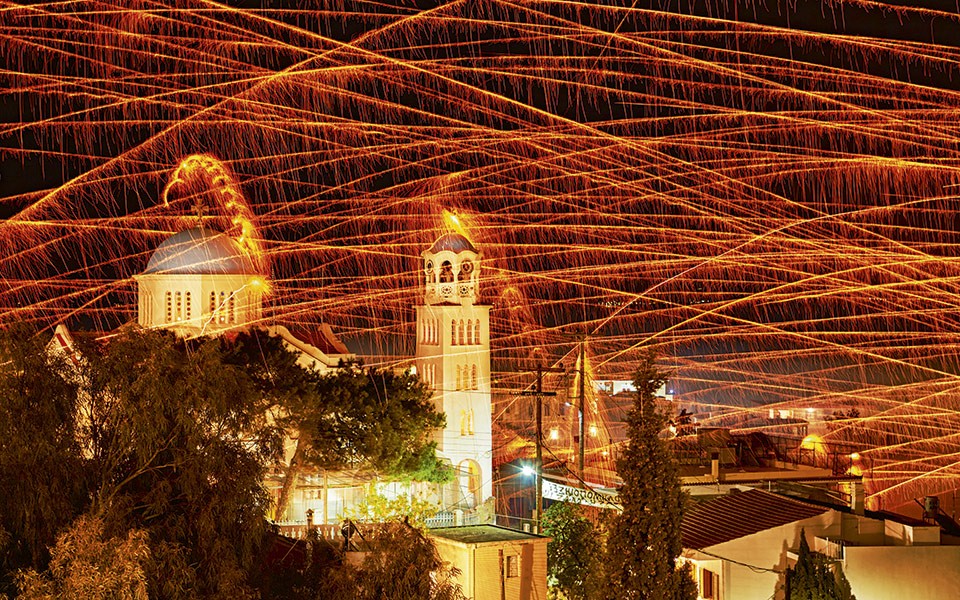
On the island of Chios the locals of Vrontados village literally go to war upon the Rise of Christ at midnight on Holy Saturday. The ‘war’ is between two local churches where opposing parishioners fire thousands of homemade firecracker rockets at each other, while the more pious attend the Resurrection liturgy inside the two churches.
The objective is to hit the bell tower of the church on the other side. The rockets are wooden sticks loaded with an explosive mixture containing gunpowder and launched from grooved platforms.
On the islands of Kythnos and Lesvos a swing is crafted in the main square on Easter Sunday, where girls and boys dressed in traditional costumes get on to sway. If someone sways the swing, then they pledge before God and man to marry the one sitting on the swing.
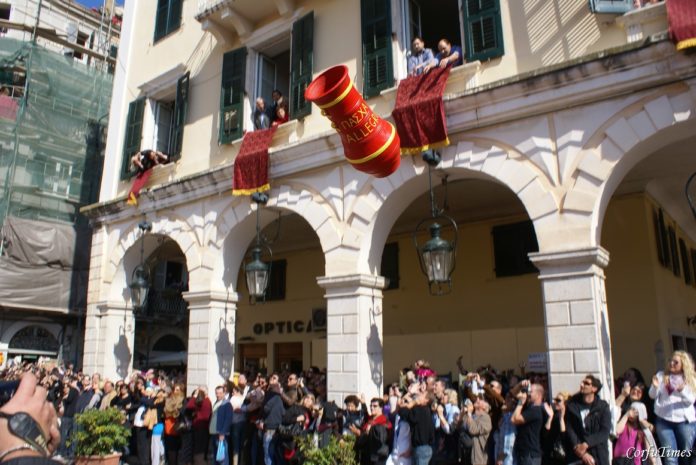
On Corfu, every Easter locals revive the old tradition of “botides”, a special type of clay pots. After the First Resurrection, which takes place in the island’s Metropolitan church, the bells of all churches begin to toll and people start throwing thousands of botides filled with water and laurel from their windows.
The botides crash on the road with a loud bang, which in combination with the water and laurel is supposed to chase “evil” away. Furthermore, the day is filled with music from the island’s numerous bands that march around the city center playing joyous songs. The custom alone attracts thousands of Greek tourists each year.
5 islands in Greece with special Easter traditions
On the island of Hydra, the Epitaph of the neighborhood of Kamini is blessed after entering the sea waters, while on the island of Zakynthos the priest and locals release white doves from the top of the church and their houses respectively after the first bell rings at midnight on Holy Saturday.
On Folegandros island, the icon of the Assumption is taken from the Church of Agios Georgios and then carried around town for three days. The icon procession passes through the homes of all religious people.
On Symi and Astypalaia locals burn the effigy of Judas on Easter Sunday or the day after. The Judas dummy is stuffed with straw and wood and is first paraded around town before it is set on fire.
On the island of Patmos, a representation of the Last Supper and the Washing of the Feet takes place in the central square. On Kalymnos on Lazarus Saturday, there is a tradition where the women bake man-shaped cookies, called ‘lazarakia,’ with a head, arms and legs.
On the mainland
During the Second Resurrection on Easter Sunday evening, in the northeastern towns of Orestiada and Didimoticho the icon of Agia Anastasia is auctioned. The one who bids the most will hold the holy icon while walking around the city in order to bless and protect it from evil.
In the Thrace region in northern Greece, a Judas Iscariot effigy is paraded by children in the streets who ask locals for branches so they can burn him. On Holy Friday, the procession of the Epitaph stops outside a chapel, where the fire is ready to burn Judas. Once the priest starts reading the Gospel, they light the fire and burn the effigy. Later, they take a handful of the ashes and scatter them in the graveyard.
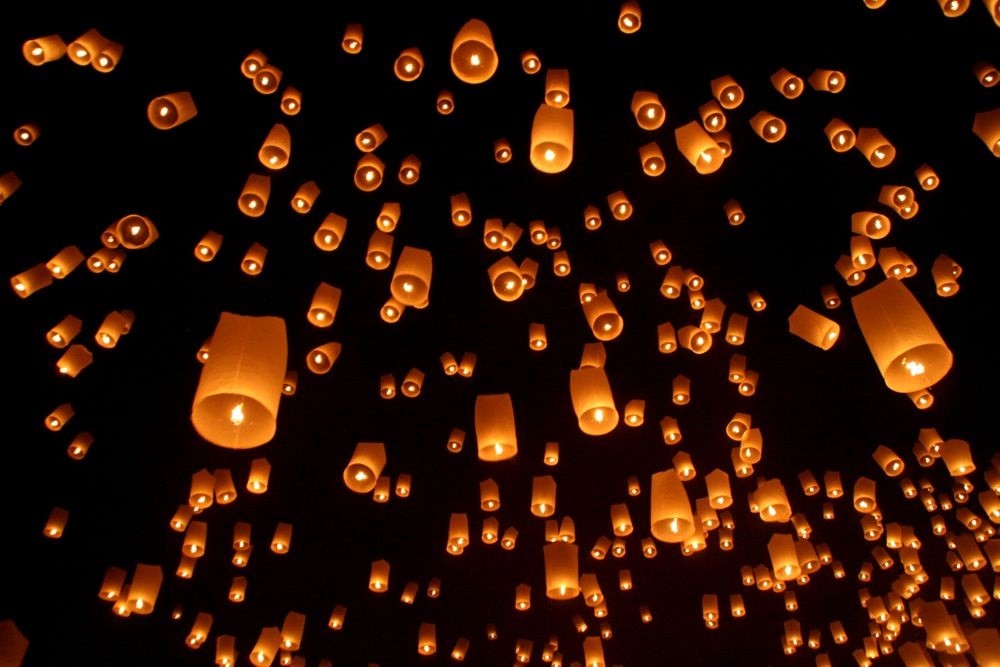
At midnight on Easter Sunday locals of Leonidio in the Peloponnese release hundreds of homemade hot-air balloons, creating a fascinating spectacle. The balloons stay in the air for 30 or 40 minutes before they are lost in the sky or blow up.
In Kalamata, also in the Peloponnese, the famous “saitopolemos” custom is observed, stemming from the 1821 Greek War of Independence, and the battles of the Greeks against the army of Ibrahim Pasha.
The participants are divided into 10 to 15 teams, each consisting of 15 to 30 people, mainly young boys dressed in traditional costumes and armed with “saites”, cardboard tubes filled with gunpowder which are then lit. The custom is a controversial one because it is very dangerous.

In the village of Arachova in central Greece, locals celebrate Easter, along with the Agios Georgios name day, a moveable feast which traditionally falls near Easter.
On Easter Sunday, a procession carrying the Agios Georgios icon parades around the village and travels uphill to church. Over 3,000 villagers dressed in colorful local dresses follow the icon procession while dancing troupes entertain the crowd. At the same time, they have already prepared pits lit with fire from the Resurrection light candles to roast a lamb over the fire.
Source: greekreporter
Ask me anything
Explore related questions




