

×
GreekEnglish

×
  • Politics
  • Diaspora
  • World
  • Lifestyle
  • Travel
  • Culture
  • Sports
  • Cooking
Friday
30
Jan 2026
weather symbol
Athens 13°C
  • Home
  • Politics
  • Economy
  • World
  • Diaspora
  • Lifestyle
  • Travel
  • Culture
  • Sports
  • Mediterranean Cooking
  • Weather
Contact follow Protothema:
Powered by Cloudevo
> Culture

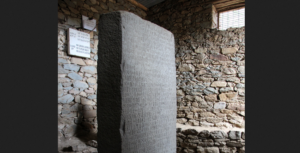
The “Ezana Stone” of Aksum: A trilingual monument, similar to the “Rosetta Stone”

These liturgical epigraphs were written in various ancient languages, including the Ethiopian Semitic Ge'ez, the South Arabian Sabaean & Greek

Newsroom September 8 09:28

The Ezana Stone is an ancient stele still standing in modern day Axum, the centre of the ancient Kingdom of Aksum. This stone monument, that probably dates from the 4th century of the Christian era, documents the conversion of King Ezana to Christianity and his conquest of various neighbouring areas, including Meroë. The name Ezana is possibly of Amharic origin and means “King of king elected by God king of axume”. An other opinion suggests that Ezra is a biblical name meaning “help” or “helper” in Hebrew. The Ezra of the Bible was a Jewish priest who helped reintroduce the Torah to the Jewish people who escaped captivity in Babylon.

From AD 330 to 356, King Ezana ruled the ancient Kingdom of Aksum centred in the Horn of Africa. He fought against the Nubians, and commemorated his victories on stone tablets in praise of God. These liturgical epigraphs were written in various ancient languages, including the Ethiopian Semitic Ge’ez, the South Arabian Sabaean, and Greek. The king’s engravings in stone provided a trilingual monument in different languages, similar to the Rosetta stone.

See Also:

>Related articles

USA: Gold and silver prices plummet after Kevin Wears is chosen to lead the Fed

The signatures were finalized for the first agreement to sell US LNG to Ukraine

More than 3.5 million Epstein case documents made public: Andrew’s email about a “beautiful” 26-year-old Russian woman, 3,200 references to Trump

The Philistines were likely of Greek origin, according to new DNA evidence

The earliest known inscriptions in the Ge’ez script date to the 5th century BC. At first the script represented only consonants. Vowel indication started to appear in 4th century AD during the reign of king Ezana, though might have developed at a earlier date.

Read more: The archaeologist

Ask me anything

Explore related questions

#Aksum#archaeology#culture#Ezana Stone#language#stone#world
> More Culture

Follow en.protothema.gr on Google News and be the first to know all the news

See all the latest News from Greece and the World, the moment they happen, at en.protothema.gr

> Latest Stories

USA: Gold and silver prices plummet after Kevin Wears is chosen to lead the Fed

January 30, 2026

The signatures were finalized for the first agreement to sell US LNG to Ukraine

January 30, 2026

Mitsotakis: In order to be a prosperous and democratic country, we must be safe – Citizens accept that defense spending is necessary

January 30, 2026

Severe bad weather arriving over the weekend: When storms will hit Attica – Warning for six regions

January 30, 2026

More than 3.5 million Epstein case documents made public: Andrew’s email about a “beautiful” 26-year-old Russian woman, 3,200 references to Trump

January 30, 2026

Communication between Gerapetritis and Rubio: Focus on the 6th round of the Strategic Dialogue in Athens

January 30, 2026

Syria: ‘Closed security zone’ declared in Al Hall camp, where relatives of Islamic State members live

January 30, 2026

Mitsotakis: Tax cuts mean wage increases – We said it, we did it!

January 30, 2026
All News

> Culture

European Parliament: “Yes” to AI protection for artists and media in the EU

Legal Affairs Committee members call for protection for online copyright holders - They propose that creators should give their consent and be compensated for the use of their work

January 28, 2026

In Megalopolis, Arcadia, the world’s oldest known wooden tools – see photos

January 27, 2026

Greek antiquities held by the company of Robin Symes are being repatriated

January 25, 2026

The Shackled Men of Phaleron: This is what the space that will host the major archaeological find will look like – Photos

January 24, 2026

The dirty side of Pompeii: baths filled with sweat and urine, according to a new study

January 23, 2026
Homepage
PERSONAL DATA PROTECTION POLICY COOKIES POLICY TERM OF USE
Powered by Cloudevo
Copyright © 2026 Πρώτο Θέμα



