

×
GreekEnglish

×
  • Politics
  • Diaspora
  • World
  • Lifestyle
  • Travel
  • Culture
  • Sports
  • Cooking
Monday
21
Sep 2026
weather symbol
Athens 26°C
  • Home
  • Politics
  • Economy
  • World
  • Diaspora
  • Lifestyle
  • Travel
  • Culture
  • Sports
  • Mediterranean Cooking
  • Weather
Contact follow Protothema:
Powered by Cloudevo
> Culture

5,500-year-old Neolithic cranial amulets shed light on ancient belief system

And the Neolithic practice of using human remains for protection or luck is not unique to cranial amulets

Newsroom October 30 12:48

Δείτε περισσότερα άρθρα μας στα αποτελέσματα αναζήτησης

Add Protothema.gr on Google

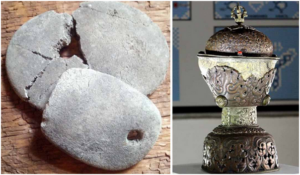
In 1914, a Swiss amateur archaeologist, Ernest Roulin, approached the Museum of Science and Art in Ireland with an incredibly rare discovery – two  ancient amulets  made from fragments of human cranium.

The amulets were dated to around 3,500 BC, during the Neolithic period, and have led to some fascinating conclusions regarding the practices and beliefs of our ancient ancestors.

The amulets are oval in shape and perforated towards one end, possibly for threading so that the item could be worn around the neck. The edges are well finished and rounded, which also suggests that they were worn or displayed as  pendants.

See Also:

Plaque honouring the “first black Briton” is removed after DNA analysis finds she was “most likely from Cyprus”

>Related articles

Mitsotakis goes behind the scenes at Nvidia in California: Investment talks in Greece, meetings with top researchers at Sequoia Capital

Sydney Sweeney nude sports Ad goes viral, igniting -again- global debate over woke culture & women’s athletics (videos)

Pedro Sánchez’s wife to stand trial over influence-peddling and embezzlement allegations

The site of Roulin’s discovery in Neuchâtel dates to the Middle Neolithic period of western Switzerland (also known as the Cortaillod culture), and so far only a few such pendants have been discovered in Switzerland.

Ernest Roulin, and a number of archaeologists have suggested that the cranial fragments  were removed from the deceased and then perforated and polished to form pendants, possibly to draw strength or protection from  the world of the deceased  or perhaps simply to commemorate past members of the community.

Continue here: Ancient Origins

Ask me anything

Explore related questions

#amulets#archaeology#cranial#culture#neolithic#skull#world
> More Culture

Follow en.protothema.gr on Google News and be the first to know all the news

See all the latest News from Greece and the World, the moment they happen, at en.protothema.gr

> Latest Stories

Mitsotakis goes behind the scenes at Nvidia in California: Investment talks in Greece, meetings with top researchers at Sequoia Capital

September 21, 2026

Sydney Sweeney nude sports Ad goes viral, igniting -again- global debate over woke culture & women’s athletics (videos)

September 21, 2026

€1.5bn in increases for 2.5 million households over 100 days: The 14 measures launching on Friday

September 21, 2026

Alco poll: New Democracy leads by 9.9 points, ELAS falls, PASOK edges up, Karystianou’s party on 3% threshold

September 21, 2026

Pedro Sánchez’s wife to stand trial over influence-peddling and embezzlement allegations

September 21, 2026

Alarm over feta: Stocks may not last through the year, price heading towards €15–16

September 21, 2026

Europe steps up preparations for possible conflict with Russia, analysis says

September 21, 2026

US denies visas to members of Masoud Pezeshkian’s communications team

September 21, 2026
All News

> Greece

In reverence, the emotional deposition in Jerusalem, see photos & video

The Holy Temple of the Resurrection opened after many days due to the war between Israel and Iran

April 10, 2026

In the final stretch for the accreditation of joint master’s degrees: Aiming for their launch in the coming academic year

April 10, 2026

Schedule for Epitaph Procession today (10/4)

April 10, 2026

Perfect weather for Easter excursions, according to Tsatrafyllia’s forecast

April 10, 2026

Easter in Greece: The customs that continue in Greek tradition – From Nafpaktos to Corfu

April 10, 2026
Homepage
PERSONAL DATA PROTECTION POLICY COOKIES POLICY TERM OF USE
Powered by Cloudevo
Copyright © 2026 Πρώτο Θέμα



