





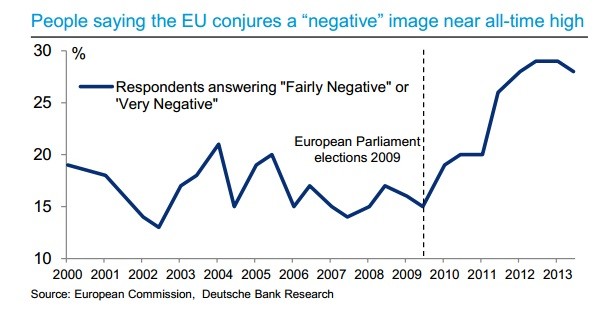
As Deutsche Bank indicates, the rise of these parties in the upcoming elections may increase doubts about Europe’s ability to deal with crisis successfully.
Although Deutsche Bank believes that the Eurosceptic parties are unlikely a) to receive more than 25% of European Parliament seats and b ) to form a united front since these are parties who move towards either the extreme right or the extreme left, it is afraid of the possibility that their enhanced strength will affect the policy applied, and even the politics practised in each EU country separately.
For example, it notes, that this could lead governments to reverse the trend of greater European integration (eg Britain). Also, it could postpone or even cancel reforms in several countries (eg Greece, France, Italy, etc).
Also, it lists a table with the latest polls showing how united Eurosceptic parties come first in Italy, Greece, Britain and France.

Deutsche Bank concludes that weak economic data for the Eurozone in the first quarter along with a strong rise of anti – European parties could reset fears over Europe’s ability to deal with and restrain the crisis effects.
Ask me anything
Explore related questions




