





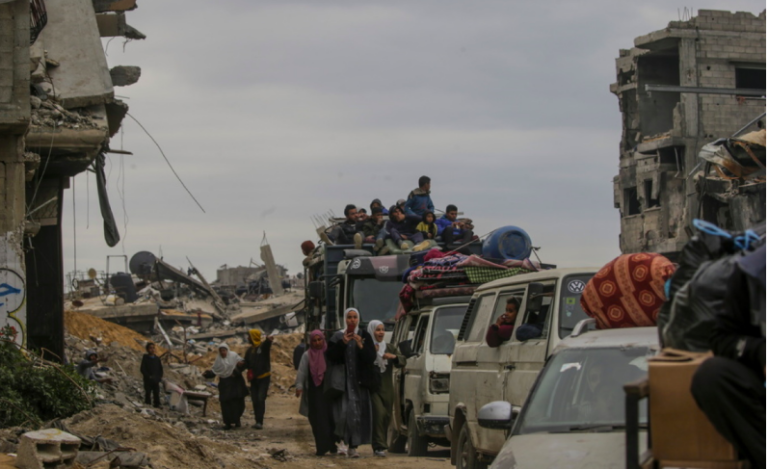
The ceasefire came after 15 months of intense and devastating conflict in Gaza. According to a statement released today, a Hamas delegation met in Cairo with Egyptian intelligence chief Hassan Mahmoud Rashad to discuss the ceasefire and the exchange of prisoners between Palestinian detainees in Israeli prisons and Israeli hostages.
Israel Also Preparing for Talks
Israel has also confirmed its readiness for negotiations. Prime Minister Benjamin Netanyahu’s office announced that an Israeli delegation would travel to Doha on Monday to participate in discussions, following an invitation from mediators supported by the U.S.
Hamas spokesperson Abdel Latif al-Qanoua expressed the group’s willingness to engage in negotiations, emphasizing the importance of addressing the needs of the Palestinian people. He also called for increased humanitarian aid to Gaza and the lifting of the blockade that has left the population in dire conditions.
Following further discussions with Egyptian intelligence officials, Hamas signaled its approval of a proposed committee made up of national and independent figures to temporarily govern Gaza until elections can be held.
Egypt Pushes for Transitional Government
Egyptian President Abdel Fattah el-Sisi, speaking at the Organization of Islamic Cooperation (OIC) summit, proposed the creation of a technocratic committee to oversee Gaza’s governance post-war. This plan was introduced as an alternative to former U.S. President Donald Trump’s “Middle East Riviera” vision, which had excluded Palestinian residents.
Ongoing Violence Amid Diplomacy
Despite ongoing diplomatic efforts, violence persists. Israeli airstrikes in Gaza killed two Palestinians in Rafah on Saturday, according to medical sources. Two more Palestinians were killed in a separate airstrike on Friday.
Under the terms of the January 19 ceasefire agreement, the second phase is expected to facilitate the release of 58 remaining Israeli hostages—24 of whom are believed to be alive and 34 deceased, according to Israeli military sources. It also includes negotiations for a permanent end to the war.
However, with the first phase of the agreement officially ending last Saturday, the Israeli military has again blocked the entry of humanitarian goods into Gaza, demanding that Hamas release all hostages before further negotiations proceed.
During the first phase of the ceasefire, Hamas released 33 hostages, including four deceased individuals, while Israel freed around 1,800 Palestinian prisoners and temporarily allowed humanitarian aid into Gaza before re-imposing restrictions.
Heavy Toll of the War
The ongoing war was triggered by Hamas’ surprise attack on southern Israel on October 7, 2023, which resulted in 1,218 Israeli deaths, mostly civilians, according to official Israeli figures. This count includes hostages who died in captivity or were already dead before being taken to Gaza.
Israel’s retaliatory military operations have since led to the deaths of at least 48,453 people in Gaza, the majority civilians, according to the Hamas-run Ministry of Health—figures that the United Nations considers credible.
As ceasefire talks continue, the humanitarian crisis in Gaza deepens, and the region remains on edge, awaiting the next steps in a conflict that has devastated countless lives on both sides.
Ask me anything
Explore related questions




