

×
GreekEnglish

×
  • Politics
  • Diaspora
  • World
  • Lifestyle
  • Travel
  • Culture
  • Sports
  • Cooking
Tuesday
27
Oct 2026
weather symbol
Athens 17°C
  • Home
  • Politics
  • Economy
  • World
  • Diaspora
  • Lifestyle
  • Travel
  • Culture
  • Sports
  • Mediterranean Cooking
  • Weather
Contact follow Protothema:
Powered by
> Environment

99.999% of the world’s ocean floor remains unseen

The 0.001% that humans have visually observed over the past 70 years covers an area roughly one-tenth the size of Belgium

Newsroom May 13 09:05

Δείτε περισσότερα άρθρα μας στα αποτελέσματα αναζήτησης

Add Protothema.gr on Google

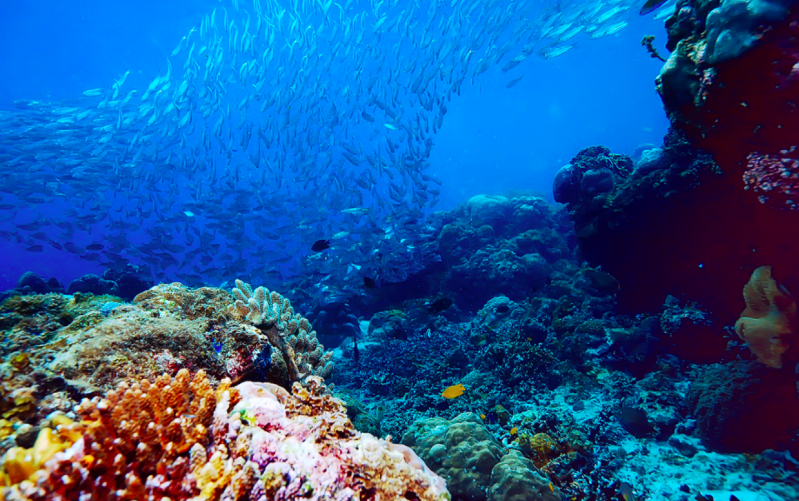
Humans have visually observed less than 0.001% of the global seabed in the last 70 years, an area approximately one-tenth the size of Belgium. This finding comes from a study published in the journal “Science Advances.”

The ocean bears the primary impacts of human-induced climate change, and while much is known about the effect of global warming on the surface and shallower waters, less is understood about its influence on the deep ocean, i.e., at depths greater than 200 meters.

>Related articles

South Aegean marine park plan submitted to Greece’s top administrative court

Europe’s deadliest summer in decades: More than 50,000 heat-related deaths in 2026, new analysis finds

Mediterranean warming and becoming saltier at an accelerating rate, new study finds

Researchers compared 43,681 records from submarine missions conducted since 1958 across 14 countries, 120 Exclusive Economic Zones (EEZs), and the open sea. At best, the data captured only 0.001% of the seabed.

The study highlights geographic disparities in the collected data, as most observations have been made within 200 nautical miles of the United States, Japan, and New Zealand. These same three countries, along with France and Germany, accounted for 97.2% of all dives. “This small and biased sample is problematic when attempting to characterize, understand, and manage the global ocean,” note the authors.

Their calculations suggest it would take over 100,000 years to map the ocean floor in situ. “These estimates demonstrate that we need a fundamental change in how we explore and study the deep global ocean,” they conclude.

Ask me anything

Explore related questions

#climate change#ocean
> More Environment

Follow en.protothema.gr on Google News and be the first to know all the news

See all the latest News from Greece and the World, the moment they happen, at en.protothema.gr

> Latest Stories

Kylian Mbappé apologises after Mao Zedong remark sparks outrage in China, sponsorship losses and TV boycott

October 27, 2026

Airbus A320 severely damaged by hailstorm, with nose and cockpit windshield destroyed

October 27, 2026

Jared Leto: The rock star bringing Thirty Seconds to Mars to Athens

October 27, 2026

Three tankers carrying Russian diesel are heading to the US, Moscow says

October 27, 2026

Israel election turnout on course for 50-year record as Netanyahu faces battle to stay in power

October 27, 2026

‘Ochi Day’ 2026 in Athens and Thessaloniki: Parades, Free Museums and Long Lunches

October 27, 2026

Athens International Music Festival: Five Days of Classical Music in the Heart of Athens

October 27, 2026

Woman who accused Petros Filippidis of rape sentenced to 12 months in prison, suspended

October 27, 2026
All News

> Greece

In reverence, the emotional deposition in Jerusalem, see photos & video

The Holy Temple of the Resurrection opened after many days due to the war between Israel and Iran

April 10, 2026

In the final stretch for the accreditation of joint master’s degrees: Aiming for their launch in the coming academic year

April 10, 2026

Schedule for Epitaph Procession today (10/4)

April 10, 2026

Perfect weather for Easter excursions, according to Tsatrafyllia’s forecast

April 10, 2026

Easter in Greece: The customs that continue in Greek tradition – From Nafpaktos to Corfu

April 10, 2026
Homepage
PERSONAL DATA PROTECTION POLICY COOKIES POLICY TERM OF USE
Powered by Cloudevo
Copyright © 2026 Πρώτο Θέμα



