





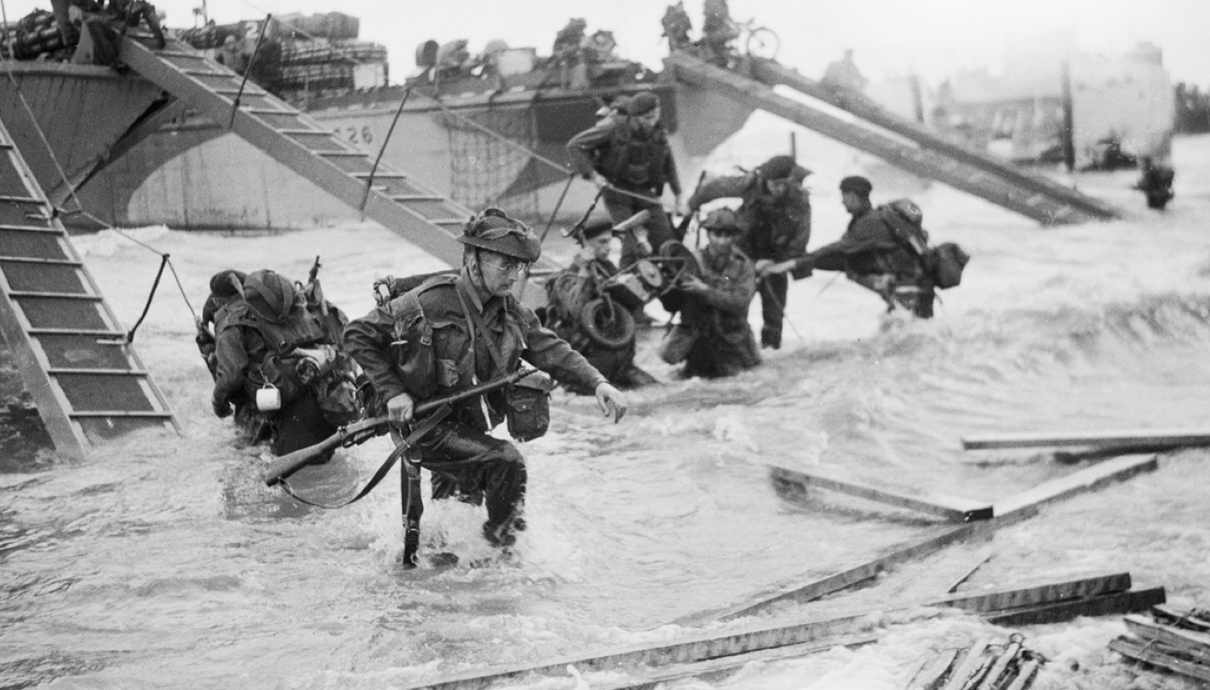
Today marks 81 years since the famous D-Day, June 6, 1944, and the Allied landing in Normandy.
The victory of the Allies was decisive for their final triumph in World War II. Today we will look at more details about D-Day, which was the first day of the Allied operation to liberate France and Europe.
When and Who Decided the Allied Landing in Normandy
The Normandy landing (Normandy Invasion) is also known as “Operation Overlord.” D-Day refers to June 6, 1944, the day on which the Allies landed in Normandy. The “D” simply stands for “Day,” referring to an unspecified future day on which a planned military operation would begin.
The liberation of occupied Europe had been a goal of the Allies since the evacuation of Dunkirk in 1940, when 330,000 encircled soldiers escaped the Wehrmacht forces. Initially, Allied defeats followed one after the other, making liberation impossible. Although Hitler had canceled the invasion he planned for autumn 1940 against Britain, his forces were achieving successive victories in North Africa and Russia.
However, in the winter of 1942, things had drastically changed. The German forces in Stalingrad were trapped and later surrendered, a humiliating defeat. In North Africa, the British 8th Army defeated their opponents at El Alamein, and in the Pacific, the Americans—who entered the war after the Japanese attack on Pearl Harbor in December 1941—had many successes.
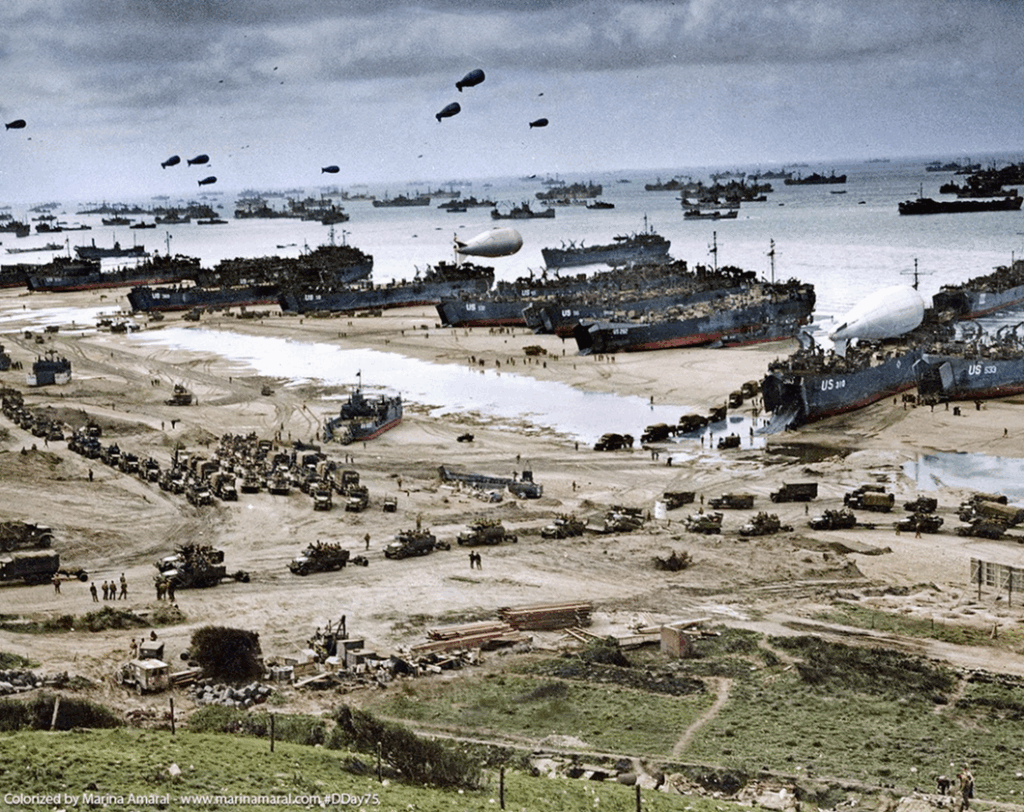
The situation was equally bad for the Nazis in the North Atlantic, as German submarines were successfully countered by Allied convoys. By late spring 1943, German Admiral Dönitz admitted that “the Battle of the Atlantic was lost.”
This German defeat was very significant because a large number of American soldiers and enormous quantities of war materials now reached Britain without hindrance.
At the Casablanca Conference in January 1943, Roosevelt convinced the initially hesitant Churchill to begin preparations for an intervention in France. This started with the formation of an Allied staff under Lieutenant General Frederick Morgan. Morgan’s orders were clear: “Defeat the Germans in Northwest Europe.”
The final decision was made during a conference in Washington in spring 1943. However, in December 1943, General Dwight Eisenhower (also known by the nickname “Ike”) was appointed Supreme Allied Commander, while General Bernard Montgomery took command of the 21st Army Group, which included all the land forces participating in the invasion of France. The staff previously led by Morgan was renamed the “Supreme Headquarters Allied Expeditionary Force.”
Its headquarters was established at Norfolk House in London. In March 1944, it moved to Bushy Park in West London, with a section based at Southwick House in Portsmouth. Eisenhower’s subordinates numbered about 900.
Morgan had planned an amphibious landing of three divisions in Normandy, where coastal defenses were weaker than at Pas de Calais. Eisenhower and Montgomery added two more divisions and a strong airborne formation to the planned invasion. They also expanded the landing zone along the Normandy coast to cover 100 km from Sainte-Mère-Église to Lion-sur-Mer.
The Allied Forces
Eisenhower was tasked with assembling the largest fleet ever used in a landing operation. Initially scheduled for May, the operation was postponed to early June 1944. Instead of June 5, it began on June 6 due to unprecedented bad weather for the season.
The fleet included 1,200 warships, 10,000 airplanes, 4,126 landing craft, 804 transport ships, and hundreds of tanks for various missions. A total of 156,000 men landed in Normandy: 73,000 Americans and 83,000 British and Canadians. Of these, 132,000 crossed the English Channel, while the rest arrived by air.
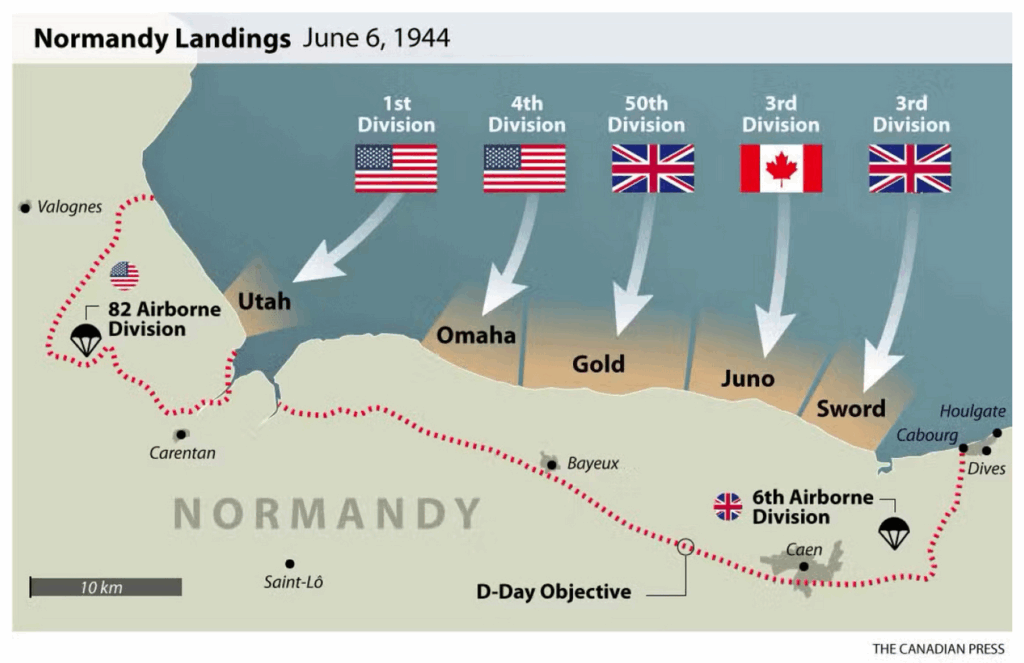
The beaches chosen for the landing covered a vast area from the Orne River estuary to the southwestern tip of the Cotentin Peninsula. The Americans took positions in the western sectors, while the British and Canadians landed in the eastern sectors.
The land forces for the initial assault, under British General Bernard Montgomery, included:
a) The Canadian 1st Army under Lieutenant General H.D.G. Crerar, the British 2nd Army under Lieutenant General Miles Dempsey, and the British 1st and 6th Airborne Divisions, and
b) The American 1st Army and the American 82nd and 101st Airborne Divisions under Lieutenant General Omar N. Bradley.
The Operation
On the morning of June 6, 1944, Allied troops landed on five beaches in Normandy with code names: Utah, Omaha, Gold, Juno, and Sword.
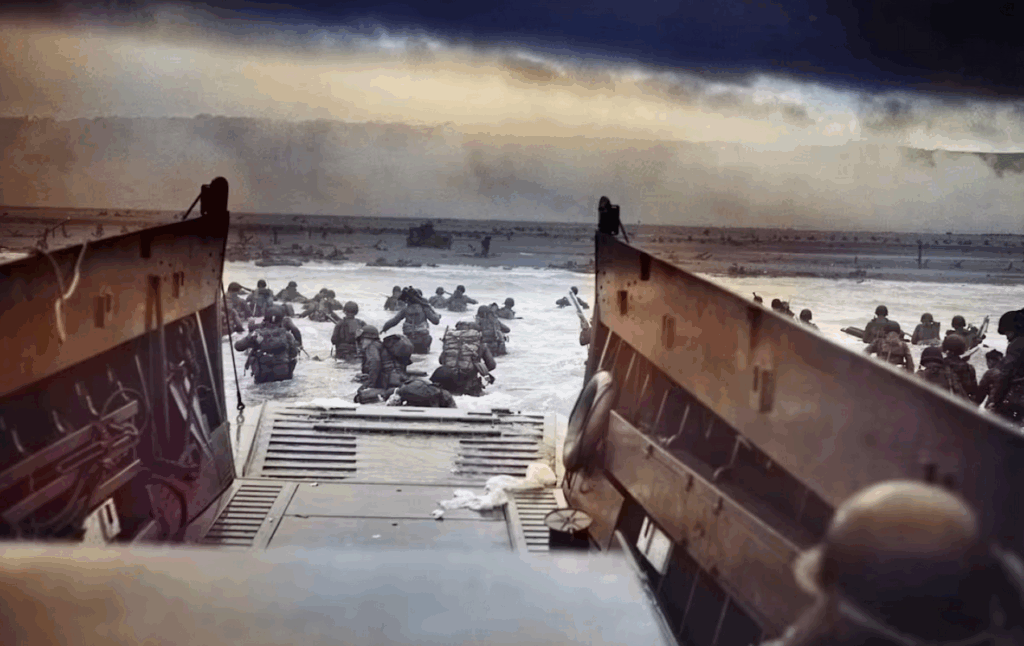
In all areas, except “Bloody Omaha,” where fierce German resistance was encountered, Allied forces landed quickly and easily.
By dusk, large beachheads had been established in all five sectors, and the countdown for the Germans had begun. However, the fighting did not end there. The British did not capture Caen on June 6 as planned but only on July 9. The Americans took the port of Cherbourg on June 26.
Why Did the Germans Lose?
The Germans had the major disadvantage of having to defend 3,000 miles of Western European coastline and half of the Netherlands up to the mountainous Italian border. Their 59 divisions in Western Europe were “static” in nature. However, others were operational, including 10 Panzer divisions with high mobility.
Nevertheless, the determined and timely Allied attack collided with disagreements among German generals over the landing site and how to respond. Hitler had been vindicated, but the situation was irreversible…
Epilogue
The Allied success in France was largely due to Dwight Eisenhower (his last name is of German origin and means “iron worker”). The contribution of aircraft that destroyed bridges over the Seine and Loire rivers was also significant, preventing German supply to the front.
Losses on both sides were heavy. The Allies suffered 36,000 dead and about 200,000 wounded, with 4,000 tanks destroyed. The Germans lost 300,000 men (two-thirds were captured), and of their 2,000 tanks, only 120 crossed east of the Seine.
The Luftwaffe could no longer play a role in operations, as in 1943, the Germans produced only one-sixth of the aircraft acquired by the Allies.
We close with the story of an exceptional Luftwaffe pilot who later became a successful industrialist. In the early hours of June 6, 1944, he took off on patrol and saw the invasion fleet: 7,000 ships carrying 160,000 soldiers with thousands of planes overhead.
“Then I realized the war was lost,” he said. Thanks to cloud cover, he shot down six Allied planes before landing due to lack of fuel.
At the same time, once-powerful German submarines sank only one ship, a Norwegian destroyer. The battle was decided before it had barely begun, and the Allies broke the German encirclement, beginning their rapid advance into Europe’s interior…
Ask me anything
Explore related questions




