





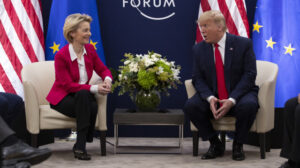
A proposal for a deal that would maintain a 10% basic tariff on all European products, with exceptions in sensitive sectors such as aircraft and spirits, has reportedly been submitted by the Trump administration to the European Union, according to a European diplomat and a national official who spoke to Politico.
The Trump administration announced Sunday that it would postpone the imposition of the extended tariffs until Aug. 1, giving countries negotiating new trade deals with the U.S. leeway. It was reported that tariffs for countries that don’t reach a deal will revert to April 2 levels.
Notices began being sent out on Monday with South Korea and Japan, which will face 25% tariffs starting August 1.
European Trade Commissioner Maros Sefchowitz is on an open line with the U.S. government after President Trump and European Commission President Ursula von der Leyen spoke by phone on Sunday. Diplomats said Sefchowitz briefed EU ambassadors stressing that the commission does not expect to receive one of the new tariff letters.
However, the framework of the trade deal remains unclear and diplomats stress that whatever is agreed will have to have Trump’s final approval. Washington has given no indication whether it intends to exclude politically sensitive industries such as cars, steel, aluminium or pharmaceuticals – a request the EU has put on the table. In contrast, countries such as France, Italy and Ireland are expected to be satisfied with possible exemptions for aircraft and spirits.
White House press secretary Caroline Levitt said Monday that an executive order would make the extension of the suspension official. Until then, the EU had been moving with a July 8 deadline (the deadline was the 9th) for reaching a deal, with the commission saying it would work hard to reach an agreement by Wednesday.
Irish Trade Minister Simon Harris confirmed on Monday evening that “we can now expect an extension of the current regime until 1 August to allow further time to reach an agreement in principle between the EU and the US.”
In this context, Brussels has to balance between accepting a possible asymmetry in negotiations with Washington and the risk of being confronted again with unforeseen reversals by the Trump administration. At a meeting held on Monday night, the atmosphere was what diplomats described as “heavy” as there were no assurances from the US about avoiding new surprise tariff changes.
The European Commission declined to comment further, limiting itself to saying that “negotiations are ongoing.”
Ask me anything
Explore related questions




