





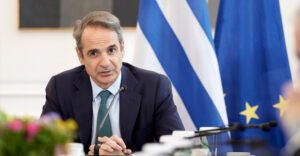
The chilly atmosphere among political leaders at yesterday’s Presidential Palace meeting stood in sharp contrast to the sweltering heat in the Presidential Gardens, which made it difficult for anyone to linger outside for long. In this setting—and under these strained conditions—Prime Minister Kyriakos Mitsotakis didn’t miss the opportunity to make his position clear to the other party leaders.
Although the conversation began on a civil note, thanks to Parliament Speaker Kostas Tasoulas’ call for restraint, Mitsotakis didn’t hold back. Addressing Nikos Androulakis and Sokratis Famellos directly, he made it clear that the current level of political discourse—marked by accusations of criminal behavior and mafia-style tactics—is unacceptable.
For those familiar with Mitsotakis’ style, it was obvious that yesterday’s gathering was one of the most uncomfortable moments of his premiership. Political communication channels are essentially shut down, and the level of confrontation has become deeply toxic. The Prime Minister knows that this isn’t likely to change soon, which is why he’s staying focused on his political roadmap.
Today’s Cabinet meeting at 11:00 is the last before Parliament’s brief summer recess. Mitsotakis is expected to set the tone for the coming months and offer his ministers some parting guidance—including, reportedly, a reminder to keep their summer holidays low-key. He himself is expected to take a few days off around the week of August 15, but he has already scheduled meetings to resume after the 18th, ahead of the Thessaloniki International Fair.
During today’s meeting, ministers will be briefed on the government’s priorities for the second half of 2025. These will be presented in a more concise version of the so-called “blue envelopes,” led by Deputy Prime Minister Kostis Hatzidakis and State Minister Akis Skertsos. Each minister is also expected to receive a one-page summary of the top priorities in their portfolio—targets that will be monitored directly by the Prime Minister’s office. This system was first introduced after the March cabinet reshuffle.
Meanwhile, Interior Minister Theodoros Livanios will present a bill proposing significant reforms to the Local Government Code, particularly the electoral system. Despite pushback from some mayors within the ruling party, Livanios is moving forward with plans to eliminate second-round voting in local and regional elections. Under the new system, a candidate will need just over 42% of the vote to win outright. Voters will also be able to indicate a second choice on the ballot. If no candidate clears the threshold, those second-choice votes from eliminated candidates will be redistributed among the top two contenders.
Ask me anything
Explore related questions




