

×
GreekEnglish

×
  • Politics
  • Diaspora
  • World
  • Lifestyle
  • Travel
  • Culture
  • Sports
  • Cooking
Monday
02
Feb 2026
weather symbol
Athens 15°C
  • Home
  • Politics
  • Economy
  • World
  • Diaspora
  • Lifestyle
  • Travel
  • Culture
  • Sports
  • Mediterranean Cooking
  • Weather
Contact follow Protothema:
Powered by Cloudevo
> World

Spain closes famous 11-kilometer beach after appearance of “blue dragons”

What is the “blue dragon of the sea” and why it is dangerous

Newsroom August 21 05:22

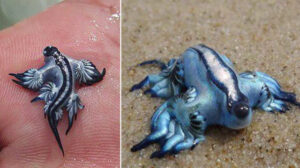
Alarm has been raised in Spain in recent days after the appearance of rare and dangerous marine creatures, known as “blue dragons,” along the Costa Blanca coast. Authorities in Guardamar del Segura, north of Torrevieja, decided to temporarily ban swimming across an 11-kilometer stretch, raising black flags on the beaches.

According to the Daily Mail, after two blue dragons were spotted on Vivers beach, the mayor of Guardamar del Segura, Jose Luis Saez, announced the swimming ban, urging citizens to stay away from the creatures, even though their size does not exceed 3.8 centimeters. “Despite their small size and striking color, they are dangerous and should not be touched, not even with gloves,” he stressed.

Watch video:

He warned: “If you see one of these creatures, notify lifeguards and the authorities. If you are stung, wash the affected area with seawater and go to the nearest first-aid station or health center.”

Meanwhile, the municipality launched a preventive operation to detect possible specimens carried by sea currents, while local police and lifeguards closely monitored the situation.

Aviso importante. En las últimas horas han aparecido ejemplares de Dragón Azul (Glaucus atlanticus) en #GuardamarDelSegura (#Alicante). Por seguridad, prohibido el baño en las playas del municipio hasta nueva orden. El contacto con este animal marino es peligroso y doloroso. pic.twitter.com/IJQnD8DtTq

— MeteOrihuela (@MeteOrihuela) August 20, 2025

Despite the ban, several bathers ignored the instructions and entered the sea, risking heavy fines. Vivers beach, though less crowded than usual, still saw visitors who failed to comply with safety measures.

What is the “blue dragon of the sea”?

The blue dragon of the sea, also known as Glaucus atlanticus (a type of sea slug), is one of the rarest marine animals. It lives in tropical waters, most often off the southeastern coast of South Africa, the eastern coasts of Australia, the shores of Mozambique, and parts of the European coastline. Its size does not exceed 3 centimeters, and it is notable for its striking blue coloration.

Its stingers are venomous. The venom, which it acquires from other poisonous animals such as jellyfish, can even be lethal. It has rightly been called “the most beautiful killer in the ocean.”

>Related articles

First official report on the railway disaster in Spain: Main cause of the derailment was a fracture in the track

Broken tracks under scrutiny after deadly train collision in Spain: Death toll reaches 40

Train Collision in Spain: 39 dead, “extremely strange accident,” says Transport Minister

Spanish beachgoers banned from swimming after sightings of poisonous 'blue dragon'https://t.co/WpvFYEl9Rw

— ITV News (@itvnews) August 21, 2025

It usually floats at the sea’s surface and moves with the help of a special gas-filled sac that acts as a natural float and propels its movement in the ocean.

Contact with a blue dragon can cause severe pain, nausea, vomiting, and in some cases, serious allergic reactions—particularly in children, people with respiratory or cardiac conditions, and those who suffer multiple stings.

Ask me anything

Explore related questions

#alert#blue dragons#Costa Blanca#daily mail#sea#spain
> More World

Follow en.protothema.gr on Google News and be the first to know all the news

See all the latest News from Greece and the World, the moment they happen, at en.protothema.gr

> Latest Stories

Gilfoyle’s forewarning about Trump’s visit to Greece and speculations on the timing

February 2, 2026

Tremors in the Norwegian Royal Family from Princess Mette-Marit’s Contact with Epstein: “You Are Very Charming” – “Paris is good for adultery”

February 2, 2026

Official EU law bans Russian natural gas imports, upgrading Greece’s role and the vertical corridor

February 2, 2026

Tsoukalas: ‘We will submit our own proposal for constitutional revision, we would like an agreement with SYRIZA and New Left on Article 86’

February 2, 2026

Tangerines and their health benefits

February 2, 2026

Bistis and 9 more leave the New Left: They disagree with the photographic disapproval of Tsipras

February 2, 2026

K.M.’s Address, Nikos the Dribbler “Rumenige” and the Whip, the Ambassador of President Maria, Alpha Bank’s “Base” Salary €1,600, Ivan and Porto Carras

February 2, 2026

Six dead and 480 injured in 433 traffic accidents in January in Attica, as the data show

February 2, 2026
All News

> World

Tremors in the Norwegian Royal Family from Princess Mette-Marit’s Contact with Epstein: “You Are Very Charming” – “Paris is good for adultery”

Princess Mette-Marit’s name appears over 1,000 times in newly released Epstein files from Friday – the spicy language the princess used in emails with the financier, for which she now expresses regret

February 2, 2026

Japan discovered rare earth elements

February 2, 2026

Time of decisions for Iran: Tehran speaks of a “framework for dialogue,” as Trump’s “armada” is within firing range

February 1, 2026

Iran: A framework for negotiations with the US is taking shape

January 31, 2026

New Epstein documents: Photos show Prince Andrew over a woman lying on the floor (photos)

January 31, 2026
Homepage
PERSONAL DATA PROTECTION POLICY COOKIES POLICY TERM OF USE
Powered by Cloudevo
Copyright © 2026 Πρώτο Θέμα



