





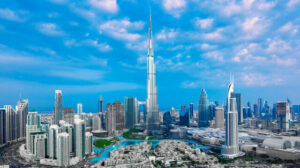
“The sky is not the limit, your mind is” is one of the sayings Marilyn Monroe managed to leave behind in her short and so turbulent life. A phrase that best captures the human tendency to want to reach as high as possible, to touch or even surpass one’s gods. From ancient times to the present day, man has never ceased to gaze at the sky with longing and awe.
The pyramids of Giza, the cathedrals of Europe and, more recently, the iron giants of the megacities bear witness to a continuous march: man’s need to transcend the limits of the earth and approach the dome of heaven. It is not only technological ambition that gives birth to these titans of steel, glass and concrete. It is much more the mental thirst for transcendence, the symbolic conquest of the impossible.
Today, skyscrapers of 1,000 meters or more, designed in Riyadh, Kuwait, Jeddah or Cairo, are the new “Babel” of our time. It is no coincidence that they are linked to grand national visions, economic projects and complex cultural strategies, embodying the desire of societies to show power, to converse with the future, to make the headlines of the New Times. And yet, behind the billions and grandiose master plans, the same primordial urge can be seen: to reach higher, not only to see further, but to feel that human creativity can transcend the limits it sets itself at any given time. One-kilometre skyscrapers are, after all, the cathedrals of the 21st century: sublime places of worship for the human mind but also benchmarks of a soft power domination for countries that want to emerge from the hum of history.
Ask me anything
Explore related questions




