






Forget the Bridge of Arta. Neither the “master builder’s wife” needs to be sacrificed, nor do today’s bridges need to be “built all day long.” Now, with the help of technology, most bridges in Greece are becoming “smart.” From Kifisos to Crete and Epirus, bridges will now be online, providing scientists in real time with all information about their structural health—measuring vibrations, weight, movements, deformations, and more. In this way, the modern “master builders” will no longer need to work endlessly, and, more importantly, collapse risks will be avoided.
The project, based on the philosophy of the Internet of Things (IoT), concerns more than 250 bridges across the country’s 13 Regions, some of which are over 70 years old and theoretically nearing the end of their service life. By creating a network between them using fiber-optic technology, the bridges are equipped with special sensors and systems that measure, record, and send information to scientists in real time, allowing them to know what and where maintenance is needed.
The first 36 to be wired in Attica
Smart systems are being installed for monitoring structural response. These are the bridges handling the heaviest traffic load, specifically as described in the contract:
- Elevated section of Kifisos
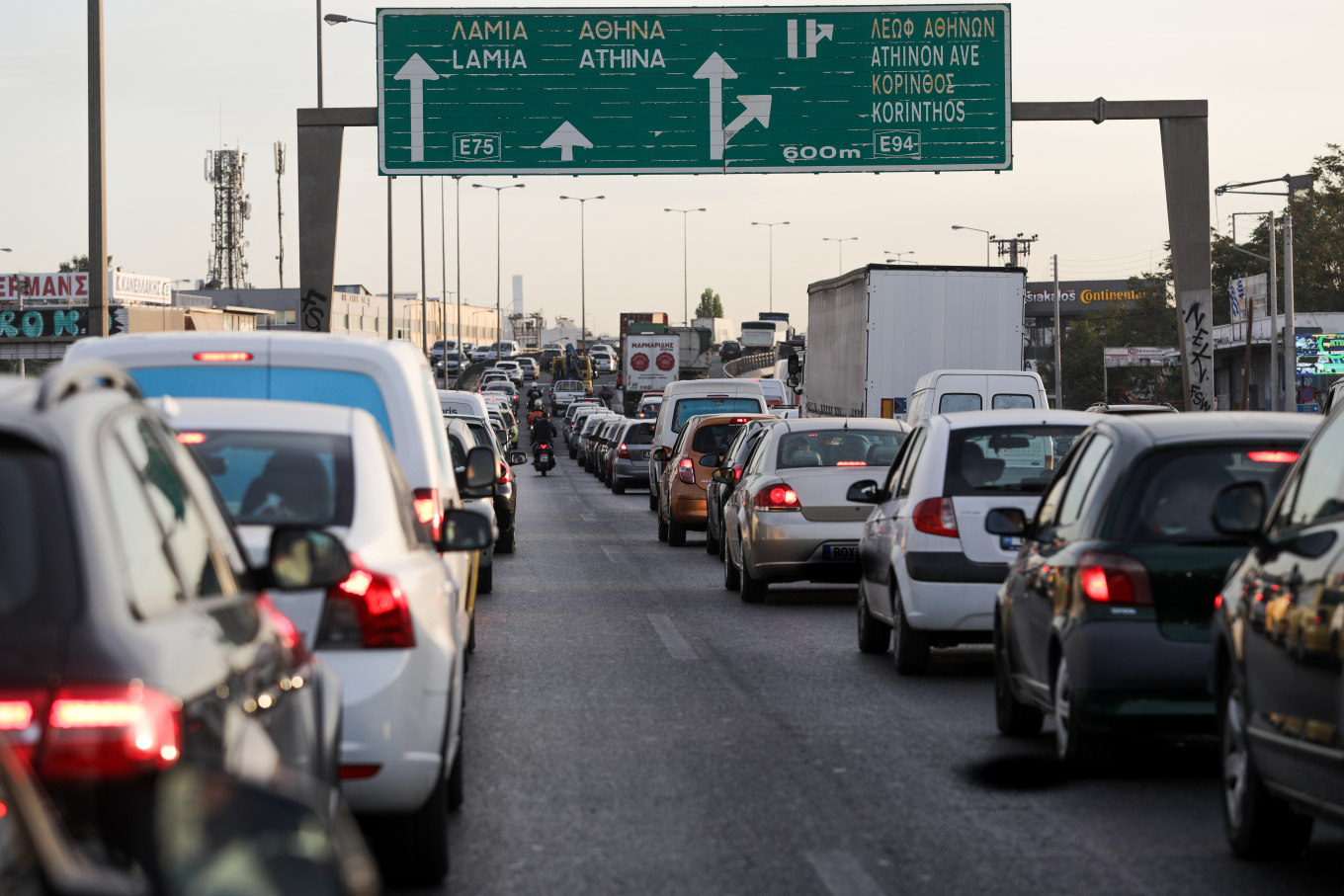
- Exit bridge from Kifisos Ave. toward Lamia (for Corinth)
- Exit bridge from Athinon Ave. toward Athens (for Lamia)
- Poseidonos Ave. bridge over Pikrodafni stream
- Bridge at the Piraeus & Chamosternas interchange
- Bridge at the Tatoiou & Kymis interchange
- Bridge at the Petrou Ralli & Konstantinoupoleos interchange
- Bridge at the Syngrou Ave. & Lagoumitzi interchange
- Bridges at the Kifisos & Poseidonos interchange – exit of Poseidonos Ave. toward Piraeus (for Lamia)
- Poseidonos Ave. bridge above P. Myrtidiotissis
- Bridge at the Kifisias & Katechaki interchange
- Exit bridge from Kallirois toward Piraeus (for Syngrou Ave. traffic to Piraeus)
- At-grade bridge on Poseidonos Ave. above the exit from the roundabout at SEF toward Ethnarchou Makariou & Dim. Falireos
- Bridge at the Katechaki & Ethn. Antistaseos (Kaisariani) interchange
- Bridge at the Mesogeion & Katechaki interchange
- Bridge at the Kifisos & Piraeus interchange
- Bridge at the Kifisos & Tsounta interchange
- At-grade bridge at Kifisos & Acharnon
- Bridge at the Kifisos & Pindou interchange
- Bridge of NEAOK over the Sarantapotamos
- Bridge at the Syngrou & Charokopou interchange
- Bridge at the Syngrou & Ag. Panton interchange
- Bridge at the Syngrou & Davaki interchange
- Bridge at the Syngrou & Spartis interchange
- Bridge at the Syngrou & Amfitheas interchange
- Kononos bridge above electric railway lines
- Exit bridge from Alipedou to Iroon Polytechneiou Ave. above electric railway lines
- Bridge at the Old Coastal Road interchange
- Poseidonos Ave. bridge over the stream of Vathi St. (Municipality of Alimos)
- Bridge on Poseidonos Ave. toward Sounio at the height of Lake Vouliagmeni
- Bridge at the Kifisias & Kapodistriou (Sidera Chalandriou) interchange
- Bridge at Kifisias & Spyrou Loui
- Bridge at Vouliagmenis & Krinis interchange
- Bridge at Stavros–Lavriou & Ag. Serafim interchange
- Bridge on Stavros–Lavriou Ave. over a seasonal stream near Palaio Kamariza
- Bridge at the Schistou–Skaramanga interchange & connecting branch to COSCO port
But how does this system work, and why is it important?
Multiple sensors
In short, a network of “smart” bridges consists of recording stations with uninterrupted communication to a unified online platform, sensors measuring axial strain, acceleration sensors (vibrographs), water-level sensors, 72 ambient temperature sensors, and Internet connection.
Thus, scientists can see in real time whether a bridge is being stressed to dangerous levels due to the volume of vehicles or trains passing above it, water flowing beneath it, wind, earthquakes, or simply… time.
At their limits
There are more than 17,000 bridges in Greece today—road and railway combined. According to a study conducted by a team from the Association of Civil Engineers of Greece, coordinated by Dr. Vassilios Bardakis for diaNEOsis, many have already exceeded their expected lifespan or, due to Greece’s prolonged economic crisis, show a lack of maintenance. Another problem, experts note, is that bridges built before 1993 lack adequate seismic design, and older ones have no provision for increased traffic loads.
The study concludes that each construction period has specific risks. For example, bridges built before the 1960s followed no specific standards, while those built up to the 1980s followed German regulations that are now outdated. The same goes for bridges built up to 1993, as they either lacked seismic provisions or had insufficient ones. Throughout this period, and even later, regulations did not account for the increased weight and volume of traffic loads that bridges would face in subsequent years.
Kifisos
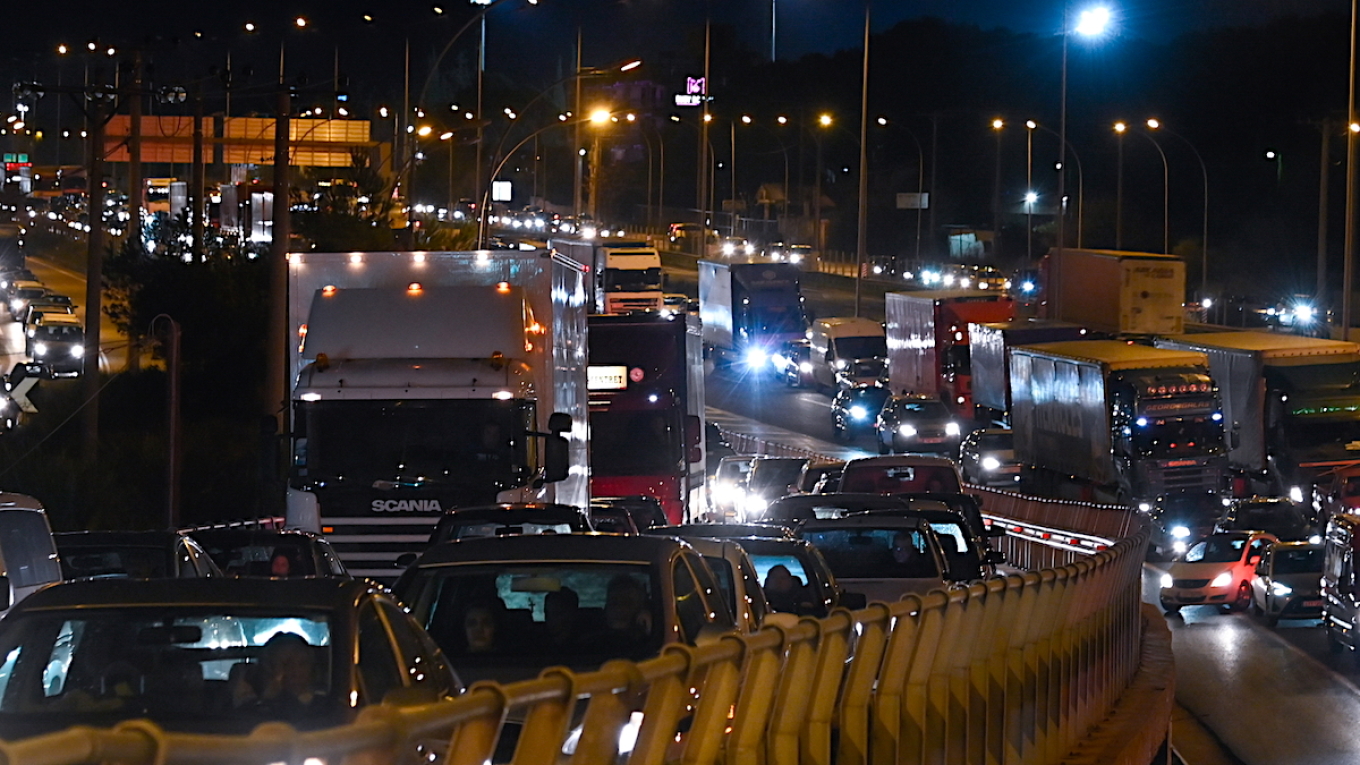
A perfect example that highlights this design shortfall is Kifisos Avenue (specifically the bridge section built over the Kifisos River to handle traffic). It was originally designed to handle about 2,000 vehicles per lane per hour.
In reality, however, with the “explosion” of traffic in recent years, each lane now carries 5,000–8,000 vehicles per hour, some of them heavy trucks heading to and from logistics centers in Piraeus and Aspropyrgos, with one recorded day reaching 16,000 vehicles per lane per hour!
The traffic capacity of this bridge has therefore not only been exceeded—it is tested daily to extreme levels. Even more concerning, it went uninspected for about 20 years, despite regulations requiring maintenance every 5 years and “heavy maintenance” every 10.
Collapses
Apart from traffic, weather conditions have become increasingly severe, with violent water flows, strong winds, floods, and, of course, time itself threatening structural integrity.
There have already been collapse incidents in Greece, most recently the Dendropotamos bridge in Thessaloniki, which fell last year (it had been closed for restoration works but could not withstand the “Bora” storm), and the bridge connecting Faliraki to the city of Rhodes via Kallithea, which collapsed last year due to flooding.
In 2023, the under-demolition bridge in Patras collapsed—it was one of four scheduled for demolition. This is because concession contracts specify that responsibility for technical works such as bridges over six meters high belongs to the State, while concessionaires must assess through studies which bridges should be repaired or replaced. On Olympia Odos, the consortium evaluated 80 such structures, with the State approving 12 urgent interventions.
In Karditsa, during the Mediterranean cyclone “Ianos,” many neglected bridges collapsed, cutting off entire areas. Examples include the Vlassiou Argitheas bridge, several in the mountainous basin of the Pamisos River, and in the Mouzaki area—the Balanos bridge, the new Mouzaki bridge, the Karaïskakis bridge, etc.
The Stations
To prevent such collapses, it was decided to create a Bridge Registry and subsequently a Smart Bridges Network (SBN), based on the Internet of Things philosophy, aiming for immediate, automatic, and continuous evaluation of the load-bearing capacity of bridges—mainly under traffic loads in real time via an IoT system.
The bridges selected to become “smart” across the 13 Regions of Greece number more than 250—both road and railway. As expected, the first contracts signed concerned Athens.
With the project expected to be completed by June 30, 2026, engineers specializing in improving bridge safety are equipping them with structural response measuring systems and sensors that record vital information in real time.
All data collected by the “smart” bridge’s sensors are recorded and processed by specialized algorithms and AI programs that calculate the bridges’ responses and transmit them from the recording stations to the central real-time structural monitoring system.
Scientists monitor the data transmitted in real time and assess possible degradation of a bridge’s structural health even over time. Thus, the specialized engineer responsible for improving bridge safety and preventing future accidents can, for example, predict that a bridge is at risk of collapse and intervene—knowing precisely its most vulnerable points.
After the Attica Region, 18 bridges in Crete, 20 in Western Greece, and then those in the Regions of Thessaly, Western Macedonia, and the South Aegean will follow, as well as bridges in Central Macedonia, Eastern Macedonia and Thrace, and Epirus. The sixth and final contract includes bridges in the Peloponnese, Central Greece, the North Aegean, and the Ionian Islands.
Ask me anything
Explore related questions




