





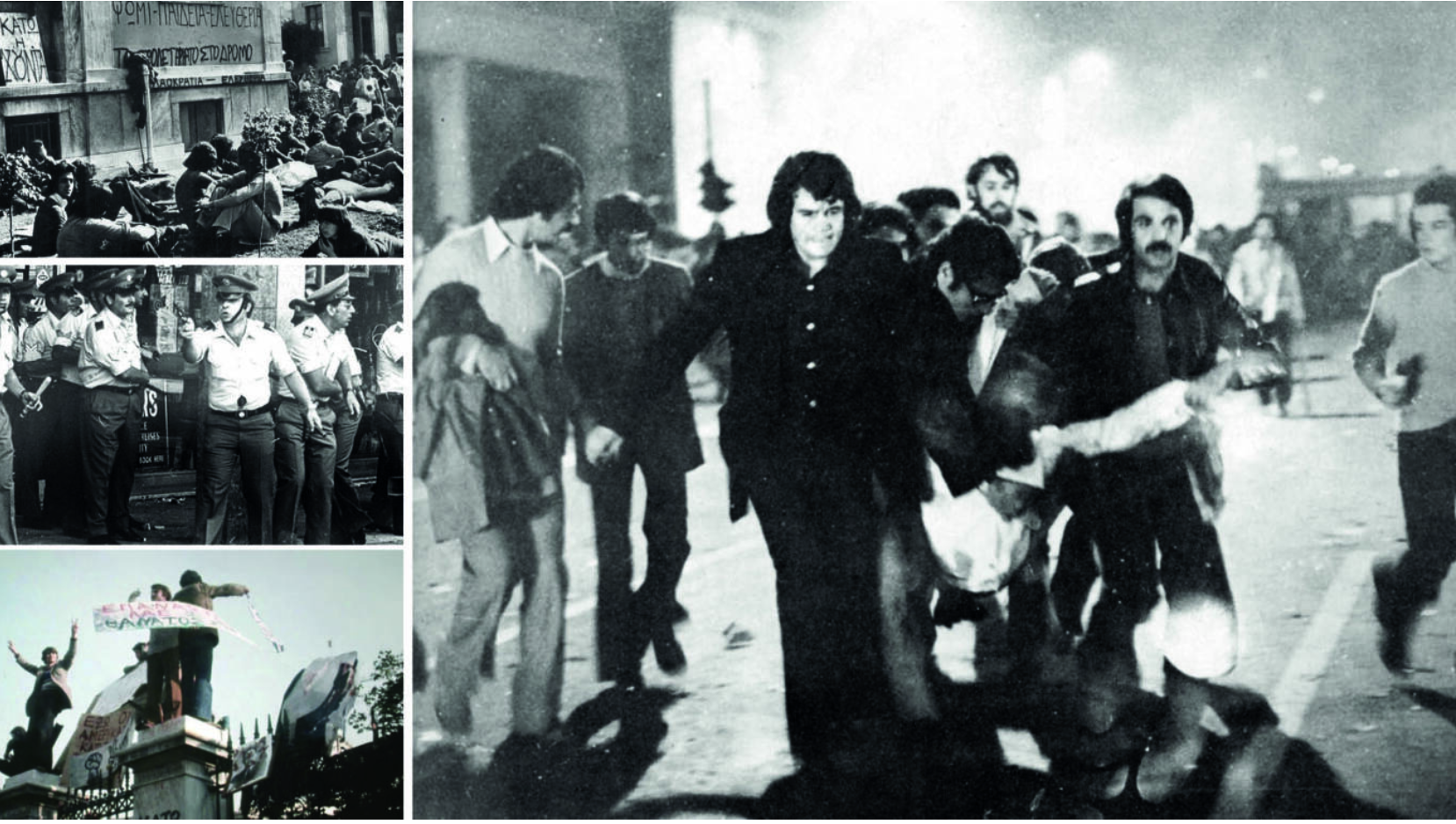
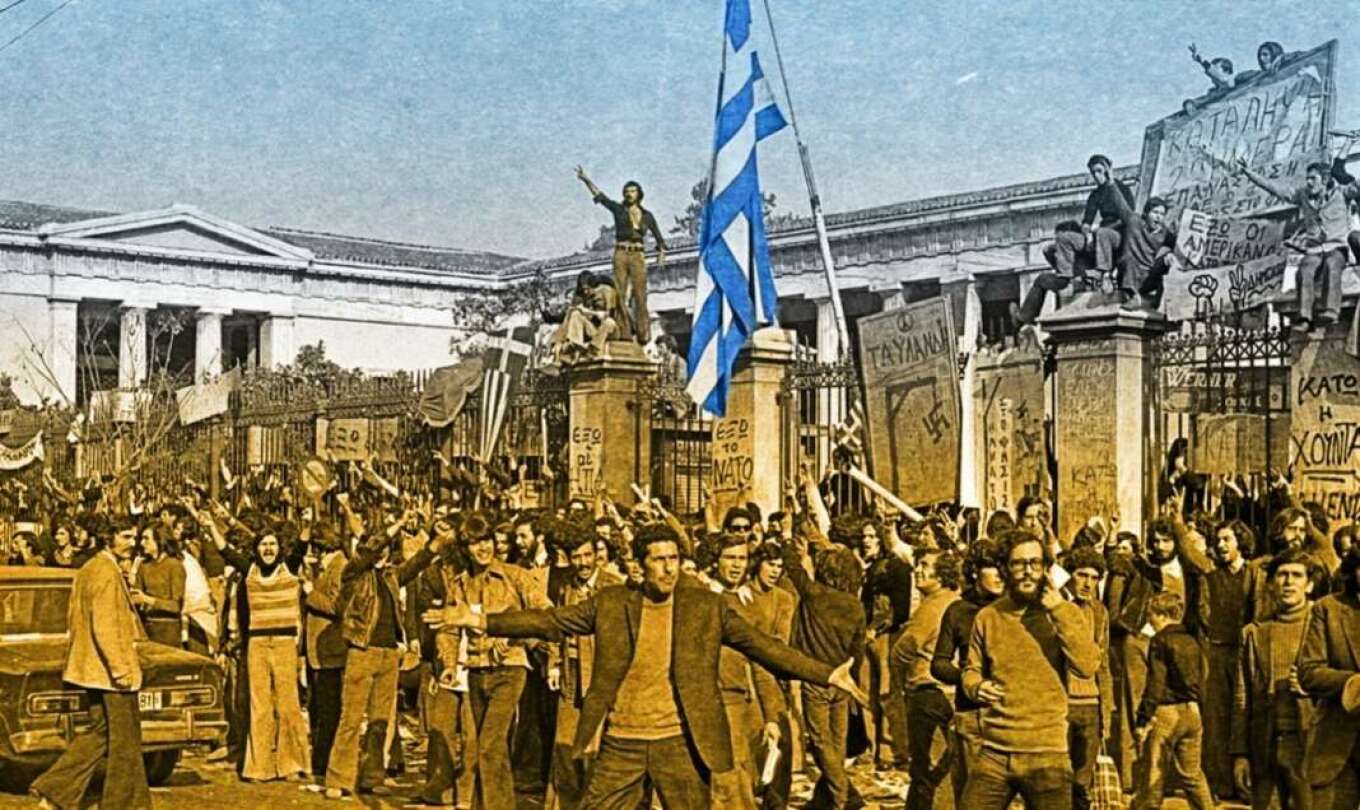
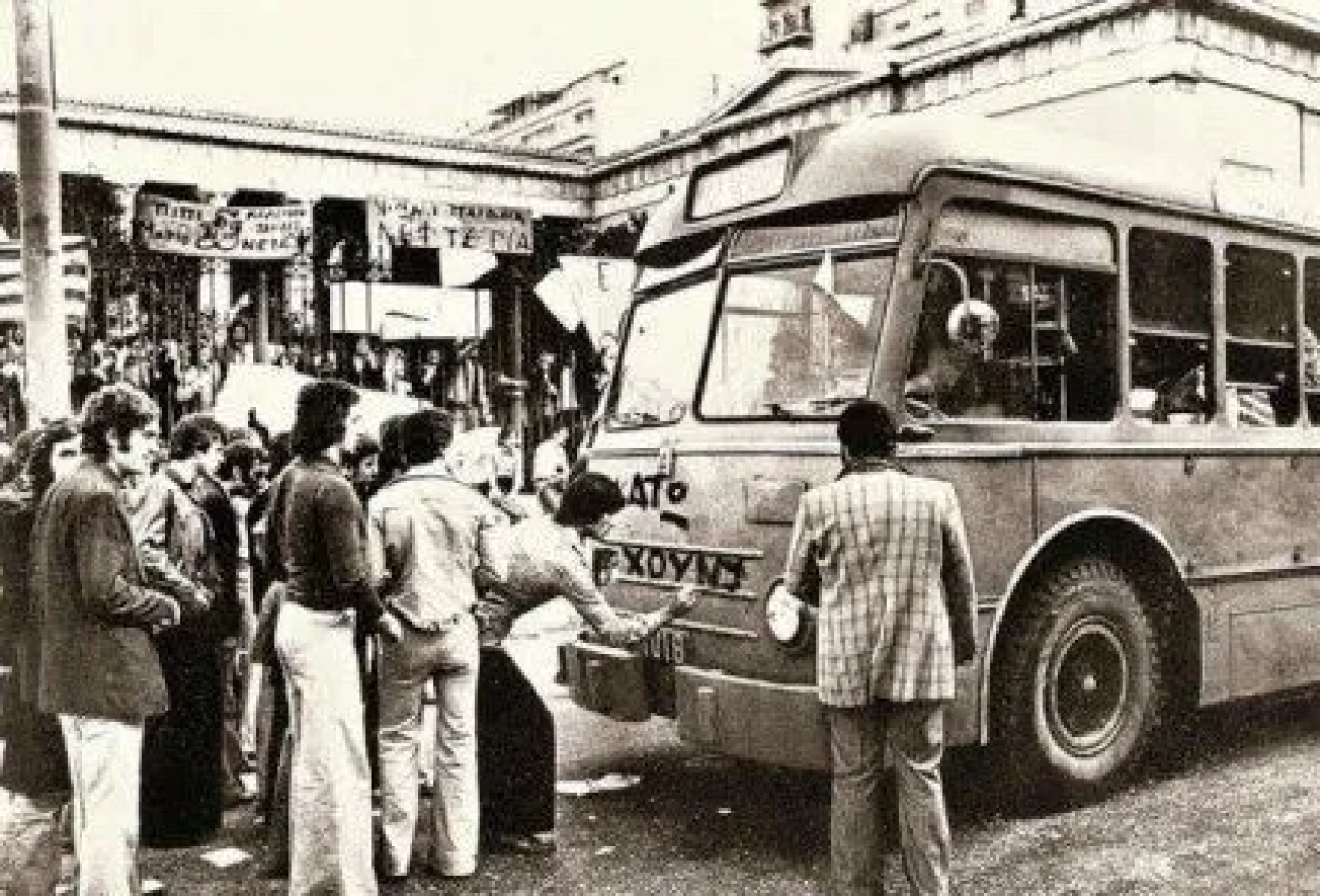
Every year, on the anniversary of the Polytechnic, there are various publications, discussions, tributes, etc., about the dead of the Polytechnic. Naturally, there are disagreements over how many died during the events of November 1973. There are sober voices, people who speak with evidence and listen to others’ views, and extreme opinions: some claim there were no deaths, while others say there were mass casualties.
Since tens of thousands of anonymous citizens passed through the Polytechnic during those days—either to stay inside the university or to provide minor assistance to those trapped inside (e.g., food and medicine)—some take the opportunity, who not only never went near the Polytechnic but likely did not leave their homes, to present themselves as Polytechnic activists. That, however, is another matter.
One of the people who has studied the Polytechnic events more than almost anyone else is Leonidas Kallivretakis, a student of the Faculty of Philosophy at the University of Athens at the time. With anti-dictatorship activity and the corresponding treatment from the junta, he pursued postgraduate studies at the Sorbonne. From 1998 to 2020 he worked at the National Hellenic Research Foundation (from 2001 as research director).
In 2023, his book “The Polytechnic Outside the Polytechnic” was published by THEMELEIO, containing the latest research data on the events of the Polytechnic. Since there are also verbatim reproductions from Kallivretakis’ book regarding the dead of the Polytechnic (in his “temporary list,” since he considers there are other deaths related to the Polytechnic, the names of 26 deceased are included with detailed information about how and exactly where they were shot, beaten, or tear-gassed), we found the data on the injured extremely interesting.
Through statistical processing of many of their records, Kallivretakis presents fascinating information on their gender, occupation, the way and place of injury, etc. The officially recorded injured were 1,103, and perhaps for the first time, valuable conclusions can be drawn about certain aspects of the uprising.
How many were injured in the Polytechnic? – Why some injured are not included
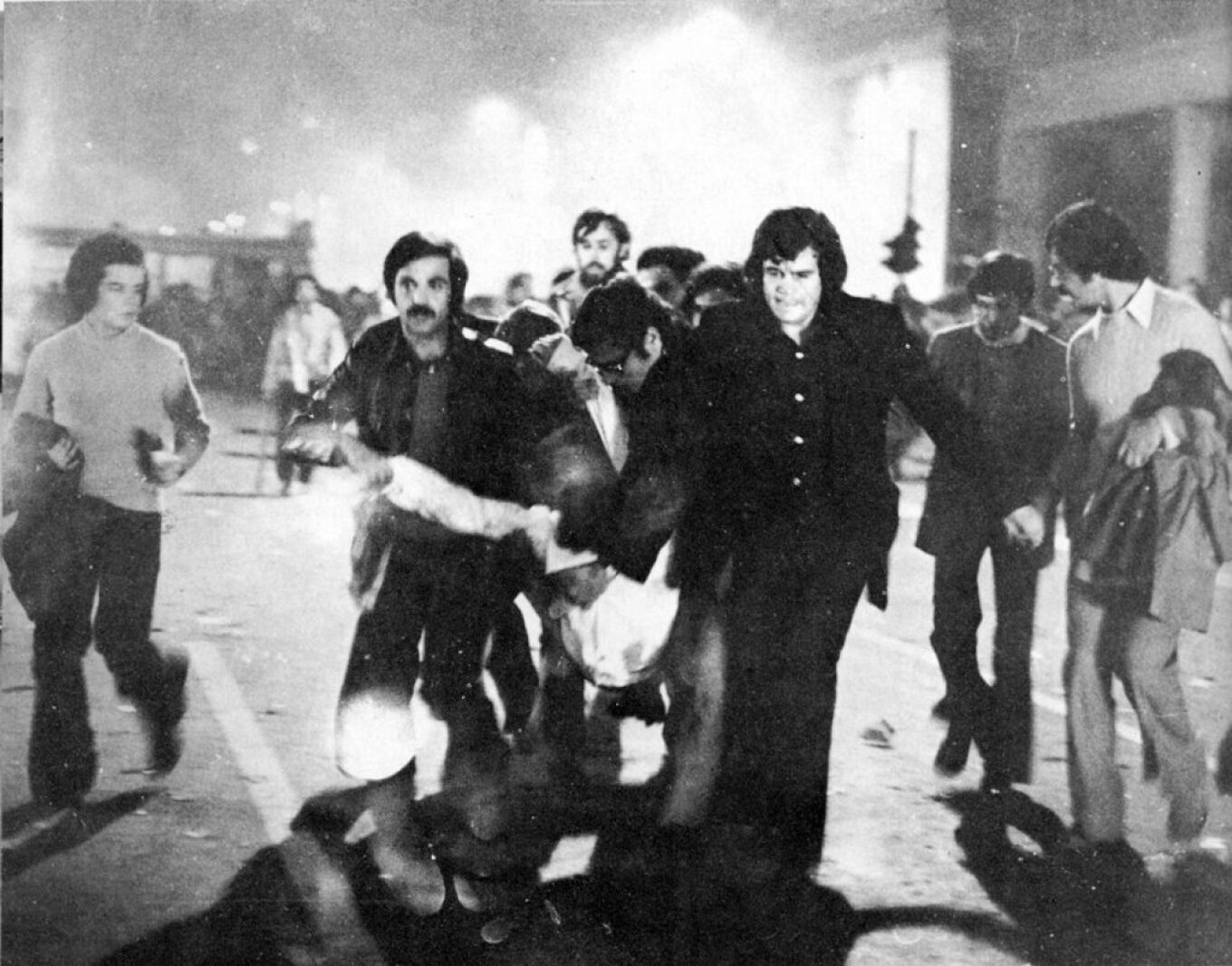
A preliminary judicial investigation conducted immediately after the transition to democracy verified (apart from the dead) 1,103 other citizens who were injured. This number comes from hospitals, clinics, and some private doctors reporting to the late prosecutor Dimitrios Tsevas, who led the investigations. As Tsevas admits, there were additional unverified numbers of citizens treated secretly by doctors, cared for at home, or not treated at all, fearing consequences for themselves and their families. Indicative of the terror that prevailed is the explicit ban by then Chief of the Hellenic Armed Forces, General Dimitrios Zagorianakos, on home treatment for anyone not living with the family providing care unless reported to the local police within three hours. Violators faced referral “before Extraordinary Military Courts.”
Interestingly, Dimitrios Zagorianakos, born in Gytheio in 1918, although initially sentenced to 25 years in prison and seven years of political rights deprivation, was acquitted in a second trial (Jan–Feb 1977) in the Court of Appeals with a 4-1 vote (as were all defendants except Varnavas and Christoloukas, who served prior sentences and were released). Zagorianakos died a few months after his release in a car accident in Saint-Quentin, France (21/9/1977) when his car hit a bridge railing. His wife and 20-year-old son survived.
As Kallivretakis notes, in similar cases (e.g., May 1968 in France, U.S. Movement 1964–1973), the non-hospitalized injured were many times the number of hospitalized. This occurred even in democratic countries, unlike Greece in 1973 under the junta’s terror regime. At the memorial of G. Papandreou in early November 1973, of at least 70 injured, only three were transported to hospitals.
Statistics on the injured
According to Kallivretakis, after years of research, the names of 642 injured were identified (and thus their gender). Age was identified in 577 cases and occupation in 308. In 265 cases, the weapon used against them was identified, in 287 cases the time, and in 173 cases the location of injury. Finally, in 260 cases, the perpetrator was identified (Police or Army).
Gender and age of the injured
Of the processed data, 80% of the injured were male, 20% female. Mainly (60%) were aged 18–30, 13.5% under 18, and 26.5% over 30.
Occupation of the injured: 21% manual workers, 17% students, 15% university students…
21% of those whose occupation was identified were manual workers (factory workers, construction workers, mainly painters, carpenters, masons, electricians, plumbers, ironworkers, truckers, cobblers, seafarers, lithographers, etc.). Some also studied at night schools or technical schools. 17% were secondary school students, 15% university students. 9% were private employees (company staff, shop clerks, saleswomen, hotel staff, waiters, etc.). 8% were small business owners and freelancers (craftsmen, merchants, insurance agents, accountants, jewelers, seamstresses, barbers, bakers, butchers, grillers, etc.). Less than 4% were public servants (mainly in public organizations or teachers), doctors, nurses, lawyers, journalists, and artists (painters, directors, actors, etc.). Finally, 13% of women whose occupation was identified were housewives, usually over 40.
Place and time of injuries and the responsible parties
From the circumstances of injury, conclusions can be drawn about the location, time, and perpetrators. According to the processed data, in 14% of cases injuries were caused by tear gas (3 deaths), 26% by beatings and blows from police batons (6 deaths), and 58% by gunfire (17 deaths). The remaining 2% were injured by other means.
For example, Kalliopi (Pepi) Rigopoulou, Sotiris Kokkinis, and Nikos Patsavos were injured during the AMX-30 tank assault, while Giorgos Chorianopoulos was injured by a soldier’s bayonet. In 78% of cases, the Police and Gendarmerie were responsible, and in 22% the Army. 45% of injuries (10 deaths) occurred on Friday, 16 November 1973; 45% (10 deaths) on Saturday, 17 November 1973; and 10% (6 deaths) from 18–22 November 1973. 61% of injuries occurred on Patission Street and its side streets, 35% in central Athens (mainly G’ Septemvriou, Acharnon, and Alexandras Avenue, as well as from Omonia to Syntagma). Finally, 4% occurred outside the center, including deaths in Ilion, Zografou, Agioi Anargyroi, and elsewhere.
Ask me anything
Explore related questions




