





Bees that once hovered around flowers and wasps that appeared at picnic tables almost vanish overnight. The inevitable question is: where do they go when the cold arrives, and how many actually survive?
According to entomologists studying their behavior, the answer is less gloomy than it might seem. Most bees and wasps don’t simply disappear, or all die off. Instead, they enter a special winter state, using different strategies to withstand the cold.
Social vs. Solitary Insects — Two Different Approaches
To understand what happens in winter, it’s important to know that bees and wasps fall into two main groups: social and solitary species. Social insects live in organized colonies with a queen and workers, while solitary insects live and reproduce alone.
Social species include honeybees, bumblebees, yellowjackets, paper wasps, and bald-faced hornets. Solitary species include carpenter bees, cicada hunters, and mud-dauber wasps. Each group faces winter in completely different ways.
Honeybees Act Like Tiny Heaters
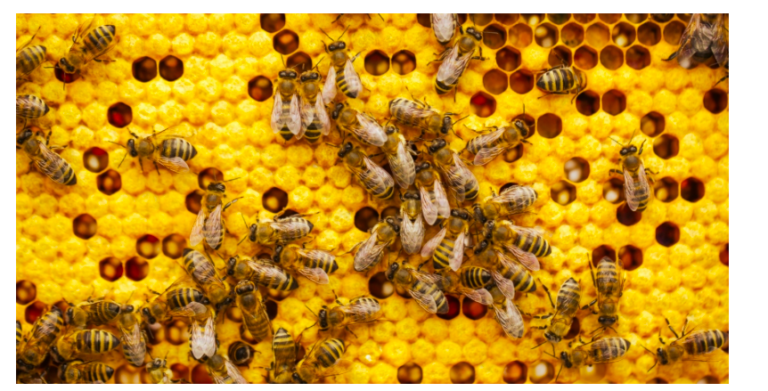
Honeybees don’t hibernate. When the temperature drops, they cluster tightly into a “ball” around the queen inside the hive. By rapidly vibrating their wing muscles, they generate heat and keep the center of the cluster as warm as a cozy room, even when it’s freezing outside.
Bees on the outside of the cluster gradually swap places with those inside to avoid prolonged exposure to the cold. They “fuel” this warmth by consuming the honey they’ve stored. That’s why a healthy hive with enough reserves can survive harsh winters that would kill many other insects.
Bumblebees and Solitary Bees Hide Underground
Bumblebee colonies usually last just one year. By late fall, workers and the old queen die off, leaving only the young fertilized queens alive. These queens burrow into loose soil, under leaves, or into small cracks, where they stay dormant until the weather warms again in spring.
Many solitary species have other strategies. Some, like carpenter bees, overwinter as adults inside wooden tunnels. Others remain as larvae or pupae in their nests, waiting to complete development. This is why experts emphasize that cut plant stems, bare soil, and leaf piles aren’t “messy”—they’re natural shelters for pollinators.
Wasp Nests Die, But Queens Survive
Most wasps follow an annual cycle. In spring, a queen builds a small nest and raises the first workers. By late summer, the colony can have hundreds or thousands of members.
When the first hard freezes come, workers die off. Only the new queens survive by hiding under tree bark, inside logs, sheds, or attics. These queens will start fresh nests the following spring.
Super Colonies in Mild Winters
In regions with mild winters, something unusual can happen: some nests—mainly yellowjackets—don’t die off. Instead, they keep growing into multi-year colonies with multiple queens and hundreds of thousands of workers. These giant nests are considered dangerous and should only be handled by professionals.
Why We Sometimes See Insects in Winter
Most of the winter, bees and wasps stay hidden. But on sunny, relatively warm days, they might appear briefly. Honeybees take advantage of these “windows” to make short flights, and some queen wasps may wake up if an indoor area warms enough.
Seeing a few insects occasionally doesn’t mean there’s an active nest. But if wasps appear frequently inside a house, it might indicate a gap in the roof or walls that needs inspection.
How We Can Help
Even if you don’t keep hives, how you care for your garden matters. Experts recommend leaving part of the garden “wild” with leaves, dead plants, and natural hiding spots. Avoid heavy cleaning in autumn and wait until temperatures stabilize in spring. This helps queens, larvae, and pupae survive winter and return in summer—supporting both pollination and pest control.
Ask me anything
Explore related questions




