





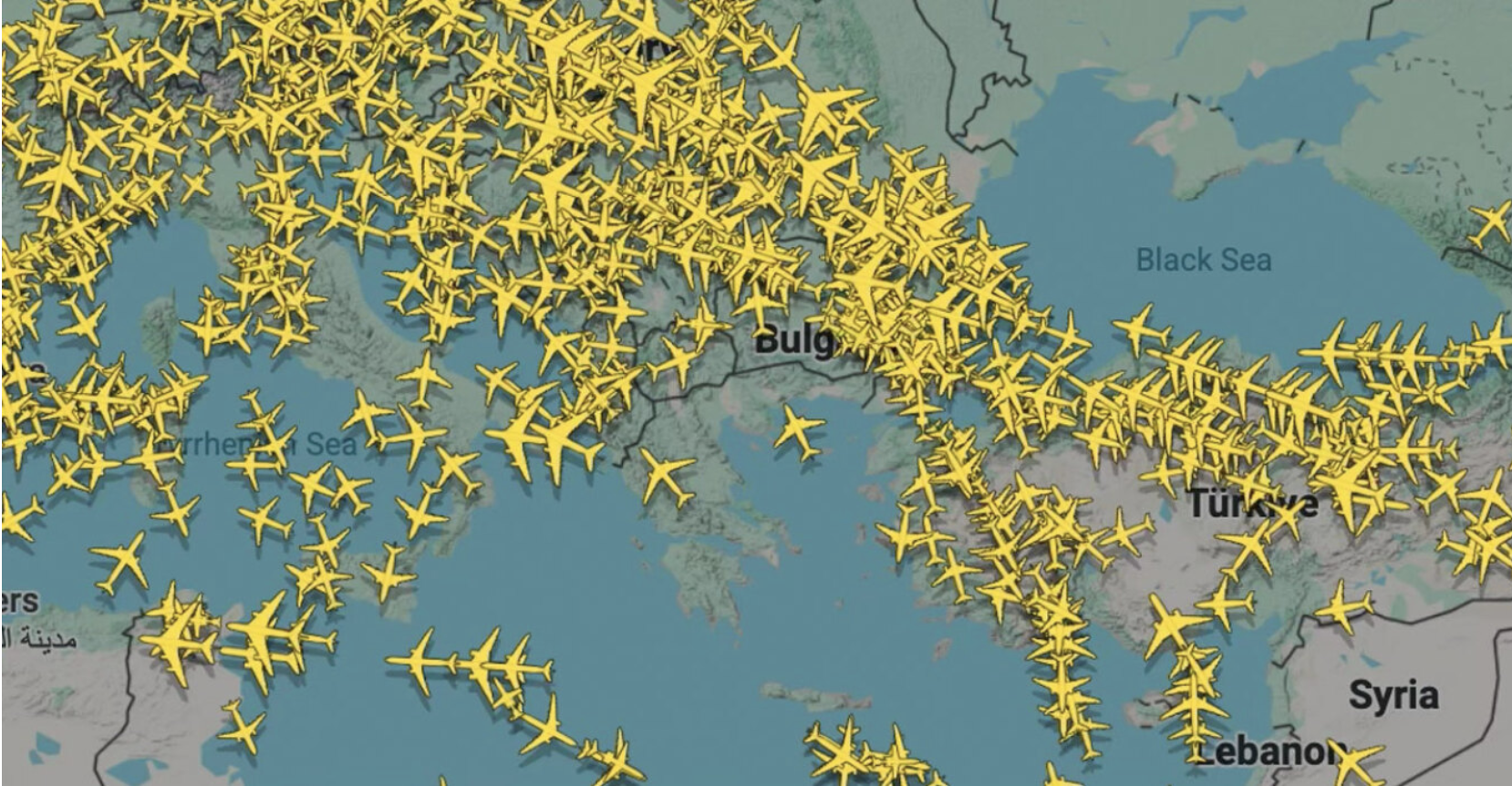
A serious problem affecting radio frequencies across Greek airspace has been recorded over the past hours, with the Hellenic Civil Aviation Authority (HCAA) already issuing a relevant aviation directive for flights within the Greek FIR.
According to the NOTAM issued by the HCAA, the suspension of flights (referred to as a “zero rate” in the aviation directive, which is issued in English) “due to technical problems with communication frequencies applies until further notice.”
In its announcement, the Civil Aviation Authority states:
“Frequency Issue in the Athens FIR
Some frequencies serving the needs of the Athens FIR are experiencing a problem, which is being investigated in cooperation with competent external bodies. In order to fully ensure flight safety, only part of overflights is being handled, and restrictions have been imposed at Greek airports. A relevant NOTAM has already been issued. The matter is under investigation and further announcements will follow.”
As a result, capacity has been reduced and while initially flights that were already airborne were being handled, departures have now effectively become impossible—primarily from the country’s largest airport, Athens International Airport “Eleftherios Venizelos,” which is the most affected due to the high volume of flights, especially these days. Regional airports are also affected, and flight diversions are already taking place, with aircraft in the air being redirected to other airports.
It is noted that today is among the busiest days of the holiday period, especially at the airports of the country’s two largest urban centers, Athens and Thessaloniki, as many travelers are returning from abroad.
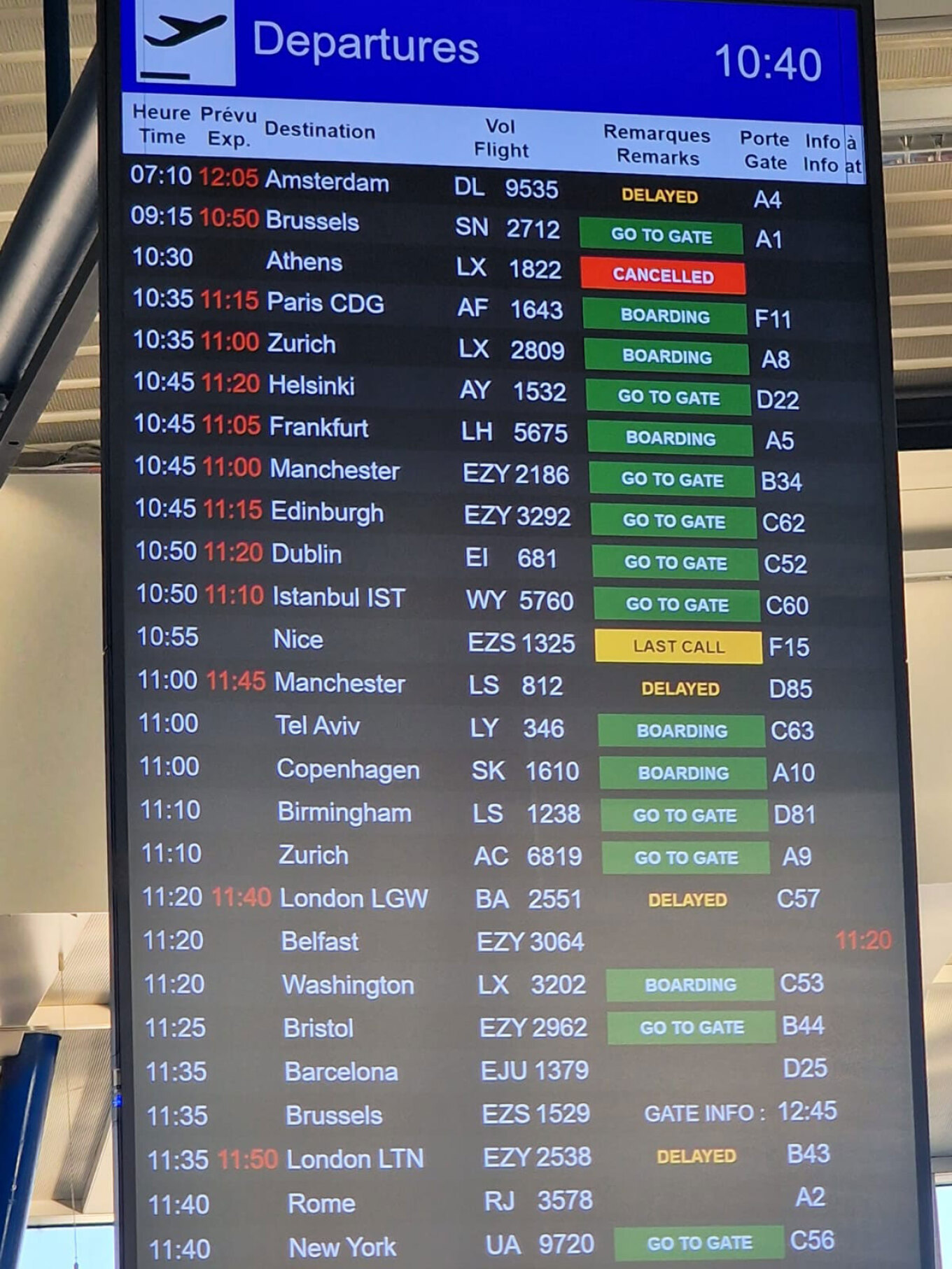
A departures board in Geneva announcing the cancellation of the flight to Athens
The problem appears to be related to the central radio-frequency systems of the Athens and Macedonia Area Control Centers, and it is not known when it will be resolved. It is considered unlikely, however, that it will be fixed before midday or early afternoon.
Flights that are already in the air and need to land at Greek airports will land “manually,” as it is termed in aviation jargon—meaning without the use of automated technical systems.
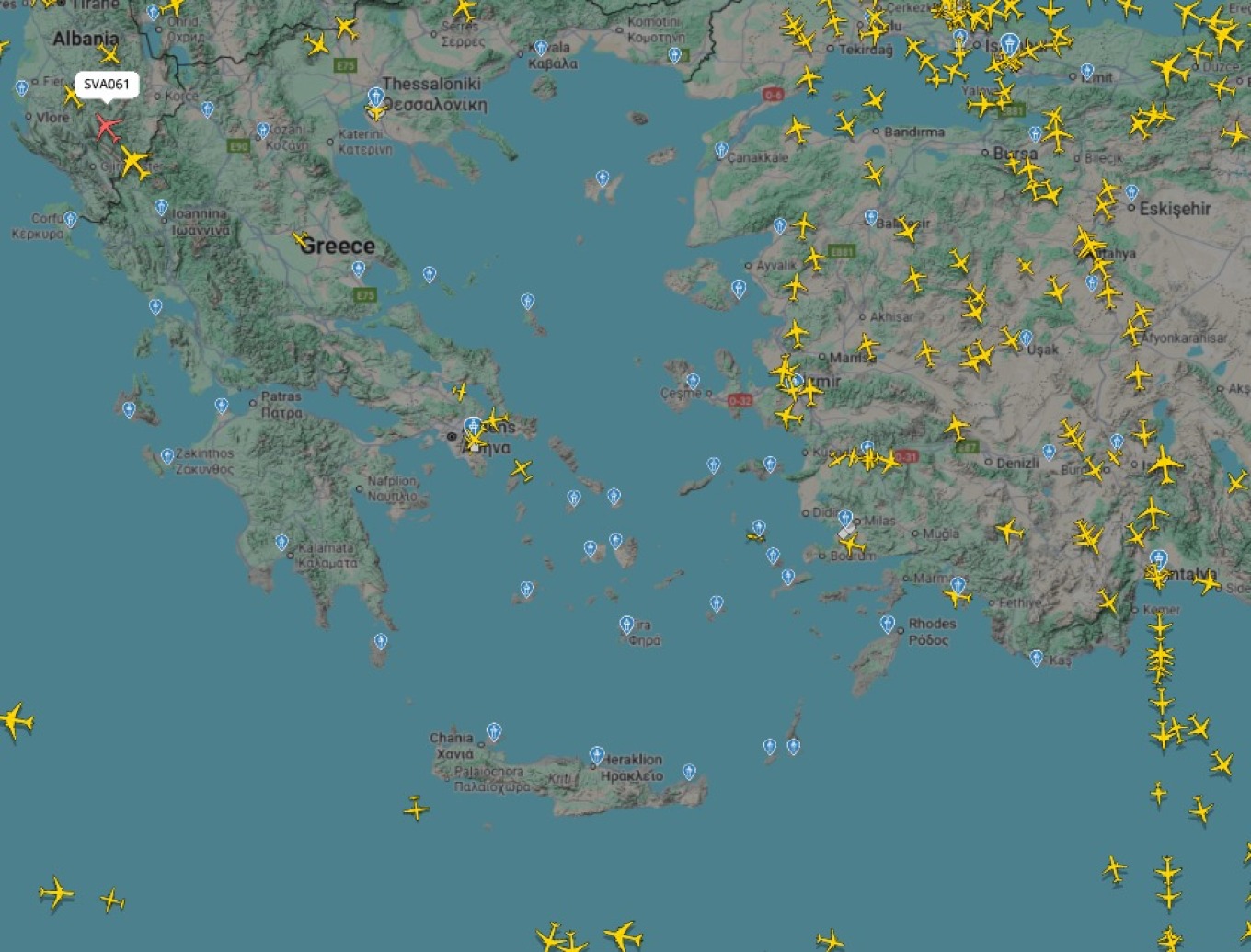
Map showing the Athens FIR with no aircraft
What airlines are saying
From the airlines’ side, according to information, and given that today is particularly dense in terms of arrivals, efforts are being made at an operational level, focusing mainly on rescheduling flights. However, the fact that departures from Greek airports—Athens, Thessaloniki, Heraklion, etc.—are not possible is impacting both domestic flights and international flights scheduled for today from foreign airports for returning travelers.
Fraport Greece, which manages the 14 regional airports including “Macedonia” Airport, has informed the traveling public that a technical problem affecting radio frequencies in Greek airspace is ongoing, “resulting in reduced capacity and the potential for delays and restrictions to the flight schedule. For better service, travelers are advised to stay informed about any changes to their scheduled flights.”
What aircraft do in such cases
“If there is a complete disruption of the system, there are procedures that aircraft follow and self-manage. Aircraft have an ETA, an estimated time of arrival. If they arrive early, they must enter a holding pattern over the airport, wait until the arrival time, and then begin an instrument approach procedure to find a slot—this is the Loss of Communication Procedure,” says Grigoris Konstantellos, an experienced pilot and mayor of Vari–Voula–Vouliagmeni, speaking to protothema.gr.
He adds: “When this happens with one or two aircraft, it’s not such a big problem. The issue is compounded by the fact that this is occurring during peak arrival hours at Greek airports. Fortunately, there is the TCAS system—the Traffic Collision Avoidance System—which, in the event of a potential collision, allows one aircraft to ‘communicate’ with the other and provide separation guidance. Therefore, the prospect of two aircraft colliding in the air is rather unlikely.”
Mr. Konstantellos concludes: “Unfortunately, the systems of the Civil Aviation Authority are outdated and need immediate modernization, despite the significant funds flowing in from the Eurocontrol system. This incident is an opportunity to wake the system up.”
Ask me anything
Explore related questions




