





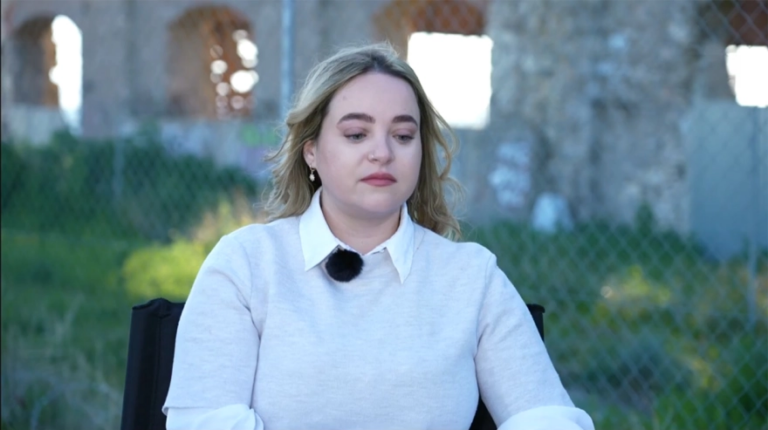
Stefania is 22 years old today. And if anything does her an injustice, it is that when we hear her age, we automatically think of a young woman just starting her life. In her case, life did not open — it shut abruptly, with noise, with blood, with a news story that moved from headline to headline before fading into the next cycle of current events.
Her 50-year-old father killed her mother with multiple stab wounds, leaving the knife embedded in her lifeless body until police arrived on the central road in Menidi, below their home, on May 16, 2024.
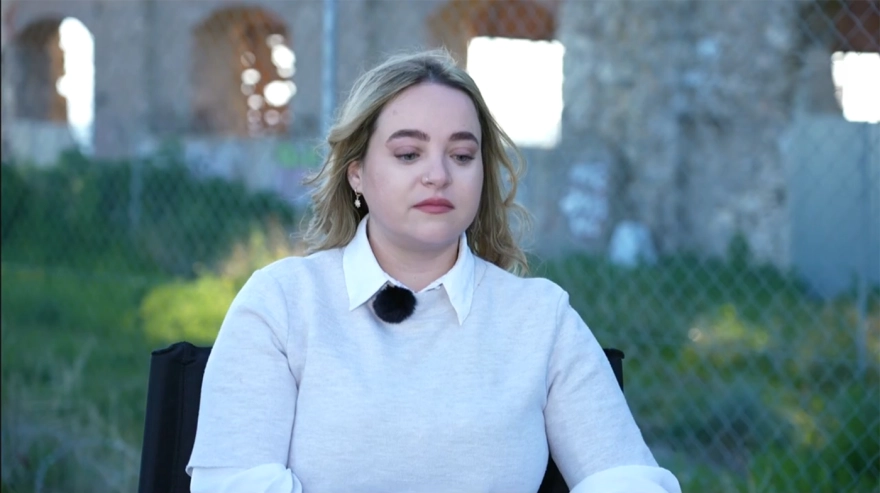
She was left behind with her brother. Alone. Their father is now in prison for killing their mother.
“My mom used to leave early for work. The bus stop she used was right below our house. When I woke up, I saw chaos outside. A journalist rang the doorbell and asked if I had witnessed what happened. That’s how I realized she had been murdered below the house — I figured out it was my mom because I had called her and she didn’t answer.”
Her 14-year-old brother had already left for school:
“He had passed the spot that morning and thought there had just been a car accident. He didn’t know it was our mother there. No one informed us.”
“It felt like I was thrown alone into an unknown place,” Stefania says — and it is clear that nearly two years later, she has not had time to grieve. She has been forced to fight.
Overnight, Stefania stopped being a child. She became a child, a mother, and a sister.
A child, because inside her still lives the girl who expected adults to protect the home.
A mother, because someone had to carry the weight of everyday life: practical matters, psychological strain, finances, and above all to become the voice, the embrace, and the shield of her younger brother.
“I had to become his mother — two roles in one person,” she says.
When a crime shatters a family, someone always “steps up” — not by choice, but by necessity. She recalls the first time her brother fell ill after they were left alone:
“I was crying. I called the pediatrician three times because he had a fever for ten days and it wouldn’t drop. I was extremely anxious. I even joked that it was my first child and I didn’t know what to do.”
Stefania spoke out. Her speech at the European Parliament was not just another emotional moment for applause.
It was the breaking of a silence that in Greece is often presented as “dignity,” but is actually defense, fear, and social complicity.
Silence covers things up. Forgetting “washes them away.” Such cases are filed under the label “family tragedy,” as if it were bad luck, an accident, not murder.
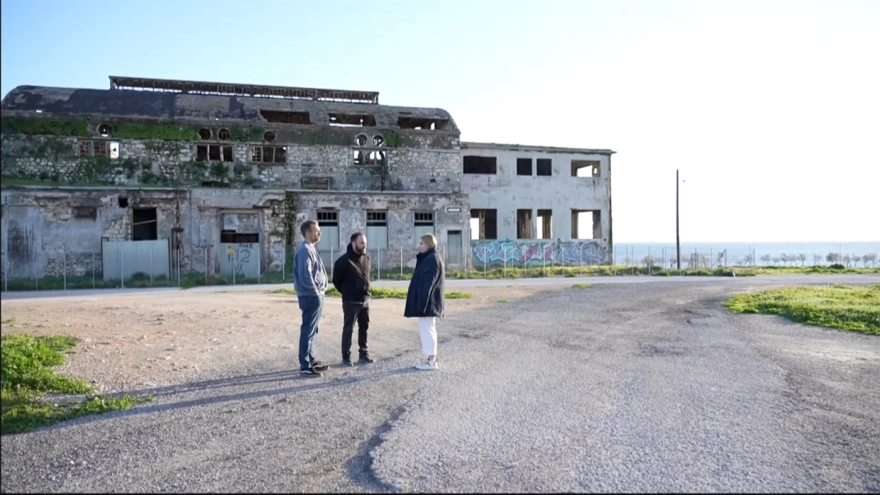
Today, Stefania speaks publicly for the first time about everything:
- the before, when there were signs, tensions, and fear inside the home;
- the after, when reality became an endless journey through police stations, courtrooms, paperwork, costs, and waiting;
- and the after the after, when the spotlight fades, leaving silence, closed doors, institutional hesitation — and her alone carrying a burden that was never hers.
She does not call the perpetrator “father,” but “the offender.”
“I never felt my father loved us. If he did, it was because he saw us as extensions of my mother.”
Why did he do it?
“In my opinion, he always saw her as his property. When he felt he was losing what he considered his possession, he believed he was justified in doing this.”
She expected him to take his own life afterward — but he did not.
“He used to say ‘together in life and in death,’ but he didn’t keep that promise.”
She recalls the only phone call she received from him after the crime:
“He tried to justify what he did by blaming my mother and speaking badly about her. He tried to excuse himself by shifting responsibility elsewhere. We never spoke again, and he never tried to call or see me as a father should.”
Stefania also feels injustice in how the authorities handled her mother’s case:
“My mother asked for help — help she never received.”
She speaks especially about a truth that rarely fits into news reports: the children of victims who remain invisible.
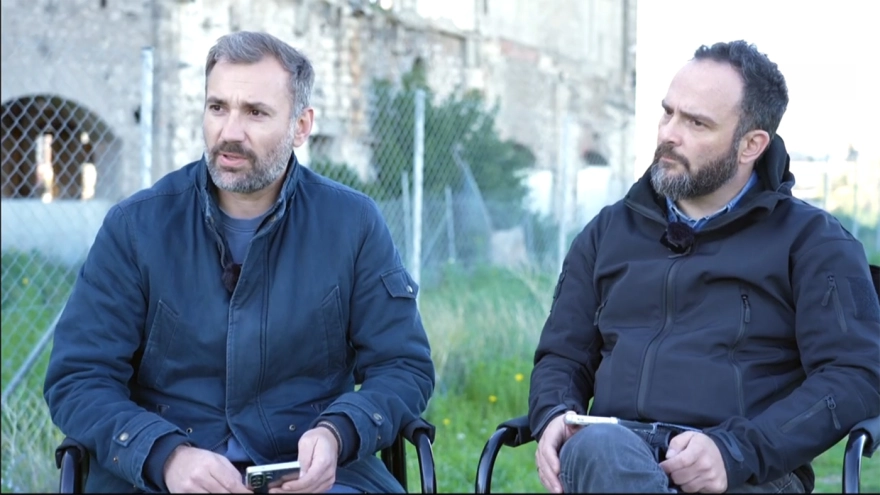
“I had dreams and plans that I had to abandon. My mother was an embrace that held everything. I had to cope while I was collapsing inside, and I had to leave ‘Stefania’ behind.”
Society is shaken briefly — then moves on. The state speaks through announcements and initiatives. But in practice, Stefania says she has received no real support: no stable assistance, no psychological care, no financial relief, no guiding figure to help her navigate a system that should have provided a way out.
She continues to struggle alone — with debts she did not create, responsibilities that are not hers, and trauma she did not choose.
This is the core of Stefania’s message: we must not allow silence and forgetting to do their work again.
Violence must not be renamed a “family matter.” Survivors must not remain faceless, unsupported, and invisible.
Her mother remains Stefania’s foundation and refuge.
“I want to make my mother proud — to work in what I studied and to be happy,” she says.
She became a symbol in a hall in Brussels.
“I decided to speak to become a message.”
The question is what happens when the symbol returns home. If no one is there, applause is only noise.
In 2021, families of victims united to create the organization “Be Human.” Its goal is not only to address practical problems but to mobilize awareness, institutions, and the state.
Ask me anything
Explore related questions




