





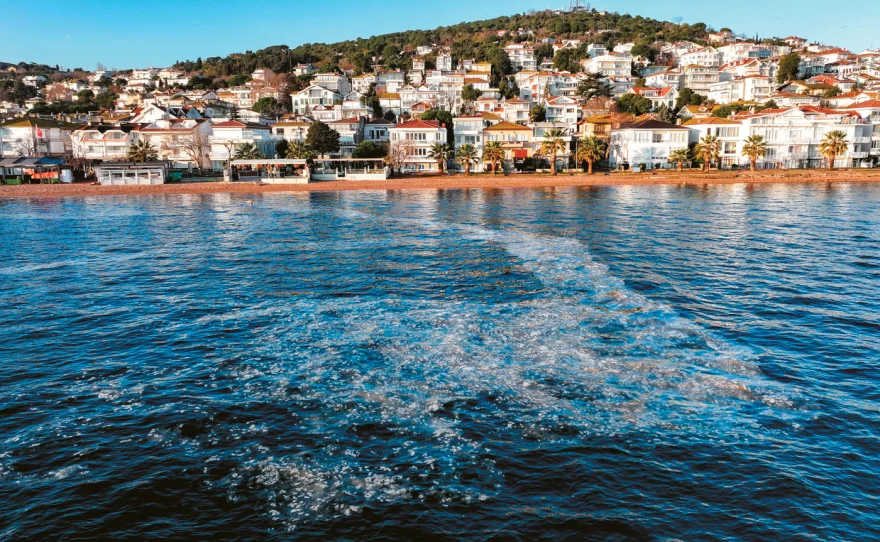
At the edge of the Sea of Marmara, 8–11 miles south of the Asian side of Constantinople, lie the Princes’ Islands. A cluster of nine islands, a small paradise completely unlike the bustling concrete metropolis of 16 million inhabitants. Anyone who visits can easily understand why, in the distant past, they were chosen as places of exile or monastic retreat for Byzantine emperors and patriarchs, and later evolved into resorts for the city’s wealthy families, especially the Rum (Greek Orthodox) indigenous ethnic minority, and later, the Turks themselves.
The gems of the Marmara
Picturesque and quiet, combining Ottoman architectural elements with Western European motifs, mostly covered in greenery, car-free except for bicycles, horse-drawn carriages, and now small electric vehicles like those used in large tourist complexes. They have become closely associated, to varying degrees, with the history of the Greeks. At every step, these islands speak to visitors about Hellenism and Orthodoxy. They once teemed with Greek inhabitants. However, waves of persecution in the postwar period—first the 1955 pogrom in Istanbul, and then in 1964—led to the dramatic decline of the Greek population on the Princes’ Islands. Fewer than a thousand remain today out of a total population of 17,000, and the numbers continue to shrink.
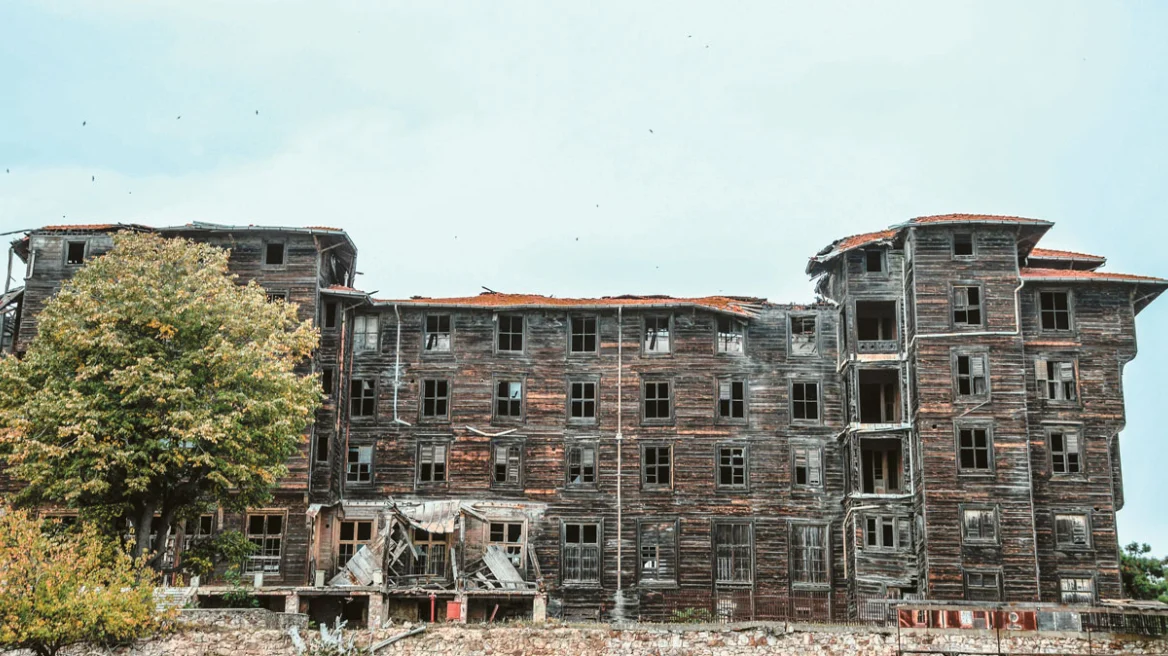
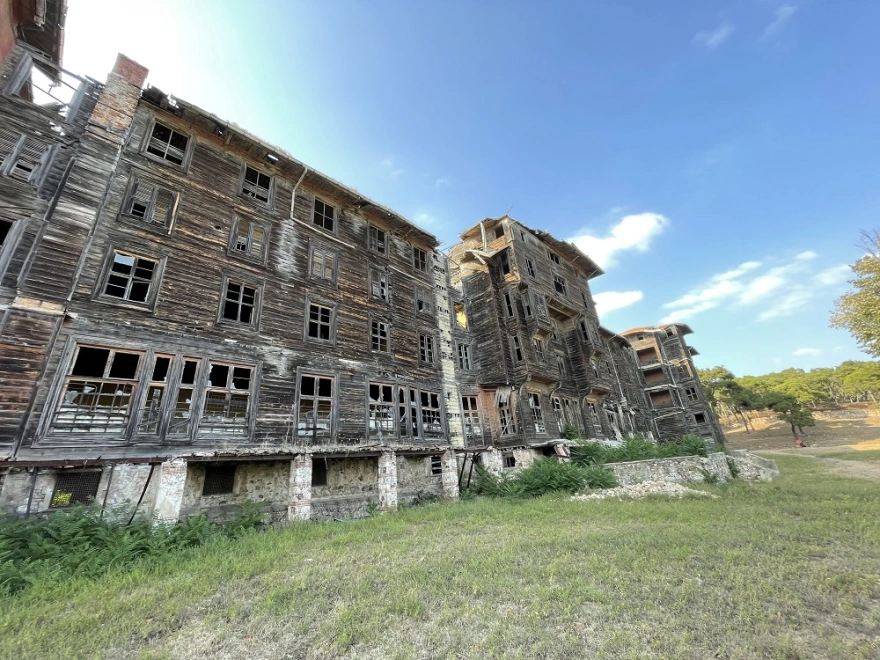
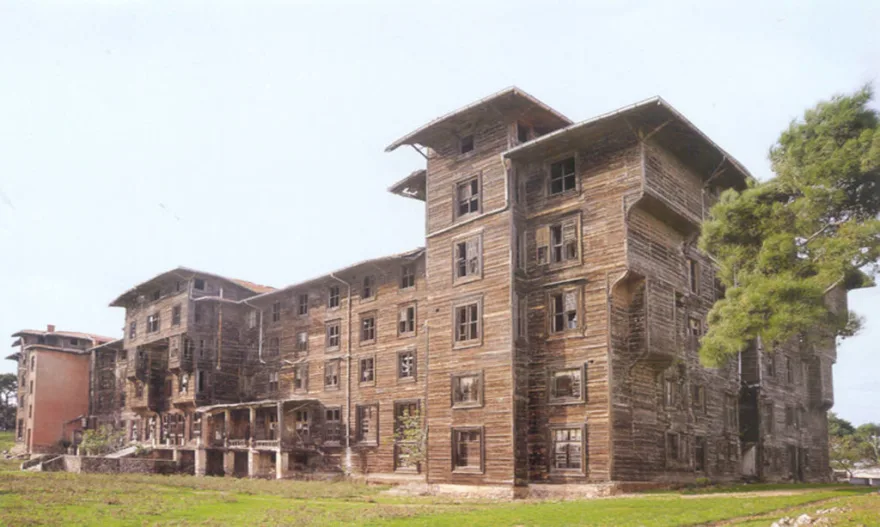
Beyond the well-known Halki Theological School, the largest island, Prinkipo (Büyükada in Turkish, meaning “Big Island”), stands out. It hosts many iconic Greek Orthodox landmarks, such as the Monastery of St. George, and the Greek Orphanage (Büyükada Rum Yetimhanesi). A huge wooden building that, despite deterioration from decades of neglect, retains its architectural grandeur and imposing presence. It is the largest in Europe and the second largest in the world, behind only the Buddhist Tōdai-ji (Great Eastern Temple) in Kyoto, Japan. Thanks to coordinated and painstaking efforts by the Ecumenical Patriarchate and Constantinople’s Greek community, a path is finally opening for its definitive rescue through sustainable ecotourism.
The French count
In 1898, when French count Maurice Bozart saw the lavish, mammoth building on Prinkipo, constructed by his company and designed by Alexandre Vallaury, a French-Ottoman architect, intended as a luxury hotel with exceptional amenities and a casino, he could never have imagined that almost immediately this wooden architectural masterpiece would change use by decree of Sultan Abdul Hamid. For many decades, it would be transformed into a Greek orphanage, the largest of the still-thriving Greek minority in the city at the time.
Bozart had chosen wood as the main construction material for its speed of assembly. Reinforced concrete buildings were only just beginning to appear in Europe. Wooden structures were common across the Ottoman Empire, and many significant buildings in the city, including luxurious residences on the Princes’ Islands, had wooden frameworks, many bearing Vallaury’s signature.
Yet Bozart could never have foreseen that decades later the building would fall into disuse and decay. Lengthy legal disputes over its ownership made matters worse, pushing it to the brink of collapse—culminating in the closure of the orphanage in 1964.
62 years of operation
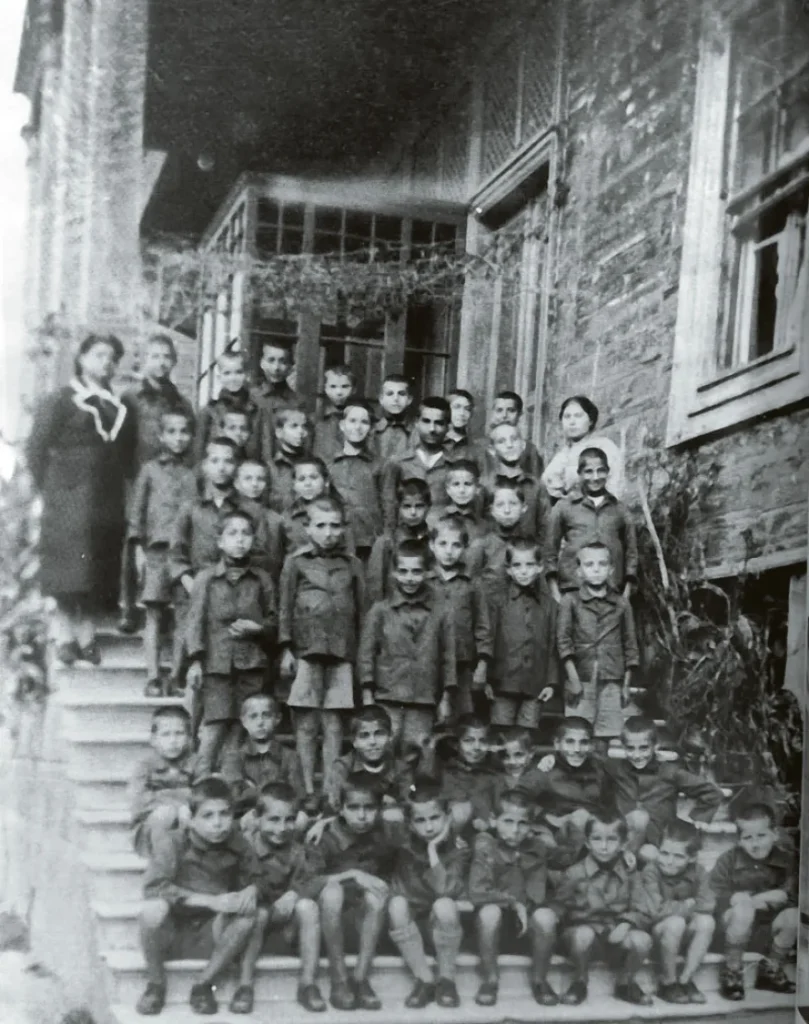
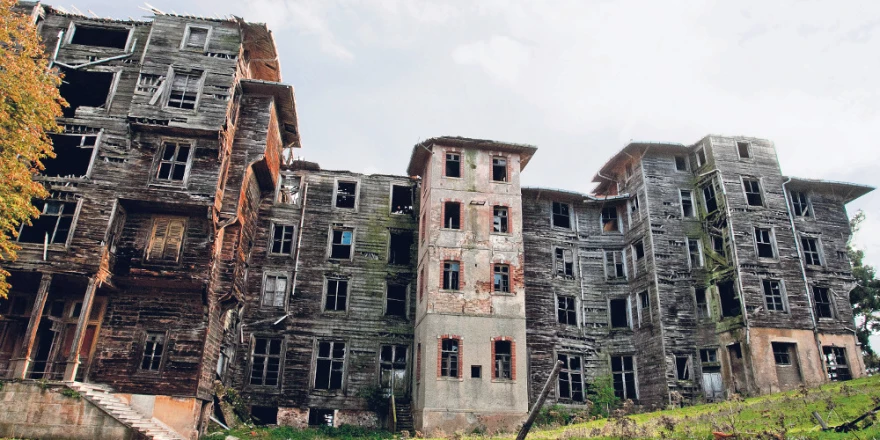
The Greek Orthodox Orphanage of Prinkipo once bustled with life. A total of 5,744 Greek children, deprived of their parents, grew up and received education under its care, learning to eventually take flight into life. Hundreds more worked there as teachers, educators, and in various other roles alongside the children. Today, enveloped in overwhelming solitude but carrying the memories and experiences of thousands, the building remains a vital piece of the Rum community’s life in Istanbul, gazing proudly, if “wounded,” over the Sea of Marmara. For many years it has waged a silent yet monumental battle to remain standing. Beyond abandonment, it suffered major damage from a fire in 1980 and further from the devastating 1999 Istanbul earthquake.
Until recently, this struggle seemed unequal. Yet the efforts of the Ecumenical Patriarchate and a group of Greeks from Constantinople have given life to Europe’s largest wooden monument. In 2009, the battle over its ownership was won, returning it to the Patriarchate.
Now begins the battle against time. Every year, month, and day without intervention worsens the building’s condition and future prospects. Patriarchate sources tell THEMA that the building is “heavily damaged.” It has long been closed to visitors as dangerous. While guarded, local guides advise tourists to avoid visiting. The situation has reached a critical point. One may wonder, after so many years, why a solution has not yet been implemented to save this wooden giant.
The high cost has been the main obstacle. Almost 130 years after its construction, 62 years after the orphanage’s closure, and eight years after Europa Nostra sounded an alarm in 2018, placing it on the list of Europe’s seven most endangered cultural monuments, it finally seems that a glimmer of hope has emerged to keep it alive, giving it new life.
The Decisions
On June 3, 2025, the Holy Synod of the Ecumenical Patriarchate broadly defined the roadmap for its next steps in the rescue and utilization of the wooden giant: “The Patriarch and the Synodal Hierarchs unanimously decided to accelerate the necessary actions to develop ecotourism activities in the said space, fully harmonized with the environment and the architectural character of the Princes’ Islands. The decision was made with respect to the historical legacy of the Greek Orphanage, which has long served the needs of the Greek Minority and with the aim of sustainable development of the Marmara island complex.” A special committee was assigned to carry out the next steps.
What does this translate to? What Bozart failed to achieve 128 years ago—operating the wooden building as a hotel—will likely happen now, within the framework of its ecotourism development through long-term leasing with a company, seen as the only viable path for the building’s salvation.
Patriarchate sources confirmed to THEMA the general direction for the building’s utilization, among several alternative options. The initial timeline foresaw that the final decision would be made by the Holy Synod by the end of 2025; however, discussions are ongoing, and once the committee submits a definitive recommendation to the Synod, the latter will be called to make decisions. Patriarchate officials prefer action over unnecessary talk. Once the final decision is made and the definitive solution is set in motion, official announcements will follow.
A long investigation has already preceded this. It is not an easy matter—quite the opposite. As soon as the Patriarchate regained ownership of the wooden giant, by order of Ecumenical Patriarch Bartholomew, all possibilities for its rescue were explored. Many proposals and studies for a sustainable form of utilization were examined, as the cost of fully restoring it from damages and using it as a visitable space—a mirror of the history of Constantinople’s Greek minority plus ongoing maintenance and protection, is enormous.
Many members of the Greek community in Istanbul, volunteers from Greece, architectural experts, specialists in wooden structures, and even cultural and ecological organizations have, over time, submitted studies, ideas, and proposals. These, however, always collided with the “cost” factor. The required investment is very high; earlier estimates placed it at 60–80 million dollars, too much for any single party to bear. At one point, for example, the Patriarchate considered using the building as an Environmental Institute. It was investigated and found unfeasible. In general, many efforts were made to secure funding, but all proved unsuccessful, as the Holy Synod confirmed in June of last year.
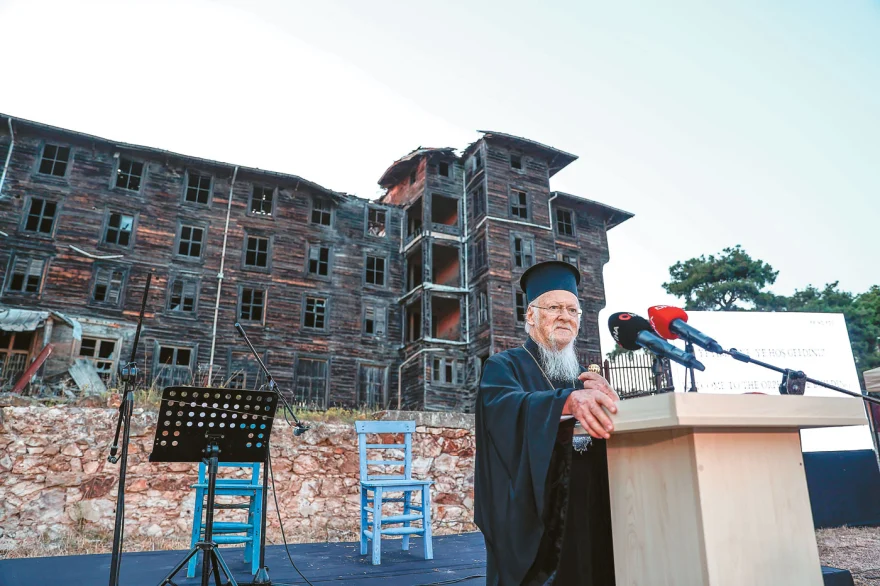
“Wounded Giant”
At the same time, over the years, the building’s condition has continuously worsened. The roof developed severe leaks, the wood has deformed, losing many of its properties. The solution of reconstruction, within the framework of careful ecotourism utilization, respecting certain principles, is the only feasible path. Principles include not destroying the building’s architectural and structural appearance and creating facilities that will remind visitors of its historical identity.
Before selecting mild tourism utilization, intensive work and exploration of alternative proposals took place. According to THEMA, a specific study of alternative utilization forms was carried out by the real estate consulting company Servotel. Many meetings took place. Initially, eight ideas for a new function of the building were proposed, later narrowed to three, with the tourism option chosen, which includes operating a hotel, hosting conferences, etc. The other two concerned wellness activities (care, beauty, health, etc.) or providing health services for the elderly.
The History
The idea of establishing an institution in Istanbul to house and care for orphaned children of the Greek community was first conceived by Patriarch Germanos IV in 1851. By 1902, the Orphanage had become a small but important part of the National Philanthropic Institutions of Constantinople, which still exist outside the walls of the Yedikule Fortress.
According to historical sources, including Halki-born historian and author Anastasios K. Iordanoglou, in 1862, the Orphanage first operated a Mutual Instruction School and later a Greek School, under two teachers and with 80 students. In addition, children learned sewing and shoemaking. The major earthquake of 1894 caused extensive damage to the Orphanage, which was repaired but converted into a single-story building, with children living and growing up under difficult conditions.
A solution was provided in two phases by Andreas Syngros. He visited the Orphanage and promised to reconstruct a ruined asylum on the opposite “Psylons” lot for its transfer. He died before he could complete it, but ensured in his will that 15,000 Ottoman liras would be left to the National Orphanage, with the condition that the new institution be built on a site away from the National Hospital.
Joachim III
The new site was identified by Patriarch Joachim III in 1901. With the help of his close associate Ioannis Chatzopoulos, the grand wooden “Prinkipo Palace,” owned by Bozart and located on Christ Hill of Prinkipo, which had been intended as a hotel and casino, was selected. The newly built five-story building, 3,587 sq.m. on 23,000 sq.m. of land, had 206 spacious, airy, and bright rooms, two massive double salons, a vast dining hall with incredible decorative richness, a modern large square kitchen with countless appliances, whose purchase and installation had cost over 2,000 liras. It also included a grand ceremonial hall intended as a theater, bathrooms, private lavatories, and other communal spaces. Water was abundant and supplied to all areas and floors. The view of the pines, the entire island, the sea, and even the Bithynian coast was panoramic.
The hotel was intended to host Europe’s elite, who would arrive in Istanbul via the famous Orient Express, the preferred means of travel for Europe’s upper class at the time.
However, the ambitious French builder-hotelier seems to have proceeded without considering the real “hotelier”—Sultan Abdul Hamid II, who refused to grant permission for the complex, considering its use as a casino contrary to Ottoman morals.
The Donor
Thus, the building remained closed until 1902, when it was purchased by imperial decree on behalf of the Patriarchate by Eleni Zarifi, wife of Georgios Zarifis, from the prominent banking family of the city and major benefactors. Zarifi fully covered the cost of purchasing and converting the building into an orphanage. She also oversaw the modification of the tower with a marble staircase connecting all apartments to serve as an emergency exit in case of fire.
Additionally, Eleni N. Zarifi and Artemisia N. Pournara contributed, the first with 100 gold twenty-franc coins and the second with 20 for constructing a blacksmith workshop. The director of the Imperial Ottoman Bank, Alexandros Panziris Bey, contributed 30 Ottoman liras for beds. The guild of oil merchants gave 300 piastres for the institution’s needs. Even Sultan Abdul Hamid, following a written report by the orphans, contributed 146 Ottoman liras. The purchase was validated by Sultan’s decree (firman) 2665, recognizing the Patriarchate’s legal ownership, as evidenced by the property’s registration in the Ottoman land registry—nearly a century before the establishment of the Greek land registry—and later under Kemalist Turkey.
The inauguration of the new institution on Prinkipo took place on May 21, 1903, on the name day of the major donor, in the presence of Patriarch Joachim III.
Resources
The National Orphanage’s resources included the annual allowance from the National Philanthropic Institutions (18,000 Ottoman liras), half of Andreas Syngros’ endowment, and other donations, legacies, and contributions. It was managed by a six-member board, with a president who was a synodal hierarch elected by the Holy Synod, and daily management by a director.
However, Turkish suspicion was immense. “We must not consider the Orphanage as a place where orphaned children truly sought refuge. Its purpose was to create a strong core of Greek (Rum) youth near Istanbul to be used in times of war or critical situations,” claimed historian Adil Ozguç in his 1974 book Batı Trakya Turklen (“The Turks of Western Thrace”).
The institution hosted Orthodox Rum orphans aged 8–17, teaching them primary education and crafts such as sewing, shoemaking, carpentry, and blacksmithing. At the end of the six-year course, they were examined in the arts and received their diplomas.
After World War I, the building was requisitioned, housed German soldiers allied with Turkey, and suffered significant damage.
From 1942, it began hosting orphaned girls who had been left homeless when the Kamariotissa Monastery on Halki, previously housing them, was seized for the Turkish Naval Military School. A separate building housed the Orphanage’s primary school, which was rebuilt in 1959. For a short time, it served as a hospital and as the director’s residence.
In 1964, with the rapid deterioration of Greek-Turkish relations due to the Cyprus issue, Turkish authorities suspended the Orphanage’s operating permit and ordered immediate evacuation, citing fire risk.
The 150 children were initially sent to the Monastery of St. Nicholas on Prinkipo, living under difficult conditions, while attending classes at the Community Civic School, far from the monastery. The authorities were requested to allow teaching in the Orphanage school building, which was safe, but denied three years later.
Abandonment
The building was definitively abandoned in 1999, following a long legal dispute between the Turkish Directorate General of Foundations, which declared it illegally occupied and filed against the Ecumenical Patriarchate to strip it of ownership.
Turkey’s Supreme Administrative Court ruled that the institution had not functioned as an orphanage for over 10 years and was therefore, under Turkish law, considered confiscated property. The Patriarchate appealed to the European Court of Human Rights (ECHR) and won in 2008. Four years later, in 2012, Turkish authorities complied and returned the building to the Patriarchate.
Photos: Getty Images/Ideal Image
Ask me anything
Explore related questions




