





In the coming days or weeks, Iran’s senior clerics are expected to decide whether the Islamic Republic will seek de-escalation or move toward extreme confrontation with the United States and Israel, following the death of Supreme Leader Ali Khamenei in airstrikes on Saturday.
Many of the previously likely successors are said to have been killed on the first day of the war, narrowing the field. US President Donald Trump acknowledged that “it won’t be any of the ones we were thinking about, because they’re all dead.”
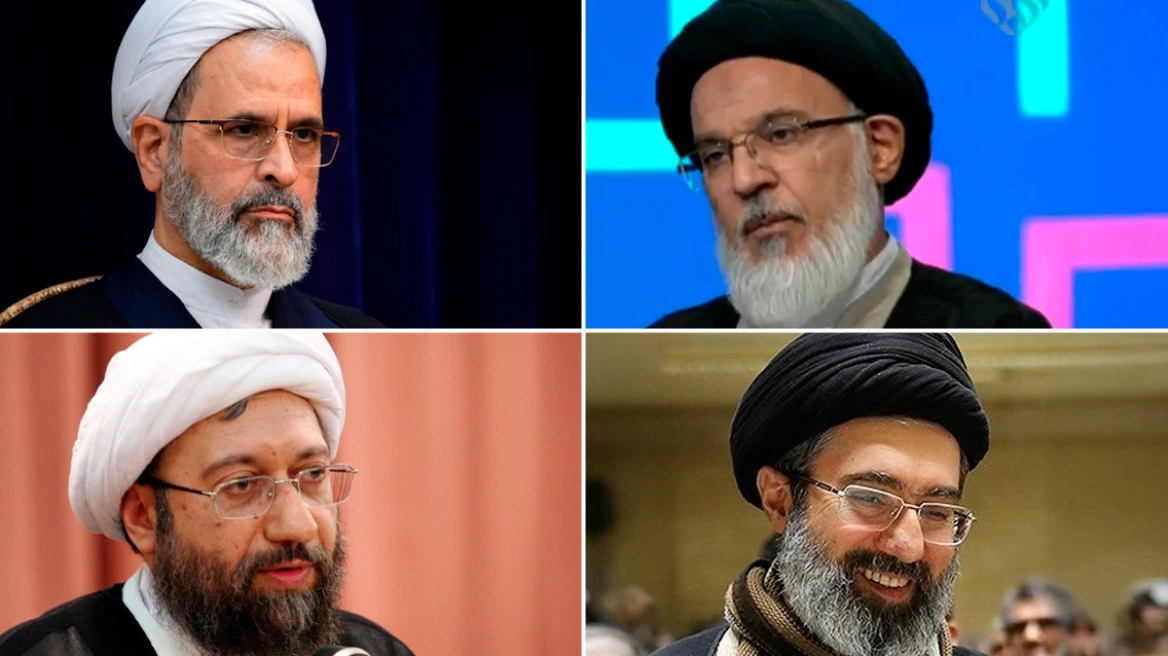
According to the Telegraph, four figures stand out among the prevailing succession scenarios, each with a different strategy for the country’s future.
Alireza Arafi – Possible path toward a ceasefire
The 67-year-old cleric Alireza Arafi, a member of the interim leadership council, is considered the option that could lead to de-escalation. Iranian Foreign Minister Abbas Araghchi conveyed to Oman that Tehran is “open to any serious effort” to halt escalation, sending the first diplomatic signal.
Arafi oversees Iran’s theological seminaries and religious education, giving him strong clerical legitimacy. His visit to Moscow in 2023 and talks on “expanded cooperation with Russia” suggest potential backing from the Kremlin.
In this scenario, Arafi would serve as a symbolic religious figure, while real power would pass to the Larijani family. Brothers Ali and Sadeq Larijani would manage negotiations — possibly mediated by Oman — for a deal that would end the strikes, preserve limited nuclear capability, and prevent regime change. However, hardline factions, Revolutionary Guard commanders, and clerics who have issued fatwas calling for revenge may resist.
Mohammad Mehdi Mirbagheri – Path toward full confrontation
The 66-year-old cleric Mohammad Mehdi Mirbagheri represents the most radical ideological current. In a televised statement, he had said that “even if half the world’s population is killed, it is worth it to achieve the goal of divine closeness.”
His selection would mean rejecting any negotiations and continuing the conflict regardless of consequences. Under this scenario, Iran would continue “Operation True Promise 4” with attacks against US bases, Israeli cities, and Gulf states. This could include further strikes on aircraft carriers, energy facilities in Saudi Arabia and the United Arab Emirates, and maintaining the closure of the Strait of Hormuz.
The US response could involve strikes on state infrastructure and cities, the imposition of a full economic blockade, and possible support for regime-change operations. Despite the risk of destruction, Mirbagheri’s theological approach frames martyrdom as victory.
Sadeq Larijani – Realistic survival
The 64-year-old Sadeq Larijani, head of the Expediency Discernment Council, is viewed as a continuity candidate and controlled transition figure. He maintains a hardline profile due to his role in suppressing the 2009 Green Movement, but has also adopted limited reformist positions.
In this scenario, the Assembly of Experts selects him directly, emphasizing institutional continuity. He would maintain Khamenei’s line while avoiding extreme escalation. The Larijani family would form a broad governing coalition aimed at regime survival through a balance between confrontation and limited diplomacy.
Mojtaba Khamenei – Scenario of military imposition
Mojtaba Khamenei, the second son of the late leader, has long been seen as a potential successor. If the Assembly of Experts fails to reach agreement, the Revolutionary Guards could impose their own solution, promoting him as a symbolic figure backed by military support.
In that case, Iran would effectively become a military dictatorship, with Revolutionary Guard commanders making key decisions and Mojtaba providing dynastic legitimacy. Confrontation with the West would continue, alongside intensified domestic repression.
The final choice will determine whether Iran seeks compromise or enters a phase of extreme and prolonged conflict, with consequences that could affect the entire Middle East.
Ask me anything
Explore related questions




