





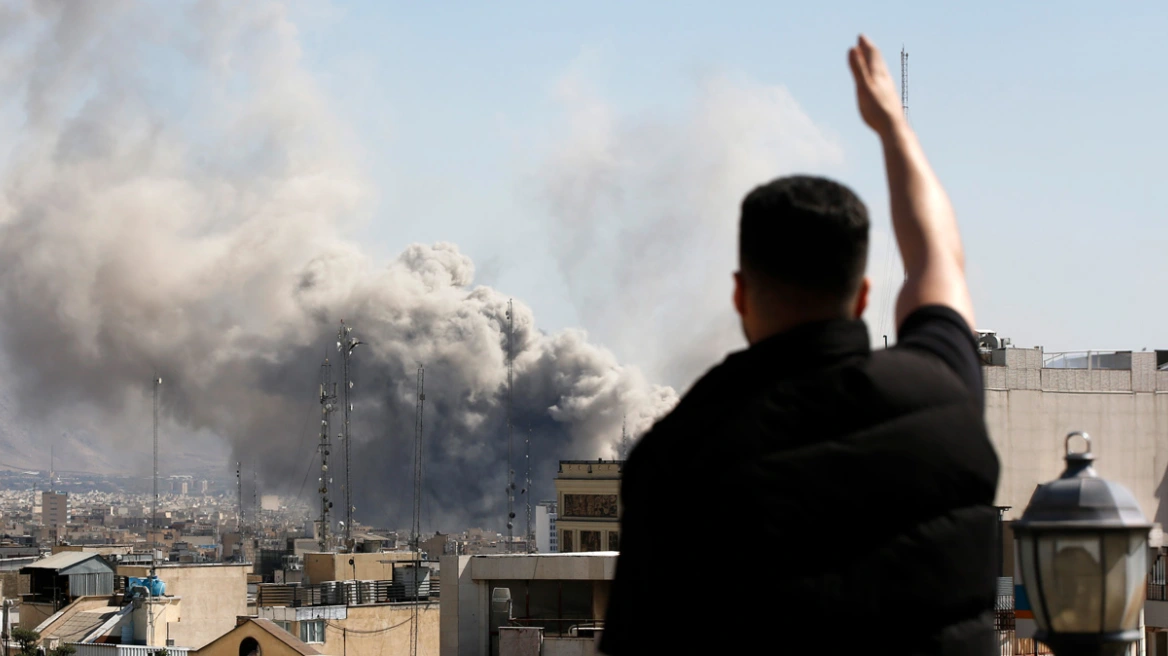
About 2.5 years after the Hamas attack on Israel on October 7, 2023, the Middle East has changed radically. Israel has consolidated itself as the dominant military power, Iran’s network of alliances is collapsing, and the region is entering a period of uncertainty with unpredictable geopolitical balances.
An order that changed the history of the Middle East
On a cool autumn morning in 2023, from an underground tunnel beneath the Gaza Strip, Hamas leader Yahya Sinwar gave the order that sent thousands of the organization’s fighters across the fence separating Gaza from Israel. The attack that day triggered a chain of events that reshaped the Middle East on a scale comparable to the Arab Spring—or even the partition of the Ottoman Empire in the early 20th century.
However, according to the Washington Post, the course of events did not unfold according to the plan that the “mastermind” of the October 7 horror reportedly had in mind. Ironically, he would die about a year later in battles between Israeli soldiers and Hamas militants.
Twenty-nine months later, the Middle East has been transformed to such an extent that it is almost unrecognizable. Israel has established itself as the undisputed military hegemon, with its main adversaries either destroyed or politically and militarily decapitated. At the same time, Saudi Arabia is emerging as a key economic and political pillar of the region, while Gulf countries are trying to cope with the consequences of Iranian missile attacks.
Meanwhile, the Palestinians once again find themselves on the margins of developments. In Gaza, which has suffered massive destruction, the death toll is estimated at around 75,000, while in the West Bank the loss of territory continues.
The collapse of the “axis of resistance”
Nearly 2.5 years after the conflict in Gaza began, the network of forces that Sinwar expected would support him is falling apart.
In a development that dramatically altered the balance of power, Iran’s Supreme Leader, Ali Khamenei, was killed in a joint airstrike by the United States and Israel.
The Iranian regime, which for four decades funded and armed the so-called “axis of resistance,” is now on the brink of collapse—a development that could also bring down organizations such as Hamas, Hezbollah, and the Houthis in Yemen.
Tehran is facing a chaotic and uncertain succession process while simultaneously escalating tensions with its neighbors by launching drones and missiles, often without a clear military target, sometimes striking civilian infrastructure.
At the same time, Syria’s former leader Bashar al-Assad is now living in exile in Moscow.
Netanyahu’s leadership and Trump’s strategy
A decisive role in these developments has been played by Israel’s prime minister, Benjamin Netanyahu. Despite political crises, government deadlocks, corruption prosecutions, and an arrest warrant from the International Criminal Court, he managed to remain in power and lead his country to unprecedented military dominance.
At the same time, Donald Trump returned to the White House after a politically turbulent period that included two impeachment proceedings, a felony conviction, and even an assassination attempt against him. After his re-election, Trump placed the United States in a military confrontation with Iran without seeking approval from Congress.
A new geopolitical reality
Despite accusations of genocide against Israel, a new generation of Israelis is now experiencing the traumatic realities of war, as previous generations did. At the same time, American soldiers are once again losing their lives in the Middle East in a war whose duration and objectives remain unclear.
Instead of weakening Israel and removing Western influence from the Middle East, the Hamas attack appears to have produced the exact opposite outcome. Israel strengthened its position and the United States has once again emerged as a decisive actor in regional developments.
Bilal Saab, an analyst at Chatham House and former Pentagon official, described Hamas’s initial calculation as “a colossal miscalculation with disastrous consequences,” noting that it “instantly changed the face of the Middle East.”
However, where these changes will ultimately lead remains an open question. The previous geopolitical structure—with Iran as a key destabilizing factor and its armed organizations as pressure tools—has essentially collapsed.
In its place is emerging an unstable mix of competing ambitions, new hostilities, devastated cities, and areas without effective or stable governance.
Israel’s dominance and neighbors’ concerns
Israel now holds a dominant position but at the same time faces increasing diplomatic isolation. Neighboring countries are watching with concern how it will use its military power and how it will manage the ongoing hostility of its defeated adversaries.
The Gulf states, including those that signed the Abraham Accords during the Trump presidency, now appear cautious about American security guarantees.
Meanwhile, Saudi Arabia and Turkey are redefining their strategies in the region, though it is not yet clear in which direction they will move or against which rivals.
Much will depend on who prevails in the succession battle in Tehran following Khamenei’s death.
A new, unpredictable chapter for the Middle East
The Middle East has experienced major geopolitical upheavals before. After World War I, European colonial powers drew the region’s borders on the map, creating the modern regional system. The Arab Spring of 2011 caused the first major cracks in that system.
Today, the region may be facing an even deeper transformation.
As Ali Vaez, director of the Iran Project at the International Crisis Group, notes: “The region has changed forever.” The remaining question is what the consequences of that change will ultimately be.
Ask me anything
Explore related questions




