





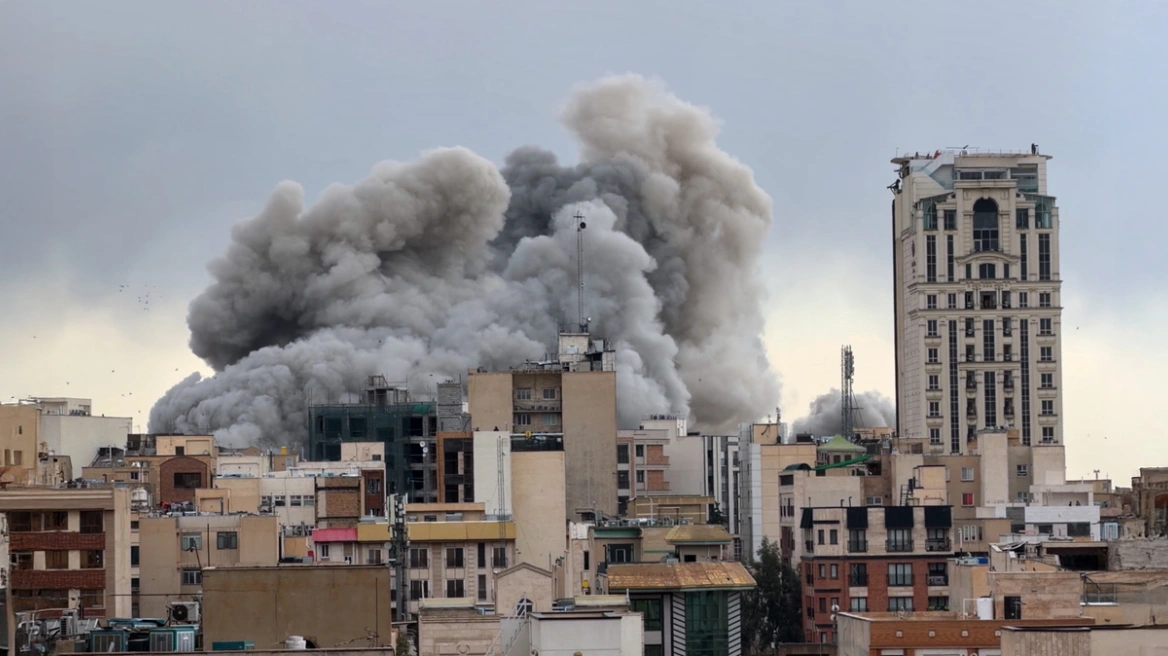
Although it has not been confirmed by official sources, several analysts believe that Iran has launched more ballistic missiles and drones against the United Arab Emirates than against Israel since the start of the war in the Middle East.
Even though Tehran has been under massive attack for the past thirteen days by the armed forces of Israel and the United States, it is now clear that for the Iranians the center of gravity of the conflict is not the attacking forces themselves, but rather Arab states in the Middle East that play a crucial role in the global economy.
Iranians “well prepared”
Better prepared compared to the first American operation—when they were caught off guard and showed significant delays in reorganizing—the Iranians now appear to have developed a clear grand strategy against the U.S.–Israeli strikes.
This strategy does not rely solely on deterrence, but also includes a series of regional countermeasures aimed at spreading the conflict on a global scale.
This is because the Iranians have focused attacks on the Arab world, concentrating on:
- Maritime routes and global shipping
- Energy infrastructure and refineries
- Tourism facilities, transportation networks, and airports
In other words, these are structures that internationalize the war, increasing pressure on Gulf countries as well as the international community.
The Strait of Hormuz and global pressure
The possible closure of the Strait of Hormuz, which the new Iranian religious leader Mojtaba Khamenei has hinted at, has already driven up the price of oil per barrel, while disruptions in the global supply chain and rising fuel prices are beginning to appear across the Western world.
Within this framework, Iran’s center of gravity is not necessarily the successful defense against U.S.–Israeli strikes, but rather the deterioration of the global economic environment.
The aim would be for consumers to transfer the pressure from supermarket shelves and fuel stations to national governments, forcing them to push for an immediate ceasefire and an end to the war.
A faster end to the war
If Iran’s strategy succeeds, military operations against it could end earlier, or at least before the regime collapses or becomes exhausted, while simultaneously weakening other states in the region.
For example, one of Iran’s most attractive potential targets would be the refineries of Saudi Aramco.
At the same time, this could damage the hegemonic image of the United States, which is heading toward midterm elections where voters’ main concern is the performance of the U.S. economy.
Iran’s grand strategy also sends signals about the post-war balance of power in the region: if it demonstrates strong resilience despite repeated strikes, it may be able to impose its terms on several Arab states.
“Horizontal escalation”
In this sense, the escalation of the war ultimately benefits Iran, according to Foreign Affairs, which notes that Iranian strikes represent:
“A strategy of horizontal escalation—an attempt to transform the stakes of a conflict by expanding its scope and prolonging its duration.”
Such a strategy allows a weaker combatant to alter the calculations of a stronger enemy, something that has worked in the past against the United States, the article adds—pointing meaningfully to the Vietnam War.
Strategic infrastructure targets and market panic
At the same time, strikes on strategic infrastructure, such as tourism facilities in Arab states, could rapidly undermine the security image of global tourist destinations like Dubai.
Meanwhile, The New York Times reports that advisers to U.S. President Donald Trump underestimated the market turbulence caused by the war, even during the first wave of bombings last June.
As a result:
“President Trump downplayed risks to energy markets as a short-term concern that should not overshadow the mission of decapitating the Iranian regime.”
However, according to the newspaper, finding an exit from the war has become urgent since the weekend, as global oil prices continue to rise and the United States is consuming extremely expensive munitions.
The cost of these munitions in the first 24 hours of the war alone was estimated at $5.6 billion.
Ask me anything
Explore related questions




